 Once upon a time, an eternity ago, in their heavenly abode on Mount Kailash, Lord Shiva, Mother Parvathy and their children Ganesha and Muruga were all together in a moment of family bliss. The Sage Naradha, who is notorious in Hindu mythology, for creating dissension among the Gods, paid them a visit. Holding a mango in his hand, Naradha addressed the boys, “Lord Ganesha, Lord Muruga, this is the mango of knowledge or enlightenment (nyanam) . It is sweeter than amirtham or the divine nectar, elixir of immortality. It must not, however, be shared or divided. It must be consumed whole, by one person of course!” Shiva and Parvathy were perturbed by this divisiveness, but nevertheless Lord Shiva set the boys a challenge, “This mango, this Nyana Pazaham (fruit of enlightenment), goes to the person who is the fastest in circumnavigating the world.”
Knowing he must win, Muruga bestrode his glorious vahanam (mount), the peacock, and flew swiftly round the world. The ungainly Ganesha, God of Wisdom, thought for a moment before setting off. Ganesha pondered on his own gait and girth, and on his modest vahanam – the homely mouse, and asked his parents a question, “Amma, Appa, is it not true that the parents are the world for a child?” “Yes”, the puzzled but glowing parents replied. Ganesha continued, “Is it not true that the whole universe is but a reflection or manifestation of your Lordly selves?” “Well, yes of course, it is!” It was the only possible reply. Ganesha simply circumambulated Shiva and Parvathy, his father and mother, his whole world – the whole world!
Sure enough Ganesha won the mango. When Muruga came flying back expecting to win, he saw Ganesha with the prize. Feeling cheated by his parents, he flew into a rage and pierced Ganesha in the belly with his vel (spear) a symbolic attribute of the Lord Murugan (This unusual variation of the myth comes via my mother and grandmother). Disenchanted, he abandoned his family and discarded all his jewels and princely clothes. He left his abode in Heaven and went south to stand on Mount Palani in his loin cloth. To this day he stands there as a youth, as Palani Aandi or the Mendicant of Palani, a form of the Lord, dear to the hearts of the Shaivites of South India and the diaspora.
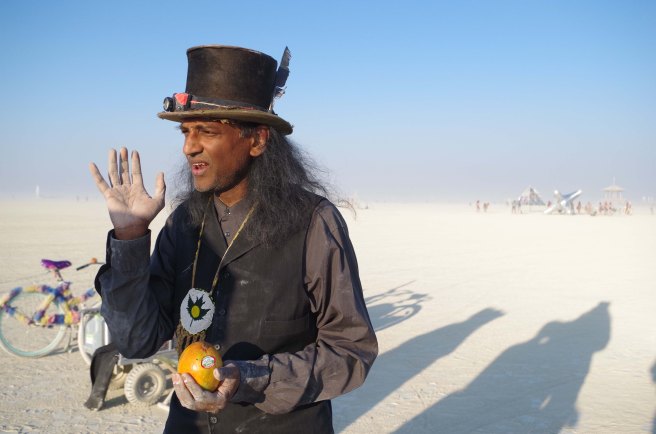 The mango also appears in an episode in the Oriya poet Sarala’s rendition of the Mahabaratha where, the now mature and more worldly, Lord Krishna performs a miracle with the fruit. He materializes a ripe mango from a seed, while the fruit is out of season and then, turns it to ashes, thereby revealing both the illusory nature of reality (maya) and the complexities that underlie the idea of truth (satyam) itself.
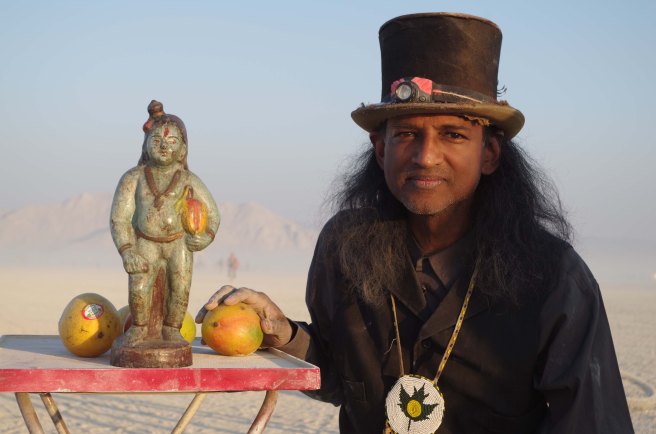 In the myth of Krishna and the fruit seller, an old hawker woman selflessly satisfies the god child’s desire for her ripe and aromatic produce, even though he seems to offer her practically nothing in return. In folk representations of this allegory of desire (kama) and devotion (bakthi), such as the terracotta icon described above, the sublime mango often stands, metonymically, for the cornucopia of fruit in the old woman’s basket, which in turn represents the desires and delectations of the material life.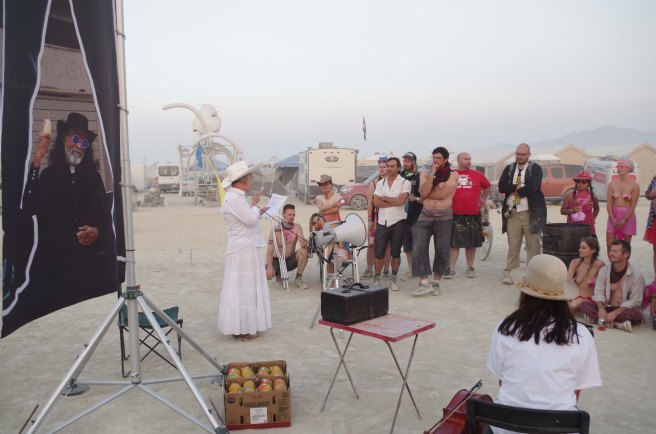

 The Koboi Project
You must be logged in to post a comment.