Pak Dogol and Wak Long

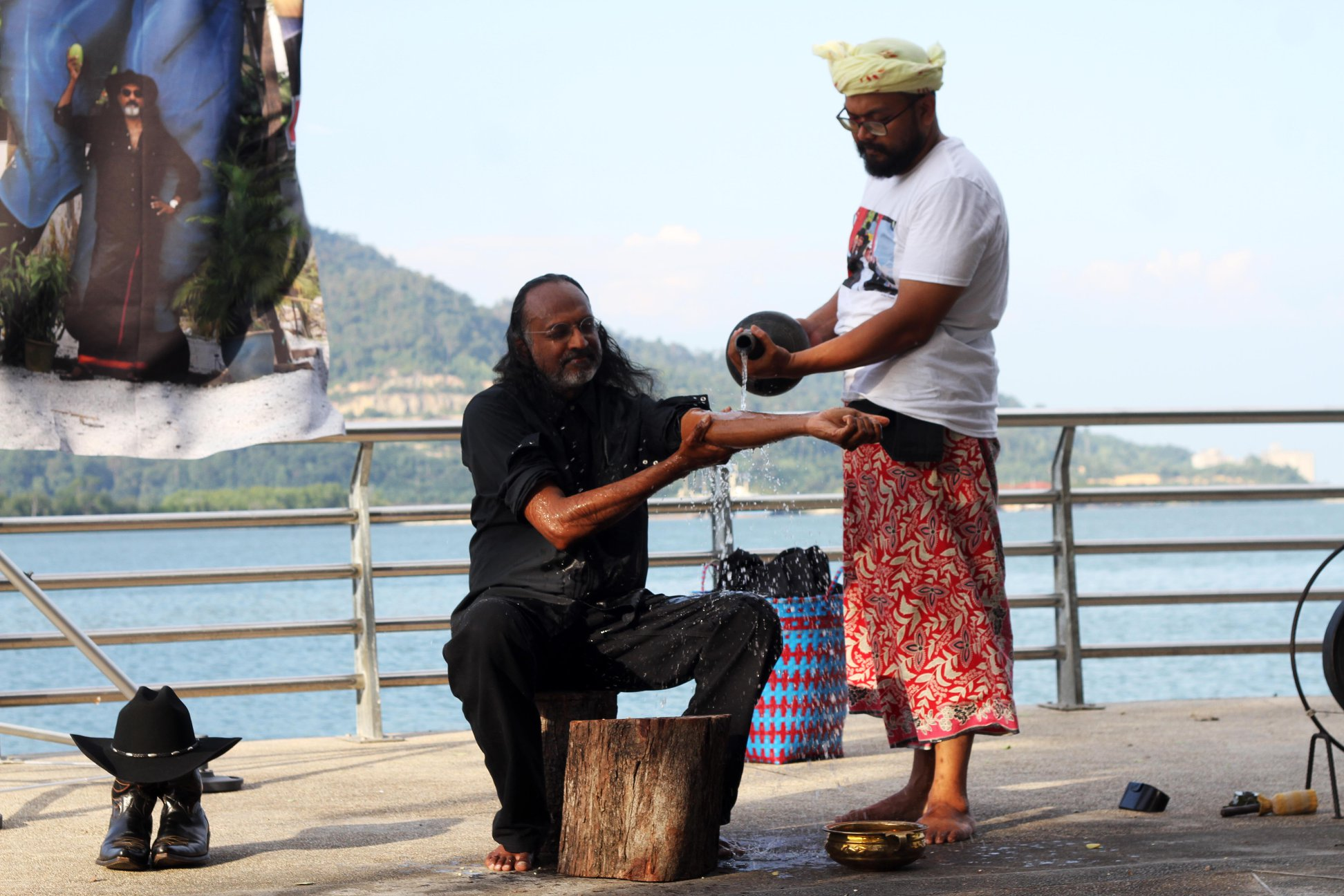
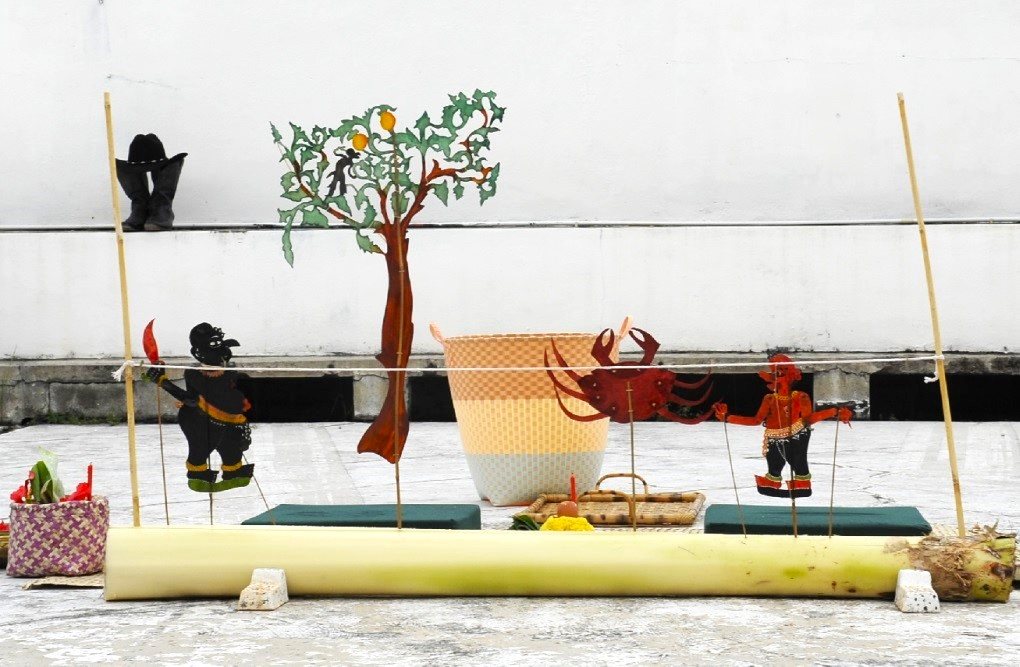
In my Pokok Pauh Janggi performance at Kapallorek Artspace, I presented a Pak Dogol puppet and a Wak long puppet, both of which I collected in Kota Baru, Kelantan over 20 years ago. In Kelantanese Wayang Kulit, or Wayang SIam as it was referred to locally, Pak Dogol is a minder or caregiver of Sri Rama. He presents as black, bald (botak), old, pot bellied man with a protruding belly button (pusat perut), an pronounced nipple (tetek), large buttocks and a large nose. He holds a machete (golok). In fact he is Dewa Sang Yang Tunggal, a supreme demigod (dewa) who descended to earth (dunia) from the heavenly realm (kayangan) with this unsightly appearance (wajah) as a disguise, in order to find his son. Pak Dogol is the principal peran (humourous figure) in Wayang Siam. He is ritually speaking, the most important of all Wayang Siam characters. This puppet is considered to be magical and possessing of a sometimes sinister spirit (keramat) that resides in tree stumps (tunggul Kayu mati). The puppet is stored wrapped a yellow cloth, signifying the a regal status of its character. Pak Dogol is always the first to receive praise and offerings (puja) in the course of the upacara buka panggung (blessing of the stage) ritual.

Wak Long, who is Pak Dogol’s companion, was created out of the former’s spirit and dirt from his body. He, like Pak Dogol, is a peran, only, he is funnier than his friend. Wak Long presents as a Red figure with a distinctive topknot. He does not hold a weapon. Both characters do not appear in the Ramayana which forms the narrative basis of Wayang Siam. Pak Dogol and Wak long are indigenous to Nusantara, analogous to Semar in Wayang Kulit Jawa. At the heart of my own performance was the presentation and initiation of two other long forgotten puppets. – Pokok Pauh Janggi and Ketam Gergasi puppet. I exorcized the bad spirits from the deer hide (membuang badi rusa) and invoked the spirit of each puppet (memanggil jambalang patung). Both of these puppets were made following designs from late 19th Century examples collected and photographed by Walter William Skeat. They too are rooted in Malay folklore and metaphysics and are not found in the Ramayana or the Mahabharata, the great epics that form the core of the culture of what some have called Greater India. As these puppets made their return to the panggung, I felt that it was important to have Pak Dogol and Wak long, present to bear witness to the proceedings.

See: Wayang Kulit Kelantan: A Study of Characterization and Puppets, Article in Asian Theatre Journal · April 2017

https://muzium.kelantan.gov.my/index.php/en/warisan/wayang-kulit/watak-watak-utama/pak-dogol

https://utusantv.com/2023/03/21/kisah-keramat-pok-dogol-nampak-tunggul-kayu-jangan-dekat-jangan-kencing/

https://www.gutenberg.org/files/47873/47873-h/47873-h.htm

The Appearance of a Fact ataupun Batu Kasih Piyadasa, circa 2007

This work is what I call a ‘deep readymade’, by which I mean there is a gesture or configuration by another actor being interpreted or articulated in the work. A deep readymade is thus differentiated from a simple readymade, in that there is a juxtaposition of components done by someone other than the artist. The primary component of this work is a carved wooden Ganesha which was once in my late mother’s possession. When my mother was alive, this Ganesha used to sit on the wall, above her prayer altar and would receive flowers in the course of her daily worship. It is an item she and my father brought back from one of their trips to India and Sri Lanka. While my father was born in Seremban, Malaysia, my mother, myself, and my sister Shyamala were born in Jaffna, Sri Lanka. We are Jaffna Tamils and Sri Lanka is in some sense our homeland.

The second component of this deep readymade, is the white stone, a large, well-worn pebble that was picked up on a Sri Lankan beach by the renowned Malaysian artist Reza Piyadasa on his first trip (date uncertain but a book that I believe was presented at the same time is autographed and dated 1995) to Sri Lanka (his own ancestral homeland) and brought back for my mother. The late Reza Piyadasa was a Sinhalese Malaysian and the stone was a deeply meaningful exchange of a piece of Sri Lankan earth (bumi) between two Malaysians, one Sinhalese, the other a Tamil – two people whose communities were at war in their homeland. As Malaysians, however, these two people were at peace with each other, falling together in the shared category of ‘Malaysian Indian’. My mother placed this stone, which was so lovingly brought for her by Piyadasa, at the feet of Lord Ganesha and it has remained there ever since. Beyond this complex image of the interplay of race and nationality in human relations, there is, embodied in this readymade, the personal relationship between Piyadasa and my mother. Piya had lost his own parents relatively early in life and, somehow, he formed a close attachment to my parents. They were his guests when he received the prestigious Prince Claus Award in 1998, and later, in 2007, he called them to his hospital bedside when he was close to the moment of his passing.

In titling this piece ‘The Appearance of a Fact ataupun Batu Kasih Piyadasa’, I pay a tribute to the striking conceptualism of Pia’s early output, while offering a way through its solipsistic reflexivity. In a piece titled ‘A Fact Has No Appearance’, 1977, Pia created an ouroboros-like liaison between form and concept. The piece consisted of a box, part painted, part bare wood, a painted ovoid form, probably made of plaster, and the stenciled text A FACT HAS NO APPEARANCE. It is indeed true that a fact is immaterial and, as such, has no appearance; even while an appearance, which is material, is, indubitably, a fact! In my readymade, we have a material configuration that presents, in its appearance, a simple fact – the fact of love.

The Appearence of a Fact ataupun Batu Kasih Piyadasa, circa 2007 is on display in the Pokok Pauh Janggi exhibition which runs from 5th Aug – 30th Sept 2023 at the Kapallorek Artspace in Bandar Seri Iskandar, Perak

Not A Tamil Tradition 2

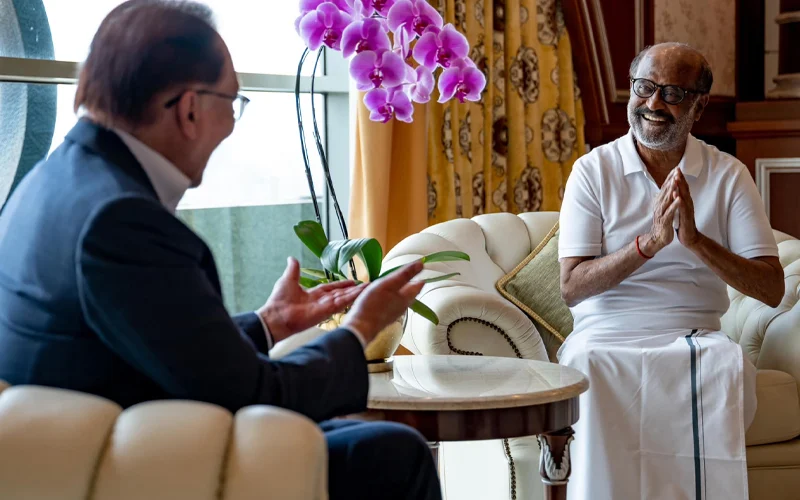
There are reports circulating that Rajinikanth will become the BJP Governor of Telangana. These may just be rumors but they do conform to the logic of his recent gesture of prostrating before BJP Chief Minister of Uttar Pradesh Yogi Adityanath. Looks like our SUPERSTAR might get his saffron make-over after all!

https://govtschemesinfo.in/telanganasuperstar-rajinikanth-as-the-governor-of-telangana/

https://www.livemint.com/news/india/efforts-being-made-to-paint-me-with-saffron-won-t-get-trapped-rajinikanth-11573225013695.html

Air Abang Salleh, circa 2013

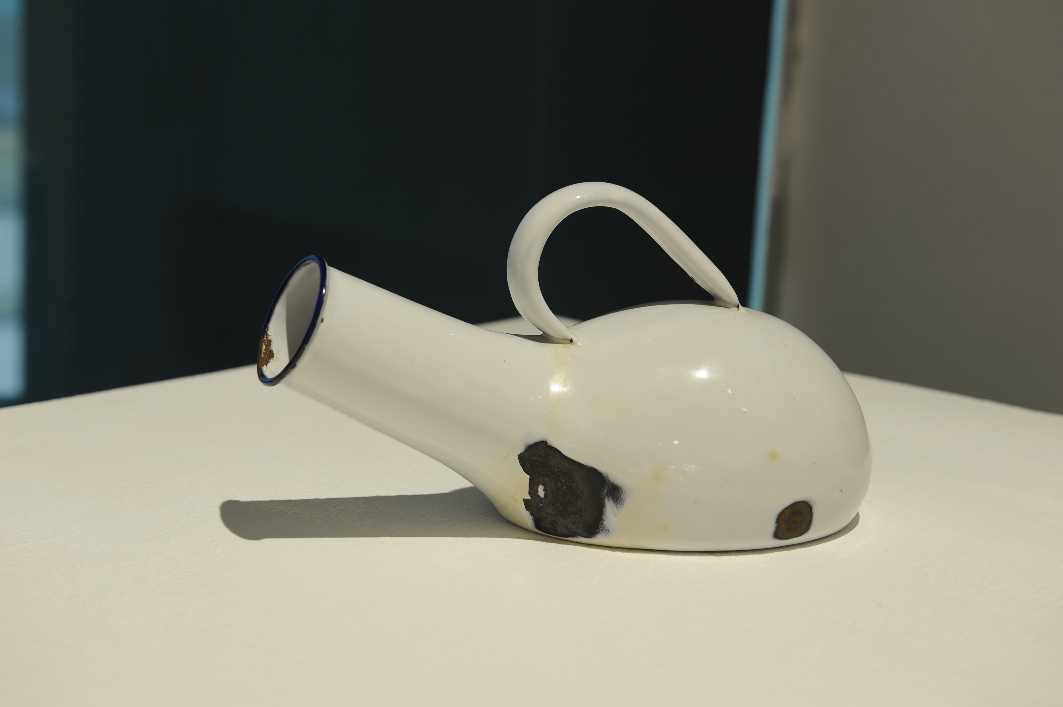
This readymade or found object alludes to that infamous incident at the Dewan Bahasa dan Pustaka in 1974, when Reza Piyadasa and Sulaiman Esa’s seminal Mystical Reality exhibition received a drenching (literally ) criticism from the enfant terrible of the Kuala Lumpur literary scene, Salleh ben Joned. While Salleh himself writes of the “simple act of unzipping my trousers and zipping up my mouth” he was undoubtedly itching (to use another bodily metaphor) to explain his position. In an open letter titled Kencing dan kesenian: surat dari Salleh Ben Joned untuk Piyadasa,published in 1975 in the Dewan Sastra, he responded to Piyadasa’s challenge to give the rationale for his uncouth (kurang ajar) gesture of pissing on the Mystical Reality manifesto in the corner of the exhibition space during the opening.

At the heart (perhaps this is the wrong bodily metaphor) of Salleh Joned’s gesture there seems to have been a critique of what he saw as Mystical Reality’s confusion of the relationship between art and life. Here is what he says “Piya! Piya! You want art, but how confused you are about what art is. You want reality, but how innocent you are about reality. Reality? Just remember the rainbow arc of my piss, the fountain of life affirms and celebrates the unity of reality: the vulgar and the refined, the bawdy and the spiritual, the concrete and the transcendent, the stinking and the mystical, the profane and the sacred.” The intrepid and insightful art collector, Pakhruddin Sulaiman, has given us a record of Piyada’s own response to being on the receiving end of this savage lesson in the Zen of art. He writes, “Rupa-rupanya, menurut Piyadasa, wujud seorang “mahaguru” Zen yang telah berjaya “mengajar” mereka berdua (yang masih “greenhorn” dalam falsafah Zen pada waktu itu) secukup-cukupnya tentang apa itu Zen sehingga serangan “mahaguru” itu tidak terbantah oleh mereka.”

My own gesture of presenting this enamel urinal along with the title “Air Abang Salleh” pays homage to Salleh Joned’s masterful deconstruction of the salient pretension of Modern Art – the interchangeability of art and life. There is also, however, in the respectful honorific “Abang” of my title, a gentle critique, much more in keeping with Malay decorum (adab), of Salleh Joned’s own pretensions to radicality. He has after all, in spite of all his ill-mannered and uncouth anti-traditional posturings, which many of his contemporaries found most offensive, been lifted up, out of the 1970’s Kuala Lumpur underground, and assimilated into the canon of modern Malaysian culture.

See Also:
Who is Niranjan Rajah?
La Folie

Air Abang Salleh, circa 2013 is on display in the Pokok Pauh Janggi exhibition which runs from 5th Aug – 30th Sept 2023 at the Kapallorek Artspace in Bandar Seri Iskandar, Perak.

https://sallehbenjoned.blogspot.com/2016/02/the-art-of-pissing.html

http://sentapmalaysia.blogspot.com/2008/09/piyadasa-obor-yang-telah-padam.html

Di Antara Saudara Mara

The Koboi Project thanks Sang Nabil Utama and Hamzah Yazd for their contribution to the performance/ exhibitions Dari Pusat Tasek at Percha Artspace, Lumut, Perak, 2019 and Pokok Pauh Janggi at Kapallorek Artspace in Bandar Seri Iskandar, Perak, 2023).

Pokok Pauh Janggi runs from 5th Aug – 30th Sept 2023 at the Kapallorek Artspace in Bandar Seri Iskandar, Perak.

https://www.facebook.com/percha.artspace/

https://www.kapallorek.com/my/

Sponsor of the Giant Anwar Ibrahim Hoarding 2

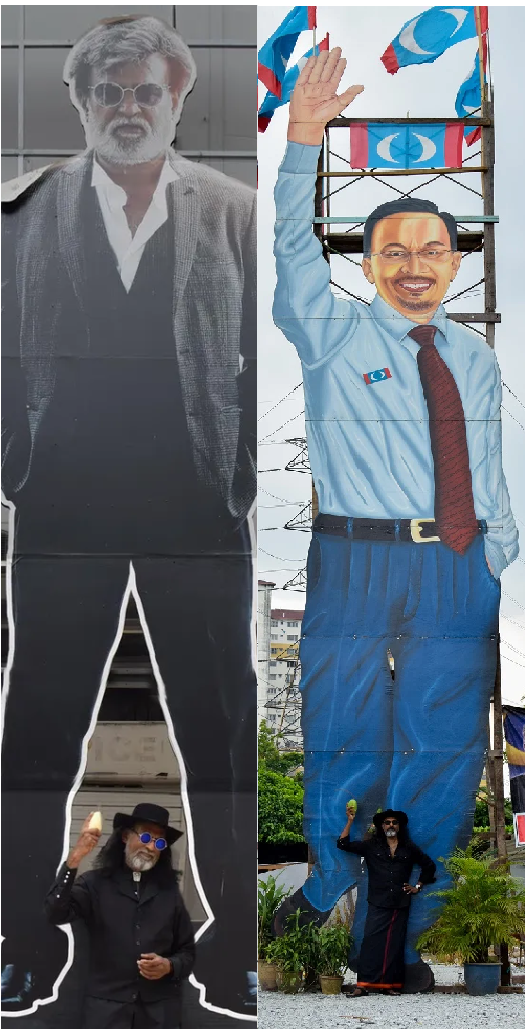
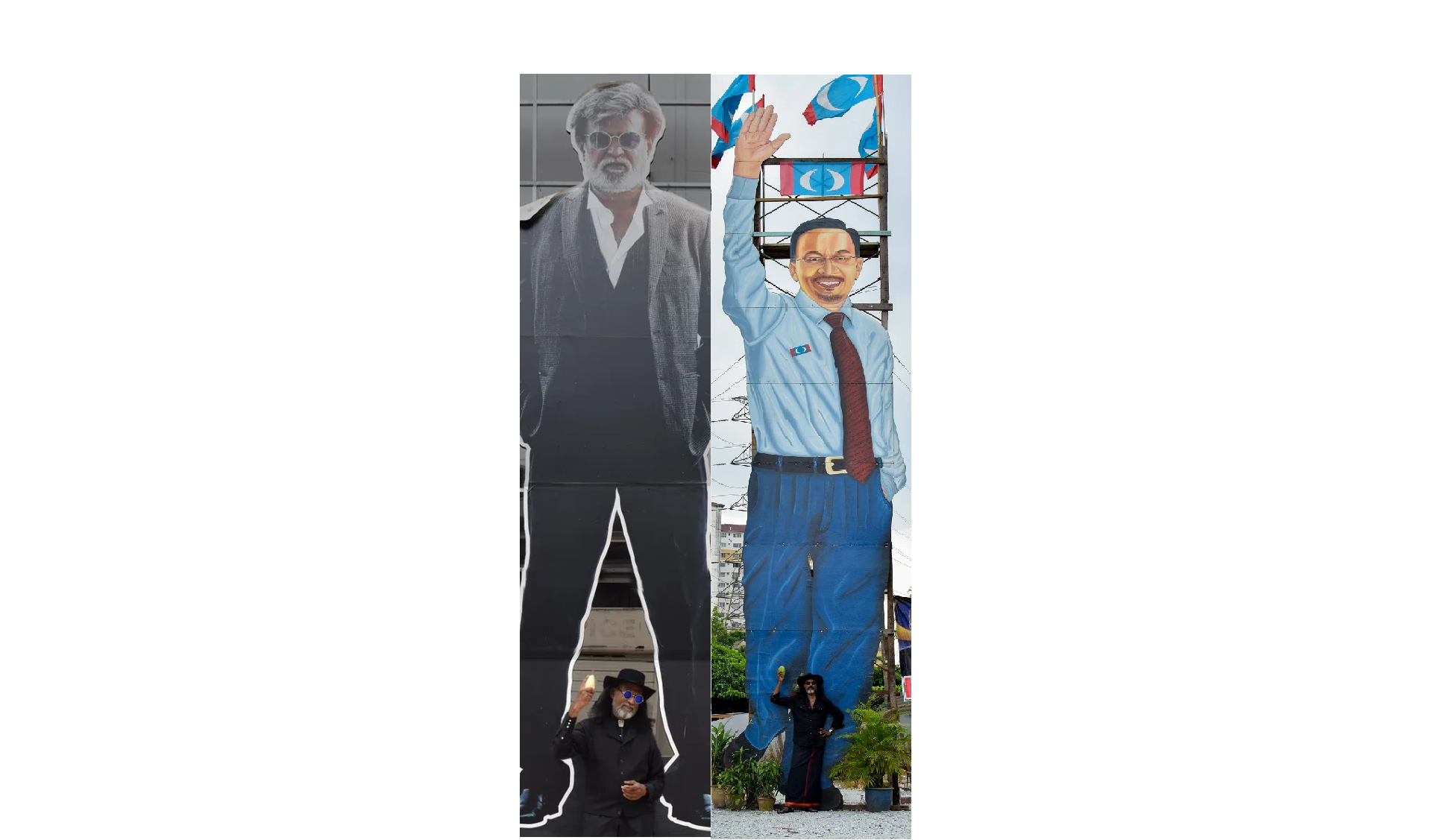
Sponsor R Viriya with a section of his giant Anwar Ibrahim hoarding when it was down between Wisma Keringat (2008) and Dewan Orang Ramai, Kg Indian Settlement (2018) installations. This image of Anwar is represented in my SUPERSTAR flag which was presented at the Pokok Pauh Janggi exhibition (part of the Koboi Project) at the Kapallorek Artspace in Bandar Seri Iskandar, Perak. Pokok Pauh Janggi runs from 5th Aug – 30th Sept 2023

Sponsor of the Giant Anwar Ibrahim Hoarding

In December 2019, I was happy to meet with R Viriya the sponsor of the giant Anwar Ibrahim hoarding at Kampung Indian Settlement Batu Caves. This hoarding was the subject of my new flag printed for the Dari Pusat Tasek exhibition at Percha Art Space in Lumut (Dec2019 – Jan 2020). The 12.2m hoarding was first erected in front of Wisma Keringat with council approval in 2008. The hoarding, which had been sponsored through community fundraising, met with accusations of wastage and idolatry from UMNO and PAS politicians. It was taken down at the end of the permit period and kept in storage to be put up again near the Dewan Orang Ramai, Kg Indian Settlement in 2018 for the GE14. According to Viriya the image was painted by a visiting Indian cinema hoarding painter and it certainly conveys the aura of an Indian media SUPERSTAR! I took my koboi photo in 2018 after the surprise Harapan win in GE14. This flag was presented again at the Pokok Pauh Janggi exhibition at the Kapallorek Artspace in Bandar Seri Iskandar, Perak. Pokok Pauh Janggi runs from 5th Aug – 30th Sept 2023

IMAGE:https://www.facebook.com/viriya.batucaves/posts/pfbid0EfyLdCtGPNTyRy6F62vdi4AgY6Fi8ZHZZ8gmyi6Af4MJsyNjyiW7vxHeF43ghSWrl