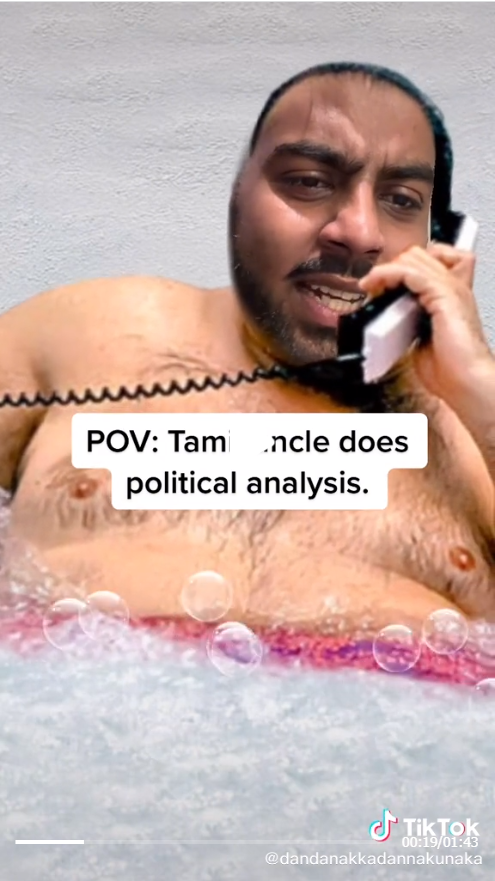
Poignant, telling and hilarious but unfortunately … its in Tamil with no subs!
The Koboi Project is a photo-performative instantiation of identity across the discontinuities of a multi-generational diasporic experience.
Poignant, telling and hilarious but unfortunately … its in Tamil with no subs!
Cinema pioneer Denis Kaufman’s family was Jewish and hailed from Bialystok in what was once Russia, but is today a part of Poland. Kaufman is known to us by his pseudonym, Dziga Vertov, which he seems to have started using as early as the year 1915. According to an entry in momoscope, “Vertov” is a neologism extrapolated from the Russian verb vertit’sia, to spin, and Dziga is the Ukrainian word for a top, This new name carried connotations of the dynamism of the age. Another aspect of this name change is that it was typical of Russophilic Jewish youth of the revolutionary period.
In the light of today’s crisis and conflict on Ukraine, it is significant that being Russophile does not preclude the pairing of Russian and Ukrainian words in the coining of a pseudonym. In fact, much of Vertov’s seminal ‘Man with a Movie.’ Camera was shot in Ukraine. Here is how this seminal work of modernist filmmaking is described in the Telescope International film database, “A man wanders around Moscow, Kharkov, Kiev, and Odessa with a camera slung over his shoulder, documenting urban life with dazzling invention. There are few films that better enable the viewer to feel and understand the power of editing than this towering achievement in cinema.”
This perspicacious conversation, which took place on 3rd March, was hosted by the Committee for the Republic, which is a non-partisan, nonprofit American organization that sponsors regular conversations on the challenges faced by the American Republic. This conversation features John Mearsheimer and Ray McGovern giving their views on the ongoing crisis in Eastern Europe. As I have previously shared Mearsheimer’s views (from 2015 and from days before the invasion) on the crisis, I will start the video at McGovern’s segment and outline his key argument here.
Ray McGovern is a long-time Russian specialist. After serving as an Army combat intelligence officer, he was a CIA analyst focused on the Sino-Soviet conflict and then chief of the Soviet Foreign Policy Branch. In encapsularing his position, McGovern offers the analogy of being bullied at the hands of bigger bigger guys as a kid, “When I get big I’m never going to let anybody do that to me …. Putin just got big, he got big last year, he got big when the Chinese decided to throw their lot in with him,” McGovern’s proposition is that the shift in the balance of power brought by an emerging Russia-China alignment helps explain Putin’s apparently irrational invasion of Ukraine, an invasion that McGovern himself had failed to anticipate.

Kazimir Malevich is known in art history as a pioneer of modernist abstraction. Malevich was born in Kyiv to an ethnic Polish family. While he began his art studies in Ukraine, he did his most important work after he moved to Moscow in 1904 and is considered to be a leading artist of the Russian avant-garde. His seminal Black Square (1915) has become an emblem of the abstract tendency that culminated in the post-painterly tendencies identified as color field painting and hard-edge abstraction. Malevich returned to Kyiv to teach at the Kyiv State Art Institute (now the National Academy of Visual Arts and Architecture) between 1927 and 1929. Along with Alexander Archipenko, Vladimir Tatlin, Sonia Delaunay, and others, Malevich is claimed by Ukrainian art history for the Ukrainian avant-garde.
https://en.wikipedia.org/wiki/Kazimir_Malevich
https://www.stedelijk.nl/en/exhibitions/kazimir-malevich-and-the-russian-avant-garde
https://prabook.com/web/kazimir.malevich/3742740
http://www.encyclopediaofukraine.com/display.as
Arseny Tarkovsky is one of the leading Russian poets to emerge from the Soviet era. His son film auteur Andrei Tarkovsky used his poetry to profound effect in his 1975 feature film Mirror (Zrekalo).
According to Joseph Nakpil, Arseny Aleksandrovich Tarkovsky was born on June 25th, 1907 in what is now Kirovohrad, in Central Ukraine. His father, Aleksandr Karlovich, was a Ukrainian nationalist of Polish origins who was sentenced to five years in East Siberia. As a young writer, Arseny had himself had been involved in Ukrainian nationalism. He was in a group of writers who published a satirical acrostic against Lenin and was sentenced to be executed, but, somehow, he escaped.
One of the poems in Zerkalo is First Dates. The subtitles in the Youtube video above are from a translation by Tatiana Kameneva.
First Dates
Each moment of our dates, not many,
We celebrated as an Epiphany.
Alone in the whole world.
More daring and lighter than a bird
Down the stairs, like a dizzy apparition,
You came to take me on your road,
Through rain-soaked lilacs,
To your own possession,
To the looking glass world.
As night descended
I was blessed with grace,
The altar gate opened up,
And in the darkness shining
And slowly reclining
Was your body naked.
On waking up I said:
God bless you!
Although I knew how daring and undue
My blessing was: You were fast asleep,
Your closed eyelids with the universal blue
The lilac on the table so strained to sweep.
Touched by the blue, your lids
Were quite serene, your hand was warm.
And rivers pulsed in crystal slits,
Mountains smoked, and oceans swarmed.
You held a sphere in your palm,
Of crystal; on your throne you were sleeping calm.
And, oh my God! –
Belonging only to me,
You woke and at once transformed
The language humans speak and think.
Speech rushed up sonorously formed,
With the word “you” so much reformed
As to evolve a new sense meaning king.
And suddenly all changed, like in a trance,
Even trivial things, so often used and tried,
When standing ‘tween us, guarding us,
Was water, solid, stratified.
It carried us I don’t know where.
Retreating before us, like some mirage,
Were cities, miraculously fair.
Under our feet the mint grass spread,
The birds were following our tread,
The fishes came to a river bend,
And to our eyes the sky was open.
Behind us our fate was groping,
Like an insane man with a razor in his hand.
– Arseny Tarkovsky
https://honors.libraries.psu.edu/files/final_submissions/3174
https://kabiraftab.wordpress.com/2018/12/13/first-dates-by-arseny-tarkovsky/
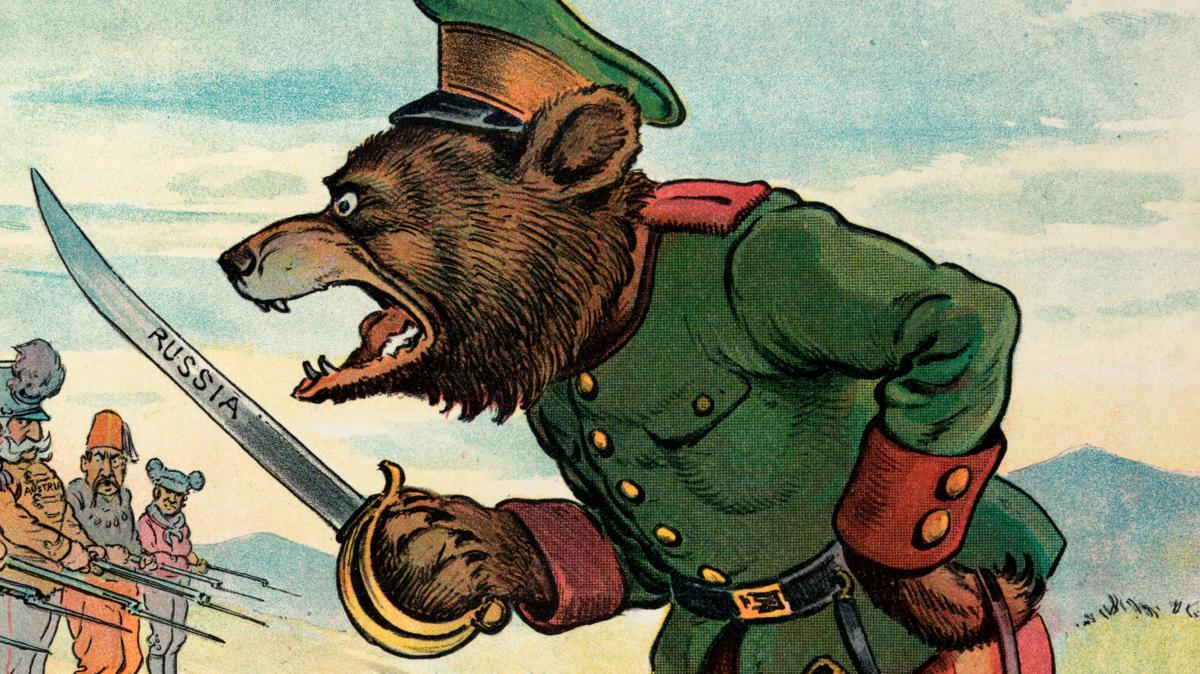
In his interview with Noam Chomsky in Truthout dated March 1st , C.J. Polychroniou asks, with reference to Article 2(4) of the UN Charter, which prohibits the threat or use of force against the territorial integrity of another state, “Can you comment on Putin’s legal justifications for the invasion of Ukraine and on the status of international law in the post-Cold War era?” Chomsky says, “There is nothing to say about Putin’s attempt to offer legal justification for his aggression. Its merit is zero.. Chomsky ranks the Russian invasion of Ukraine as “a major war crime, ranking alongside the U.S. invasion of Iraq and the Hitler-Stalin invasion of Poland in September 1939.”
In essence, there is no enforceable legality and certainly, no universal sense of right, on the geopolitical scale. There are only actions and consequences. Chomsky sums up the very narrow range of accepable geopoltical outcomes that remain, now that the threatened invasion has occurred, “The options that remain after the invasion are grim. The least bad is support for the diplomatic options that still exist, in the hope of reaching an outcome not too far from what was very likely achievable a few days ago: Austrian-style neutralization of Ukraine, some version of Minsk II federalism within. Much harder to reach now. And — necessarily — with an escape hatch for Putin or outcomes will be still more dire for Ukraine and everyone else, perhaps almost unimaginably so.’
I worry that Western leaders are unanimously displaying a lack of understanding in the matter of this ‘escape hatch’. They are either intentionally provoking Putin into a quagmire that they believe will be his demise and/or they do not understand the consequences of ‘driving the bear into a corner’ in the way that Chomsky does.
Image https://www.thetimes.co.uk/article/the-russia-anxiety-by-mark-b-smith-review-should-we-fear-the-russian-bear-rjv76qzft
https://truthout.org/articles/noam-chomsky-us-military-escalation-against-russia-would-have-no-victors/
https://www.poetryfoundation.org/poems/56966/speech-all-the-worlds-a-stage
Soviet film director Sergei Parajanov‘s masterful first feature, Shadows Of Our Forgotten Ancestors (1965), has been described as a Ukrainian masterpiece. It is an adaptation of Mikhaylo Kotsyubinsky’s 1912 novel of the same name. Kotsiubynsky was a Ukrainian modernist who developed a sophisticated form of ethnographic realism. In this film, Parajanov poetically portrays the traditional life of the Hutsul people and the natural environment of the Carpathian Mountains in Western Ukraine.
Ivan falls in love with Marichka, who is the daughter of the man who killed his father. While Ivan is away from their village, Marichka drowns trying to rescue a lost lamb. Ivan is inconsolable over the loss but eventually meets Palahna whom he marries. Ivan remains obsessed with Marichka and the marriage fails. Palahna is unfaithful with a local molfar (magician) named Yurko,. Yurko mortally wounds Ivan in a fight. Ivan goes out into the forest, sees the spirit of Marichka, dies, and finally, he is given a traditional Hutsul burial.
https://parajanov.com/shadows/
https://en.wikipedia.org/wiki/Mykhailo_Kotsiubynsky
https://en.wikipedia.org/wiki/Shadows_of_Forgotten_Ancestors
This interview with John Mearsheimer was recorded on Tuesday 15th February at Kings College, Cambridge University, online forum, just before Russia invaded Ukraine on the 24th of February. Mearsheimer is a renowned American political scientist and international relations scholar, of the realist school of thought. He presents a view that contradicts what we have been presented with by the mainstream, with regard to the underlying causes of the crisis (presented by Mearsheimer in a lecture from 2015), and goes on to define just what has he believes has precipitated the crisis that has so tragically and rapidly unfolded.
His central argument is that since the advent of the Trump administration, the USA and its allies have accelerated the arming and training of the Ukraine military, with a view to turning Ukraine into a de facto NATO. state. He stresses that, from his realist perspective, this must be unequivocally unacceptable to Russia. Further, he points to recent provocations to Russia carried out by way of territorial incursions made by the British and the Americans. Mearsheimer concludes this talk by saying that the crisis would go on for a long time. It seems that even though he is clear that the Russians had reached their ‘boiling point’, does not anticipate an imminent Russian invasion. In the course of answering the last question, which was about the deterrent effect of nuclear weapons in this crisis, he even says, “I don’t think they are going to invade.”
In an interview recorded on 10 Jan 2022, Chomsky unpacks the crisis that has sinse led to the Russian invasion of Ukraine. He echoes John Mearsheimer’s vie wanout the necessary neutrality of Ukraine with regard to NATO-Russian relations. He decribes the decision by the USA in 2008, taken against the wishes of France and Germany, to invite Ukraine to enter NATO as being utterely unacceptable to any Russian leader (ie this is not a question of Putin’s megalomania). Like Mearsheimer, Chomsky implicates the expansion of NATO contrary to gurantees given to the Soviet Union at the time of the unification of Germany as an significant cause of the present crisis.
He also suggests that the implementation of the Minsk 2 agreement (2015) which would establish the neutrality of Ukraine, as a possible way forward. However, as Duncan Allan notes, “Minsk-2 supports mutually exclusive views of sovereignty: either Ukraine is sovereign (Ukraine’s interpretation), or it is not (Russia’s interpretation)” he calls this “the Minsk conundrum”.

Alexander Dovzhenko’s last silent film Earth (Zelmya) 1930 (third part of his Ukraine Trilogy which includes Zvenyhora, 1928, and Arsenal, 1929) is a tragic and violent narrative of the Soviet collectivization is set within a lyrical Ukrainian landscape. The film features images of the cultivated Mammoth Sunflower which produces a single golden flower that grows up to 10″ across and is filled with edible seeds.
I bring up this imagery from nearly a century ago in response to the video making the rounds on social media and raising to the mainstream, that of a Ukranian woman confronting a Russian soldier in the early days of the invasion, symbolically offering him sunflower seeds so that flowers would grow where he died on Ukrainian soil, ‘Take these seeds and put them in your pockets” she seems to say, “so at least sunflowers will grow when you all lie down here.’
This powerful image raises, for me the difference I have with Andrei Tarkovsky’s premise that image can be separated from its symbols – Ukraine > Sunflower> Seeds > Death > Life > Ukraine.
https://www.thedigitalfix.com/film/dvd_review/the-dovzhenko-war-trilogy-zvenigora-arsenal-earth/
 The Koboi Project
You must be logged in to post a comment.