‘Traces, Legacies, and Futures’ was a conversation on electronic art between Hasnul Jamal Saidon and myself, presented under the auspices o the Muzium dan Galeri Tuanku Fauziah, mediated by Ropesh Sitharan. It took place at 9pm (MYT) on 30 September 2020.
Apa sebenarnya kemampuan sesuatu kejadian seni itu, dan apakah kewajipan seniman yang menguruskannya? What are the affordances of an art event, and what are the obligations of the artist in managing these?
In the late 1990’s Hasnul and continued the work of the late Ismail Zain in laying the theoretical and the practical ground for new media in Malaysian art. We did this as we worked together at the Faculty of Applied and Creative Arts, Universiti Malaysia Sarawak over a period of about 5 or 6 years. While we have exhibited together in Relocations 2008 in Singapore, curated by Roopesh Sitharan, and shared the occasional speaking platform, we have not worked together since. We have, in fact, barely kept in touch kept in touch in the conventional sense but somehow, we are completely connected in the core of our beliefs in terms of the purpose of art, the meaning of art and of the role of the artist in society.
‘Traces, Legacies, and Futures’ is a live-streamed conversation on electronic art between Hasnul Jamal Saidon and Niranjan Rajah, mediated by Ropesh Sitharan. The event is hoisted online by Muzium & Galeri Tuanku Fauziah, Unverslti Sains Malaysia.
Synopsis: The practice of art is contextual in that it is responsive to, or critical of, the time in which it is performed. Especially a work of art that invites us to foresee the possibilities to come, akin to a message that tries to teach (some say warn) future generations. In this sense, an artist is not someone who mimics the ordinary for a palatable outreach, but who is ready and willing to use their talents to challenge norms and shift perceptions. This casual conversation with Hasnul and Niranjan probes such significant efforts of ‘shifting’ in their art practice – what we have come to refer to as ‘new media art’ today. It will address the diversity and the various trajectories in their practice that have substantially contributed to the ongoing conversations about art, culture and technology in our lives today. Indeed, it is hoped this conversation on past ideas, expressions and arguments by them will help preserve their legacy and launch critical inquiry into the future of electronic art in Malaysia as these ideas find their way to the relevant institutions.
‘Traces, Legacies, and Futures’ is a live-streamed conversation on electronic art between Hasnul Jamal Saidon and Niranjan Rajah, mediated by Ropesh Sitharan.
Apa ‘kuasa’ yg mampu mencairkan ego sambil menyatukan ‘hati’ semua manusia? What power can melt the ego while uniting the heart of all human beings? (Hasnul J Saidon)
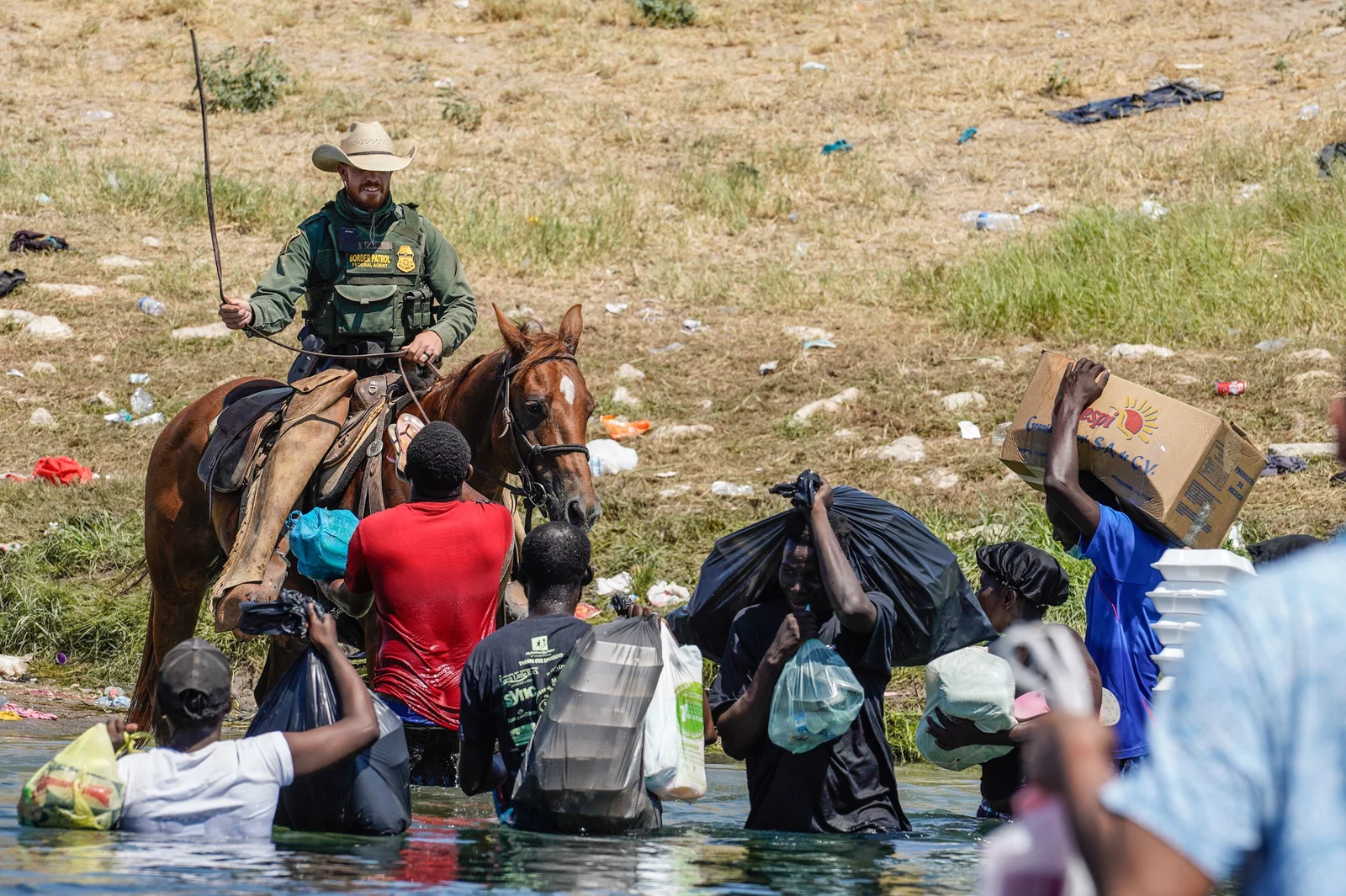
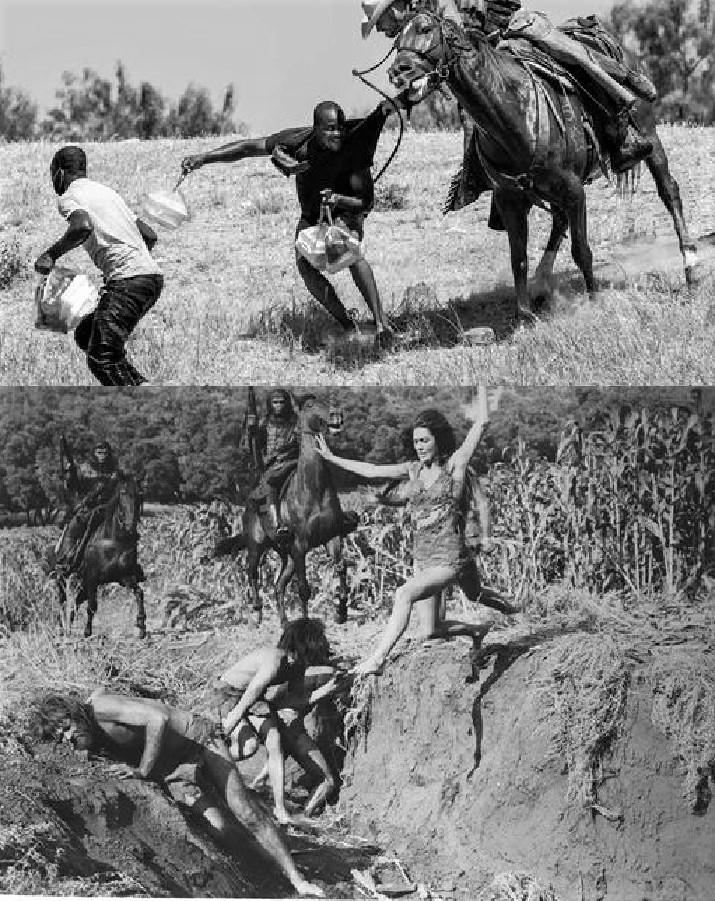
In my pervious post titled Deja Vu: Planet of the Apes I discussed the imprint made on my mind by the violent chase scenes in the said film. This impression was revived by the recent border patrol images coming out of Del Rio, Texas. I noted in that post how this is one of two images brought forth in me, the other being that of the “historical injustices suffered by black people in the US..” Upon further reflection, however, I have come to realize that these two images are infact one and the same. Urko and his fellow gorillas are literally black, while the regressed, abject, Yahooesque humans are Caucasian. This seems to be an artistic inversion of the historical image of the American slave patrol and I suggest that it is in this very reversal that the power of these chase scenes lies.
I wonder if the authors of this filmic scenario were conscious (I would like to think they were) of the Slave Patrol predecessor of their image, and further, if they intended a progressive parody or if it was merely a reactionary pastiche. However, regardless of this authorial intent, I am convinced that this recurring image is etched into the American psyche and is sublimated in all that is now referred to as ‘structural’ in that nations institutions.
Writing on Juneteenth 2020, Phillis Coley cites historian Gary Potter’s three functions of the Southern slave patrol – (1) to chase down, apprehend, and return to their owners, runaway slaves; (2) to provide a form of organized terror to deter slave revolts; and, (3) to maintain a form of discipline for slave-workers who were subject to summary justice, outside the law.
She goes on to note that the use of these patrols to capture runaway slaves was a precursor to the formal police force in America and its ethos has persisted as an element of policing role even after the passage of the Civil Rights Act of 1964.
The images coming out of Del Rio, Texas of US border guards on horseback charging at a group Haitian migrants, using horse reins to threaten and, seemingly, to strike them brought two thoughts to my mind. The first was that the image of white men in western hats using horses to threaten and herd dark skinned Haitians carried “echoes of the historical injustices suffered by black people in the US.” The second was something I could not quite pin down. It seemed like something I had already seen, a Déjà vu image from my own childhood experience. And then it came to me in a flash – The Planet of the Apes! I was struck by the cruelty of the chase scenes in that movie when I first saw them on our black and white TV as a child in Malaysia. I am equally struck by the cruelty signified in the recent images from the USA. I hear the horns of the film’s soundtrack blaring again!
Synopsis: The practice of art is contextual in that it is responsive to, or critical of, the time in which it is performed. Especially a work of art that invites us to foresee the possibilities to come, akin to a message that tries to teach (some say warn) future generations. In this sense, an artist is not someone who mimics the ordinary for a palatable outreach, but who is ready and willing to use their talents to challenge norms and shift perceptions. This casual conversation with Hasnul and Niranjan probes such significant efforts of ‘shifting’ in their art practice – what we have come to refer to as ‘new media art’ today. It will address the diversity and the various trajectories in their practice that have substantially contributed to the ongoing conversations about art, culture and technology in our lives today. Indeed, it is hoped this conversation on past ideas, expressions and arguments by them will help preserve their legacy and launch critical inquiry into the future of electronic art in Malaysia as these ideas find their way to the relevant institutions.
One of the highlights of my days as an early Internet artist in Malaysia is being invited as a guest at Michael Heim’s (author of The Metaphysics of Virtual Reality) virtual world Cyberforum as a guest in 2000. Other speaker that year were leaders in the field – Cliff Joslyn, David Weinberger, Howard Bloom, Francis … Continue readingEarly Internet Art in Malaysia 12
Between 1997 and 1998 Dr. Raman Srinivasan of Chennai and I collaborated to build, theorize and install a virtual temple on the Internet. The Temple was built in VRML in Chennai and located on a server in Sarawak. It was presented to the international interactive arts community in a paper titled Sacred Art in a … Continue readingEarly Internet Art in Malaysia 11
In 1999 Hasnul Jamal Saidon and I founded the pioneering Eart ASEAN Online portal which, as the text on the homepage used to say, was an “interactive resource for electronic art in Southeast Asia. This site consists of a comprehensive Database of new media art including profiles of artists and samples of artworks, a Journal dealing with the historical … Continue readingEarly Internet Art in Malaysia 10
In 1999, I curated the first exhibition of online artworks in Malaysia for the ‘4th International Ipoh Arts Festival.’ The artists in the show were all students and faculty from the Faculti Seni Gunaan dan Kreatif (FSGK), Universiti Malaysia Sarawak (UNIMAS). Indeed, between 1995 and 2000 Hasnul Jamal Saidon and I had worked to established … Continue readingEarly Internet Art in Malaysia 9
I had begun my practice as an artist in the late 1980’s with a series of paintings and had moved onto a more self-consciously critical performance/ installation practice when, in 1995, I found the World Wide Web, with its capacities for instantaneous connectivity, hypertextual linking and multimedia convergence. I then transferred my practice to this … Continue readingEarly Internet Art in Malaysia 8
One of the themes of my work in the 1990’s was a reclamation of the international contemporary art discourse from a national perspective. If postmodernism had displaced the hegemony of international of modernism with a disruptive array of regional, national and marginal discourses. While my own work was clearly located within the ambit of this … Continue readingEarly Internet Art in Malaysia 7
In 1998, I made my 2nd web art work titled La Folie de la Peinture (The Madness of Painting), fragments of which are archived on the Wayback Machine site. This was a comprehensive, if condensed, articulation of my critique of the movement from modernist abstraction, via conceptualism, to the photographic ontology of postmodern installation and … Continue readingEarly Internet Art in Malaysia 6
When the INET (annual Internet Society conference) came to Malaysia in 1997, I presented a paper titled “Art After the Internet: The Impact of the World Wide Web on Global Culture.” In this paper I analyzed how the Internet. was being shaped by various national and transnational forces and how esoteric postmodern theories were turning … Continue readingEarly Internet Art in Malaysia 5
In the introduction to his profound work on the cinematic image, Signatures of the Visible, Fredric Jameson writes, “The visual is essentially pornographic, which is to say that it has its end in rapt, mindless fascination.” Explicit pornography is thus the acknowledgement of the true nature of the filmic image, a “potentiation” of its call … Continue readingEarly Internet Art in Malaysia 4
In 1993 I made my first trip to New York. My wife Jane and I were living in London and had bought a Hoover vacuum cleaner. As part of the infamously disastrous (for Hoover) promotion of the time we got two free tickets to New York. I had, as an artist from Malaysia practicing in …
In 1996 I made a web work titled The Failure of Marcel Duchamp/Japanese Fetish Even! which is the first Internet art work in Malaysia and, as far as I know, also in Southeast Asia. This work was both an admiring tribute and a harsh parody of Marcel Duchamp’s Étant donnés (Given: 1. The Waterfall, 2. The … Continue reading
In Alexander Dovzhenko’s last silent film, his masterwork titled Earth(Zelmya) 1930, a tragic and violent narrative of the Soviet collectivization is set within a lyrical rural mise-en-scène and realized in profoundly poetic cinematography. In one of its many shots extolling the Ukrainian landscape, is featured the Mammoth (Russian) Sunflower. Apparently this glorious, or perhaps even monstrous, anomaly was cultivated in Russia and was brought into North America in 1880. It produces a single golden flower that grows up to 10″ across and is filled with edible seeds.
The Mammoth Sunflower is no innocent incident of nature. Being ‘man-made,’ it occupies the space between nature and culture. Despite its beauty, however, it is no mere vanity, it is a food crop. I suggest that, in Dovzhenko’s Earth, it is the perfect or complete symbol. It represents, the ethos of the narrative, at the same time, standing for nature per se as well as for its cultivation, its industrialization and even its collectivization, in the course of human civilization.
Incidentally, Dovzhenko is the only early Soviet era director whom the great Andrei Tarkovsky cites as a predecessor, “If one absolutely needs to compare me to someone (in Soviet cinema), it should be Dovzhenko. He was the first director for whom the problem of atmosphere was particularly important.” It must be said, in the context of this notion of ‘atmosphere’, that Tarkovsky himself eschewed the ‘symbol’ in cinema, and spoke instead of a more open and less intentional cinematic ‘image’ which he defined in terms of the notion of the metaphor, “A symbol contains within itself a definite meaning, certain intellectual formula, while metaphor is an image. An image possessing the same distinguishing features as the world it represents. An image — as opposed to a symbol — is indefinite in meaning. One cannot speak of the infinite world by applying tools that are definite and finite.’ (Interview Le noir coloris de la nostalgie with Hervé Guibert in “Le Monde”, 12 May 1983 )
In my own view, symbols are as malleable and as variable as the mind and worldview of a given viewer or community of viewers. As such Tarkovsky’s dichotomy, essential though it is to our understanding of art, is not an inevitable duality. An image must, in my understanding, contain many symbols that come forth as the viewer, or artist, determines, or designs. If, like Tarkovsky, the viewer finds that the ‘image’ satisfies in its latency, then it will be left unread and no symbol will arise. However, perhaps as a result of having more of an intellectual than a poetic inclination, I see symbols in all images. I see them even as I relish the ‘atmosphere’ of Tarkovsky’s own indefinite images! I suggest that, in art, the question – ‘image or symbol,’ is less about the essential quality or nature of the work and more about the perspective of the viewer or the approach of the artist.
This Sunflower was grown by Jane Frankish on our allotment in the plot shared by members of the Jonathan Rogers gardening collective in Mount Pleasant Vancouver, Summer 2021.
The revivification of religion in contemporary society leaves me with a sense of foreboding with regard to the future of humanity. There has been a resurgence of religious values in the politics of the 21st Century as theocratic and quasi-theocratic modes have made an impression, even in what were once staunchly secular democracies. The Christian right has brought socially conservative positions to the forefront of the politics of the USA. The Hindu right has turned India’s avowedly secular democracy into a nation-state steeped in Hindutva (Hinduness). Before these developments, there were the theocentric formulations of Islamic fundamentalism and Zionism. Tragically, all of these ‘post-traditional’ hybridizations of religious truths with modern politics have resulted in the division and alienation of peoples.
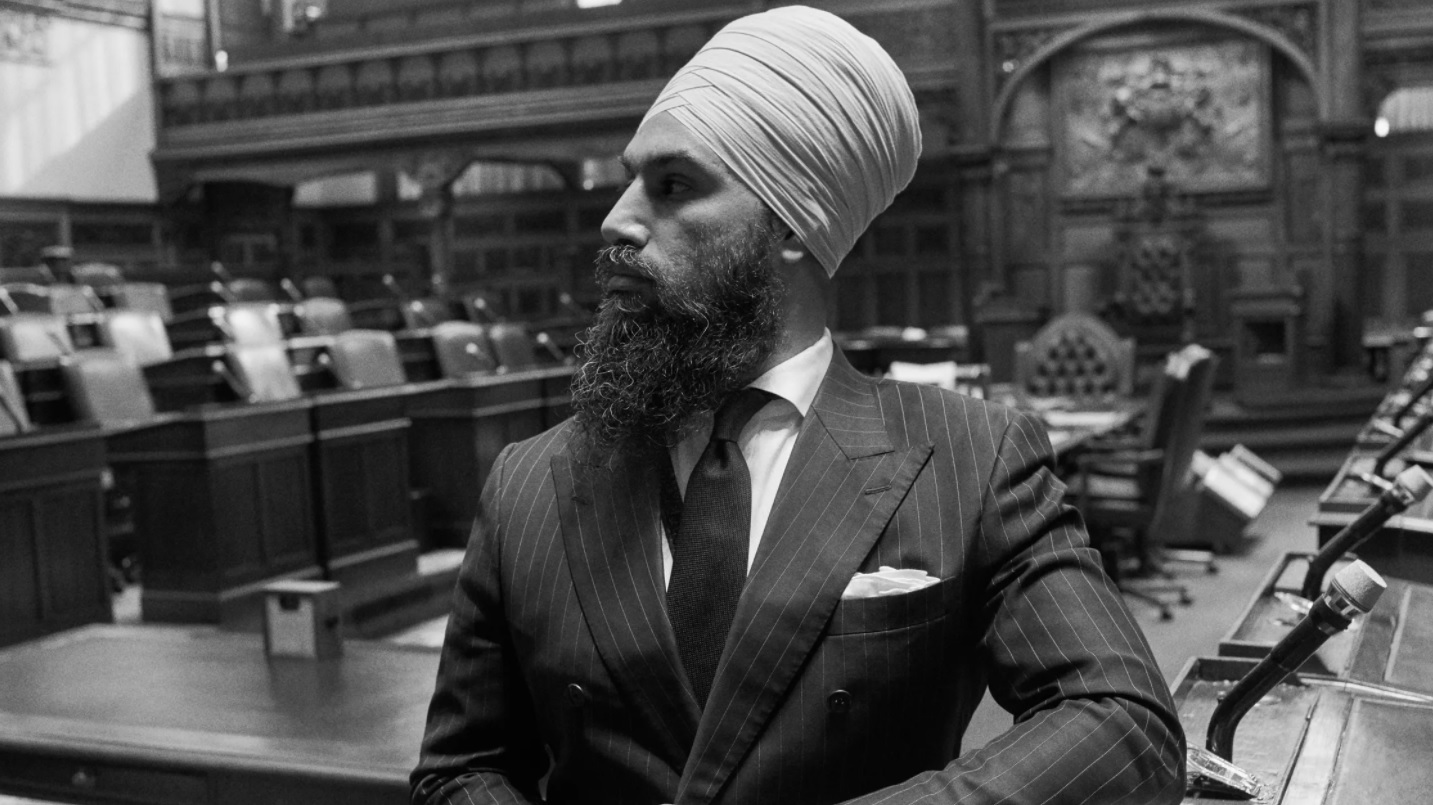
There are, however, examples of a more integrative incorporation of religious values at the forefront of human affairs. Canadian politician and leader of the NDP (New Democratic Party), Jagmeet Singh, is an exemplar of this more inclusive post-traditionalism. In a 2017 interview with GQ magazine, he articulates his religious approach to contemporary secular society, “My Sikh spirituality … influences my political style. We strongly believe in social justice as an element of our founding philosophy—that there is one energy and that we are all connected, kind of like the force. So if I see someone else suffering, as a Sikh I see that as me suffering. There’s this morality that flows from this idea that we are one and connected, and we celebrate diversity and people of different backgrounds, cultures, and religions..” He underscores his point by citing a Sikh mantra that wishes for the “betterment of all humankind.”
Directed by M. A. Thirumugam and starring M. G. Ramachandran and Savitri, the Tamil film Vettaikaaran (The Hunter) was released in 1964. The song Unnai Arinthaal is from this hit movie’s soundtrack. The music is by K. V. Mahadevan, lyrics by Kannadasan and the unsurpassable singer is T. M. Soundararajan.
உன்னை அறிந்தால் நீ உன்னை அறிந்தால் உலகத்தில் போராடலாம்
Know thyself If you know yourself You can take the whole world on
“If you want to know what you are you cannot imagine or have belief in something which you are not. If I am greedy, envious, violent, merely having an ideal of non-violence, of non-greed, is of little value. But to know that one is greedy or violent, to know and understand it, requires an extraordinary perception, does it not? It demands honesty, clarity of thought, whereas to pursue an ideal away from what ‘is‘ is an escape; it prevents you from discovering and acting directly upon what you are.”






 The Koboi Project
You must be logged in to post a comment.