The Russians

Speculation has been circulating for some time in Malaysian blogger-sphere that  PERTONAS will have to liquidate significant assets in 2016 to meet its obligations to the beleaguered  Malaysian government and now there is news on TASS that Russian Oil Corporation Zarubezhneft may acquire some assets from  Petronas and that parties are holding consultations about it. It is unclear which assets and how significant they are but the fact that this is reported in Russian media before official  Malaysian channels may be significant.

A Malaysian in BC: Part 8

PFLNG1 scale combo

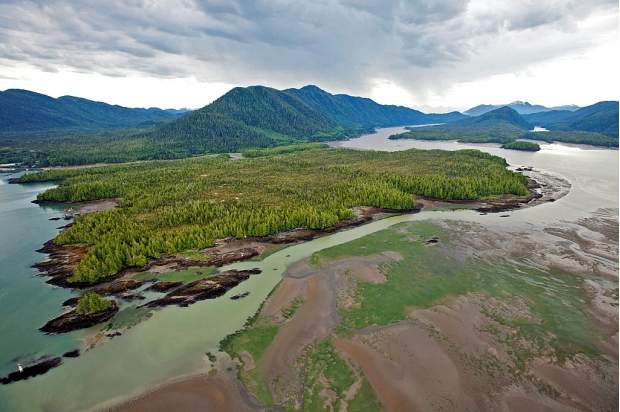
Now if you would indulge me in a flight of fancy. Just imagine… the multi-racial, multi-religious crew of a Petroship Enterprise, in their PETRONAS green suits, on a mission to extract resources from the far reaches of the planet …Oops! Sorry… time to wake up from this Malaysian reverie! As a concerned Malaysian friend of mine asked when we were discussing the BC LNG situation, “What of the pain of the natives as their natural heritage is defiled by gas hunters in pinstripes and ties?” This is the heart of the matter, Most of BC is unceded territory. All claims and constructs of provincial governance in these areas are moot at best, and at worst they are cynical extensions of the old colonial franchise. Immigrants,even the new ones like my family are all complicit in this expropriation by attrition in the jurisdictional and procedural lacuna of the law! Complex legal and jurisprudential questions aside, the simple ethical  question is –  what become s of the will of the inhabitants of the area for the proposed LNG facility – a people whose culture, economy and spirituality have all been based on vital Salmon runs and who now seem to believe that the ancient spawning habitats of the all sustaining fish is now being threatened? My friend continued, “all will be lost to the voracious needs of global millions… will their land become a mere spigot… a cash cow! Large corporations are, by their nature, only interested in profit potentials.” Indeed, once again that shrill refrain  … Cash is King!

A Malaysian in BC: Part 7

11795150

As insinuated at the end of my last post, there is a potential for positive impacts from LNG development, not just for British Columbians as a whole but also for First Nations in Particular. At the end of April 2016, the Provincial Government had signed a total of 62 pipeline benefits with 29 First Nations located along various LNG projects. These partnerships promise access to skills training and environmental stewardship projects around the  LNG developments. The Coastal GasLink Pipeline Project has secured benefits agreements with 17 of the 20 First Nations along its route. The Prince Rupert Gas Transmission Project has 16 of the 19 First Nations concerned on-side. The Westcoast Connector Gas Transmission Project has benefits agreements with 14 of 19 First Nations The nation along the Pacific Trail Pipeline have formed the First Nations Limited Partnership (FNLP) and signed a $32 million initial direct with a further $10 million in annual payments to the partnership during the operational life of the project. The 16 constituents of the FNLP are the Haisla, Kitselas, Lax Kw’alaams, Lheidli T’enneh, McLeod Lake, Metlakatla, Nadleh Whut’en, Nak’azdli, Nee Tahi Buhn Saik’uz, Skin Tyee, Stellat’en, Ts’il Kaz Koh (Burns Lake), West Moberly, Wet’suwet’en, Moricetown bands and nations. Note that this list includes the Lax Kw’alaams who lead the challenge to Petronas investment on Lelu Island. This is a conundrum that outsiders will finds very difficult to unravel and understand. In fact even in the stand against Petronas there have been different responses from different aspects of the Lax Kw’alaams leadership. In a letter to a federal government review  the elected leadership of the Lax Kw’alaams First Nation has offered conditional support for the Pacific NorthWest LNG terminal.


A Malaysian in BC: Part 6

REDYELLOW

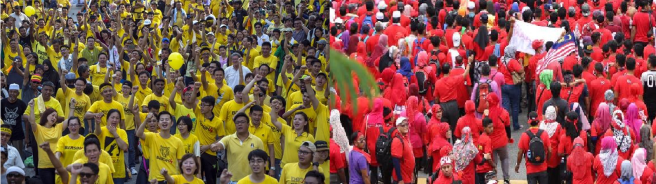
Going back some 40 years or so, when my school St. John Secondary School participated in the Independence or Merdeka parade, I was one of the many kids in the Jalur Gemilang calisthenics presentation. I was among those who made up the crescent – all dressed in yellow. The thing is, I could just as well have been one of the other colours of our flag – , blue, white or even red! There has been so much going on in Malaysia lately and one troubling development is the racializing of two of the colours of our flag – Yellow and Red . The dearth of Malay participants in the Bersih 4 rally in August 2015 due to the withdrawal of PAS gave rise to a visible difference in ethnic composition. The Bersih yellow became susceptible to the insinuation that it was a signifier for the Chinese and their interest. Yellow is, of course, the colour of a movement for integrity, clean elections, transparency and so on. Some say however that it stands for the opposition, for non-Malays and even specifically for the ethnic Chinese. What about the Red then? Red was the colour chosen to by the Himpunan Rakyat Bersatu rally organized to protest the yellows and their apparent challenge to Malay hegemony. Red, diversely, stands for the Malays, the interests of Prime Minister Najib Razak, for chauvinists or alternatively, simple grassroots folks. In my view all the above are correct. Malaysia is an embodiment of all these differences. Just as the jalur gemilamg harmonizes the three jarring primary colours, I believe our nation can move through the present conflicts, towards a more harmonious  future. As Malaysians, we know from our post-independence experience, that the balm that best soothes and heals our ethnic strife is a thriving economy.  Yes! For better or worse, and with implications for the well being of the peoples of my new home in BC, I too wonder if, in the communion between societal and economic imperatives,  that indeed … Cash is King!

Death Sentence

36c4a46e0e5582f8d62af614b95b521191bd77b1

In Malaysia, anyone found carrying 200g or more of proscribed narcotics is automatically presumed guilty of trafficking drugs and subject to a mandatory death sentence. The law does not allow judges any possibility of taking into account the defendant’s personal circumstances or the circumstances of the particular offence. It is under these laws that Shahrul Izani, then aged 19, was found one night in 2003, to have had in his possession 622g of cannabis. He was convicted and given the death penalty in 2009. Sharul has today exhausted all his appeals, and could be executed at any time.  Malaysia’s  laws relating to sentencing in drug trafficking cases are arguably contrary to international law and in July of 2012 the Malaysian government announced plans to review them. In this context, Amnesty International has started a campaign to have Shahrul’s sentence commuted. While the merits of a death penalty for drug trafficking are debatable, the justification for mandatory sentencing can only be made by considering the particular circumstances of our country and its situation within global drug conduits. In this light it seems unjust and even paradoxical to deny our judges the opportunity to consider the particulars of the accused in passing sentence. Regardless of  ones position on the penalty and its mandatory implementation, what is undeniable in my view, is that it is unusually cruel to leave this young man, on death row, facing the reality of a sudden execution, while the laws themselves are deemed worthy of review. God forbid that he is executed, in administrative indifference or haste, on the eve of a repeal of these draconian laws. Please sign the petition here if you believe it is right that his sentence is commuted

Art, Money, Drugs, Death

Jean-Michel-Basquiat-Dustheads-25-35m.png

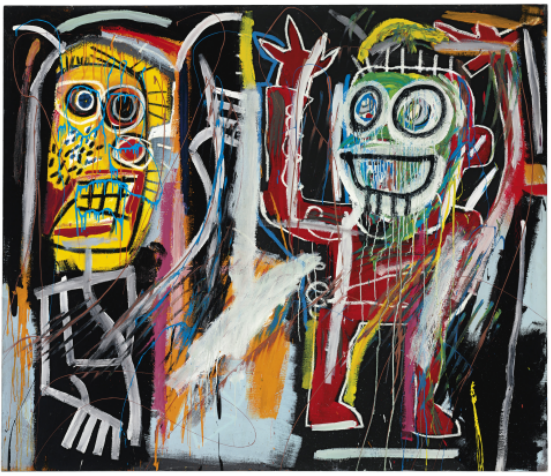
Its incredible how art is at the heart of most things. I must say, after Duchamp, everywhere one looks,  there is art! More precisely, there is no art, outside of our nomination or designation. The irony of this situation is that, far from the emancipation of art from critique, judgment and market that should have flowed from the Duchampian epiphany,  the  production and consumption of art and its circulation as investment have grown exponentially. Now, it seems that in the last year or so, the allegedly 1MDB embroiled Malaysian financier Jho Low has been off-loading his art collection – a Richter ( record 30.4 million pounds). A Rothko ( $46.5 million) a Fontana (record 15.9 million), a Picasso (at a loss for 18.9 million pounds), a Basquiat (at loss for 6.2 million pounds) and a  Monet (below estimate for 11.6 million pounds). Some of these sales by this beleaguered financier are said to be taking place in the context of the fulfillment of a Sotheby’s Financial Services agreement in which art works are pledged as collateral for major loans. The latest installment is the sale at a loss, for $33 million, of Basquiat’s tragic dustheads acquired in 2013 for $48.8 million. Among the ironies of this painting is its particular investment logic. While it is a representation of two Angel Dust users or`dustheads`, Basquiat himself died tragically of a heroin overdose at the young age of 27. A further irony is that Jho Low seems to be from the inner circle of money and power in Malaysia – a country that imposes a mandatory death sentence for drug trafficking. Ironies aside, according to  the Art Market Monitor the initial purchase by Jho Low has made a lasting impact on the Basquiat market. Indeed, it seems that art has become the ultimate commodity fetish, an investment fetish even! This is the Failure of Marcel Duchamp, and also the failure of much more besides!

The Mahathir Stand-off


The inimitable political blogger RPK has just given us his take on the great game that is being played out in Malaysia`s dominant political party, UMNO. He has called ita three corner fight between Najib, Mahathir and Razali. While `fight` is not a good metaphor for the inscrutable  exchanges of Malay politics,  I can not help deepening this analogy by invoking  my `stand-off` allegory … and extending it to other aspects of the the Malaysian scenario. “You see, in this world there’s two kinds of people, my friend.” Blondie says to Tuco, explaining that he had unloaded Tuco`s gun the night before, …”Those with loaded guns and those who dig … You dig!” This whittling down of the three-way is just like Mahathir`s gambit for the upcoming Kuala Kangsar bi-elections. He wants his allies in the Pakatan Harapan opposition to stand down, allowing a two-way between his nemesis, UMNO and the Islamic PAS. Many are incredulous as PAS`s stand is anathema to Mahathir`s own and the likleyhood of its collusion with UMNO before the shoot-out and alliance with UMNO in the aftermath are by no means low. It seems that  it is high stakes, as usual, in this Mahathir Stand-off and there is no such thing as a three-cornered fight! One of the guns must be neutralized before the big gundown.

A Malaysian in BC: Part 5

310460-3x2-940x627 (1)

Image: Reuters 

As a sign of how significant LNG and PETRONAS are in the provincial milieu, for a long period in 2015, the Liberal Party of BC website opened with the above image and the banner headline, ‘Promise Kept. Creating Jobs and Opportunity: LNG in BC’. The ‘promise kept’ refers primarily to the tentative deal signed with a proxy of the PETRONAS group of companies. While downplaying the environmental and social consequences that are the possible corollary of this enormous cash injection, the Liberals are touting their anticipated closing of the PETRONAS deal as a promise kept to British Columbians. This is a deal in which, opponents argue, BC’s LNG knuckles have been squeezed to the bone. The deal brings the lowest of tax revenues to the province on terms that bind BC governments, contractually, 25 years into the future. Indeed as Marc Lee has noted the B.C. government is locking in the tax and regulatory regime in such a manner that any changes made by subsequent governments  to the LNG tax, a special tax credit on corporate income tax, the B.C. carbon tax, and anything else that would affect project costs would lead to the payment of compensation to PETRONAS. The current market conditions foe LNG are such that this may in fact be a fair deal. At projected LNG prices, this deal may not be profitable enough for PETRONAS to want to pursue it. The point about the deal, for British Columbians, is that other than political leverage for the BC liberals, there may little benefit from it.

Canadian Child Poverty

Speaking of tin pot countries, on  14 December 1960, 20 countries signed the Convention on the Organisation for Economic Co-operation and Development (OECD). Today this forum consists of 34 democracies  with market economies which cooperate to promote economic growth, prosperity, and sustainable development. In other words, these countries work together to rise above tin pot status, so to speak. According to a recent report released today by the Canadian Centre for Policy Alternatives, the OECD average child poverty rate is about 13% which is the Canadian poverty rate for children who are non-Indigenous, non-visible minority and non-immigrant. A respectable number – certainly not a tin pot figure by any means. However, the report states that children of immigrants have a child poverty rate of 32%. Visible minority children have a poverty rate of 22%, non-status First Nations 30%, Inuit 25% and Métis 23%. To our shame as Canadians, these troubling figures rise to a shocking  60% for first nation children who live on reserve (51% of all First Nations children).

A Malaysian in BC: Part 4

pc1129247-triple_wall_stainless_steel_pressure_vessel_tank_natural_gas_storage_tank.jpg

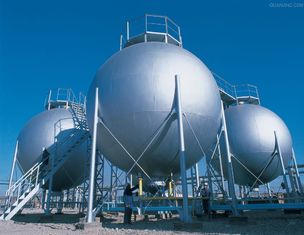
Since those tumultuous General Elections in 2013, when the political process of Malaysia seemed to be reaching a multi-party climax, our politics has been collapsing into an all-party heap. The rate of degeneration of our national polity, both government and opposition, has been unprecedented. Just today, former law minister and government critic Zaid Ibrahim said of a proposed opposition strategy, “Some Opposition leaders have lost their bearings because their struggle is no longer based on what they wish to offer to the people in terms of policies and political messages. They have become consumed by their desire to win another seat, at all costs.” Further, the 1MDB crisis has cast shadows in every direction and in the eyes of the world, we are looking more and more like one of those tin-pot nations Malaysians had come to regard as lesser in the heady days of the Mahathir era. On the world’s corporate stage, however, particularly from a Western Canadian perspective, Malaysia, in its corporate extension at least, appears much more substantial than a little tin pot… more like a sturdy steel barrel! Or perhaps, turning the metaphor towards an LNG reference, a tripple wall stainless steel pressure vessel storage tank, even!