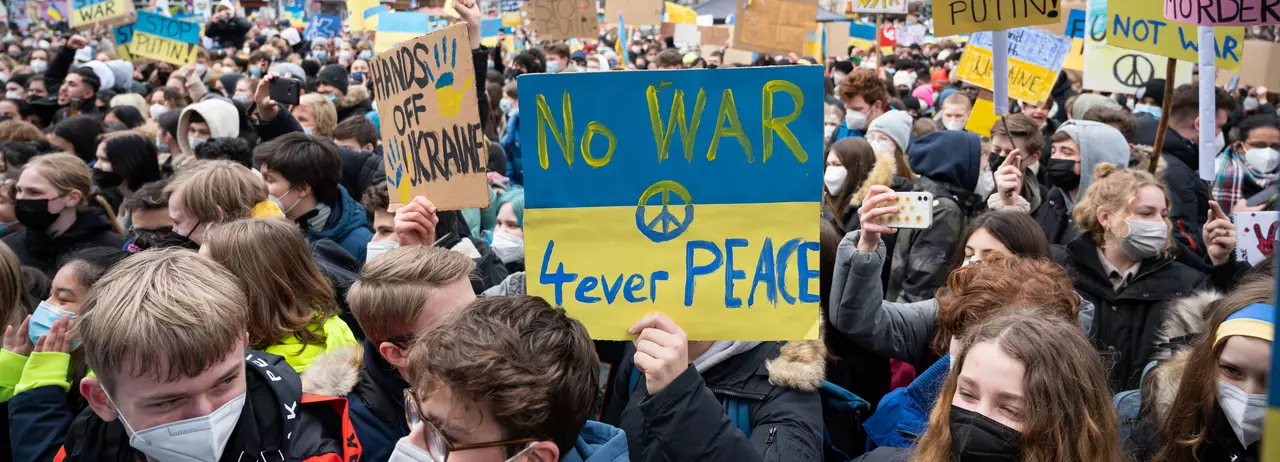
Ukraine: A Path for Peace

Now that the Russian invasion has come to pass and fighting has deepened, the possibility for peace in Ukraine can not be premised on ideals but must be based on compromise. Anatol Lieven, Professor at Georgetown University School of Foreign Service, Qatar; visiting professor in the War Studies Department of King’s College London; and a senior fellow of the New America Foundation in Washington DC, suggests that such a compromise is necessary to save Ukraine from destruction and loss of life, as well as to preserve Ukrainian sovereignty. A prolongation of the war will likely mean that large areas will be permanently lost to Russia, particularly the land linking Crimea to Russia.

Lieven suggests the terms of a possible peace –

  1. Russian forces should withdraw from all the areas occupied since the invasion began.
  2. Ukraine should sign a treaty of neutrality
  3. Russia should guarantee the sovereignty and territorial integrity of Ukraine.
  4. Ukraine should be precluded from NATO membership.
  5. Ukraine must recognize the administrative integrity of the Donbas separatist republics.
  6. Ukraine must recognize Crimea as a part of Russia.
  7. The West should lift all the sanctions imposed on Russia.
  8. Ukraine should be allowed to emerge as a Western-style democracy.
  9. Ukraine should receive a very large Western aid package for reconstruction.

Now according to Calum Roche, Russia has expressed a willingness to end the war on the following terms –

  1. No NATO membership and a neutral position.
  2. Russian should be the second official language of Ukraine, with laws prohibiting it abolished.
  3. Recognise Crimea as Russian territory.
  4. Recognise the independence of Donetsk and Lugansk.
  5. Demilitarisation of Ukraine and abandonment of weapons that could be a threat to the Kremlin.
  6. Banning of ultra-nationalist parties and organisations in Ukraine.

While it has been underplayed by the mainstream media in the West, this Russian peace proposal is close to Lieven’s suggestion as outlined above. Russia’s terms seem to constitute a reasonable (in realpolitik terms, not in terms of what is fair or just) set of demands given Russia’s overwhelming might and the West’s proven unwillingness to engage Russia directly. Can Ukraine keep fighting the Russians alone? What can Ukraine gain by pursuing this asymmetrical fight? In their valiant resistance thus far, Ukrainians have amassed much capital with which to negotiate. The Russians may have bitten off more than they can handle and be ready to compromise. On the other hand, a long and continued resistance will likely mean that larger areas will fall to Russia, not to mention devastation and loss of life.

Peace is an urgent necessity for Ukraine and Ukrainians! It seems, however, that Russia’s condition 5. might mitigate against NATO and the USA’s ascendency, and condition 6. might threaten the powerful ultra-nationalist forces that are aligned with Ukrainian state. Will these realities diminish the Ukrainian leadership’s capacity to make the compromises needed to arrive at a speedy cessation of fighting?

Image: https://www.commondreams.org/views/2022/03/04/what-path-negotiated-peace-ukraine
https://www.msn.com/en-us/news/world/putin-s-six-demands-to-end-russia-s-invasion-of-ukraine/ar-AAV5oMx?ocid=

Ukraine: Kissinger’s View

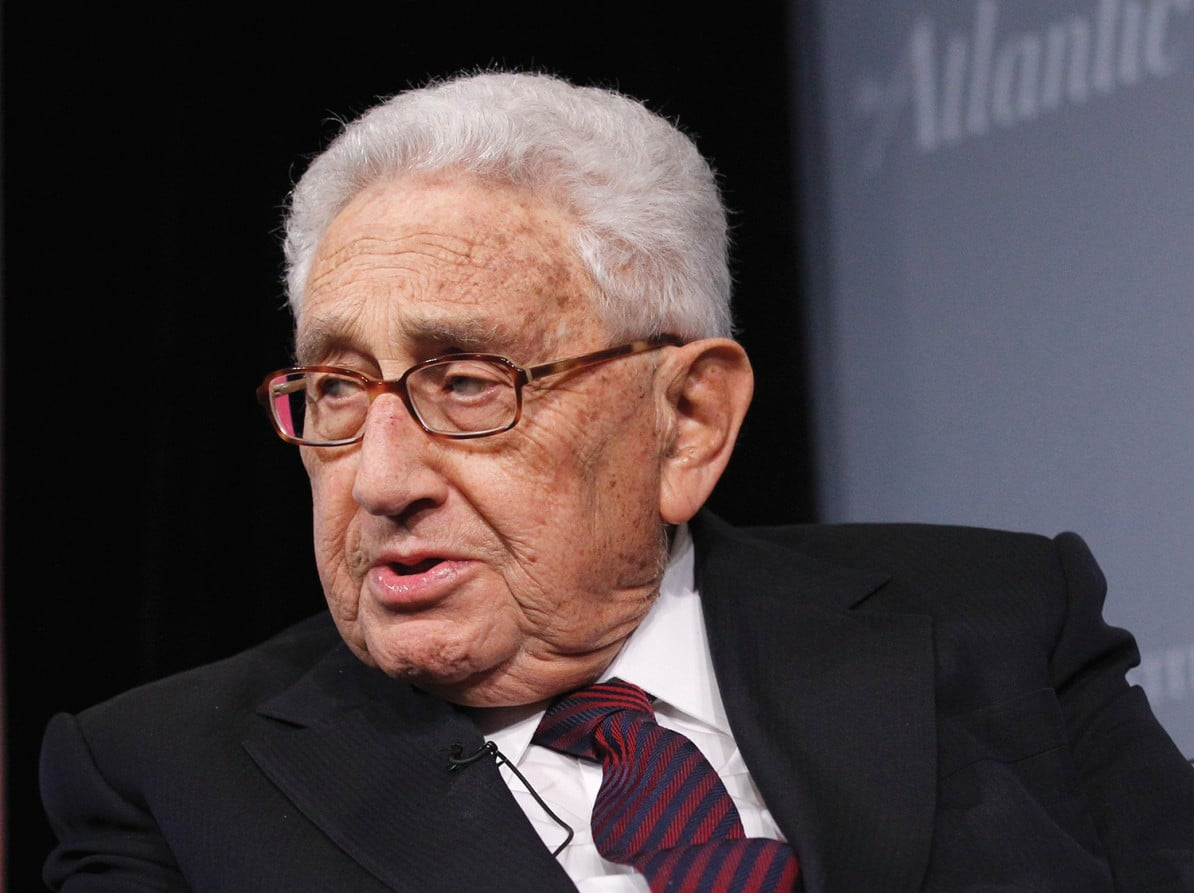
Writing in the Washington Post in 2014, Henry A. Kissinger who was US secretary of state from 1973 to 1977, noted,

“The West must understand that, to Russia, Ukraine can never be just a foreign country. Russian history began in what was called Kievan-Rus. The Russian religion spread from there. Ukraine has been part of Russia for centuries, and their histories were intertwined before then. Some of the most important battles for Russian freedom, starting with the Battle of Poltava in 1709, were fought on Ukrainian soil. The Black Sea Fleet — Russia’s means of projecting power in the Mediterranean — is based by long-term lease in Sevastopol, in Crimea. Even such famed dissidents as Aleksandr Solzhenitsyn and Joseph Brodsky insisted that Ukraine was an integral part of Russian history and, indeed, of Russia.”

He proposes four principles for geopolitical stability in the region –

“1. Ukraine should have the right to choose freely its economic and political associations, including with Europe.

2. Ukraine should not join NATO, a position I took seven years ago, when it last came up.

3. Ukraine should be free to create any government compatible with the expressed will of its people. Wise Ukrainian leaders would then opt for a policy of reconciliation between the various parts of their country. Internationally, they should pursue a posture comparable to that of Finland. That nation leaves no doubt about its fierce independence and cooperates with the West in most fields but carefully avoids institutional hostility toward Russia.

4. It is incompatible with the rules of the existing world order for Russia to annex Crimea. But it should be possible to put Crimea’s relationship to Ukraine on a less fraught basis. To that end, Russia would recognize Ukraine’s sovereignty over Crimea. Ukraine should reinforce Crimea’s autonomy in elections held in the presence of international observers. The process would include removing any ambiguities about the status of the Black Sea Fleet at Sevastopol.”

Sadly, just like John Mearsheimer, Kissinger is in the position to say, I told you so!

https://www.slow-journalism.com/from-the-archive/dg-interview-henry-kissingerImag: https://www.slow-journalism.com/from-the-archive/dg-interview-henry-kissinger

https://www.washingtonpost.com/opinions/henry-kissinger-to-settle-the-ukraine-crisis-start-at-the-end/2014/03/05/46dad868-a496-11e3-8466-d34c451760b9_story.html

Ukraine: Yanis Varoufakis’ View

In a stirring conversation with Russell Brand, Yannis Varoufakis offers the most heart I have come across in the ubiquitous commentary on the Ukraine crisis, and some sound mind too! He notes,

1. When there is an invasion we must always take the side of people who are facing troops with direct orders to destroy the circumstances of their lives.

2. We must support all defenders of neighborhoods and homes across the world without prejudice without making a distinction between fashionable victims (Ukraine) and unfashionable victims (eg Palestine, Yemen).

3. The only question is how to stop the carnage and how do we get the Russians to withdraw.

4. There is a serious moral problem in supporting the Ukrainian fighters as we know that Russia is unstoppable, that Putin is ruthless (eg Grozny), and that NATO will never intervene directly (for fear of starting World War III).

5. While we cant ask the resistance to stop resisting, we, from the comfort of our homes, have a moral obligation to find a solution.

6. Such a solution might involve the US and Russia arriving at a quid pro quo somewhat like the following-
I. Russia withdraws from Ukraine
II. there is a demilitarization of Donbas and border regions
III. there could be bargaining about specific areas like Crimea
IV. the US and Russia guarantee the neutrality of Ukraine.

7. The alternative is carnage, a prolonged occupation, the permanent division of Ukraine, and the toxification of politics both in Ukraine and Russia.