The Koboi Returns 2023 -15

The Pohon Beringin represents the three levels to the Malay cosmos, with fishes, serpents, or crocodiles at the bottom level representing the lower Waterworld; land animals like monkeys or elephants in the middle level representing the earth; birds at the top level representing the Skyworld. This tripartite division maps on to 5. Kayangan (Skyworld), 1 Dunia (earth) and 6 Dasar Laut (Waterworld) of the more complex Malay Cosmology as laid out by Md. Salleh Yaspar. In this syncretic premodern Malay Cosmology that integrates all previous ontologies with that of Islam, 5. Kayangan is consonant with Syurga and 6 Dasar Laut with Neraka, above and below the 1 Dunia, respectively.

This structure arguably underpins the story of Haji Batu whose ship went down while crossing the fearsome Pusat Tasek, as he was journeying to perform the Haj, Haji Batu clung to the Pokok Pauh Janggi and drew himself up on 7 nails that he drove into the tree. When he reached the top, he attached himself to the Burong Roc (Garuda) and flew Westward on his Journey to Mecca. (see Walter William Skeat’s Malay Magic). The climbing up the 7 nails can be seen as being an analogy for rising from the seven realms of Hell (the 7 nails could equally represent the seven levels of Heaven of course, or both (seven is a number of multilayered cosmological and soteriological significance) and the flight of the Burong Roc, for an ascent into the Skyworld.

In fact, in the sufi understanding of being, which is based on the Quranic Jihad al-nafs (battle agains the self), there are seven nafs or states of desire through which the adept must rise. The lowest state is Nafsi Ammara, a manifestation of the animal soul in man.  In Nafsi Lawwama man hears the voice of his conscience and tries to resist carnal desires. Nafsi Mulhima is when man receives direct instructions from his Lord. In Nafsi Mutmainna, man is freed of self-indulgence and finds peace and tranquility in a state of piety and obedience to the Lord. Nafsi Radiyya is when man accepts all that happens without any resentment or pain, and when good and bad become equal to him. In Nafsi Mardiyya man assumes the Divine Attributes, leaving behind the material realm, and finally, in Nafsi Safiyya, man reaches the purity of perfect harmony.

https://ejournal.um.edu.my/index.php/MJPVA/article/view/13970/9368

http://www.gutenberg.org/files/47873/47873-h/47873-h.htm

https://sufipathoflove.com/seven-levels-of-being/

The Koboi Returns 2023 – 14

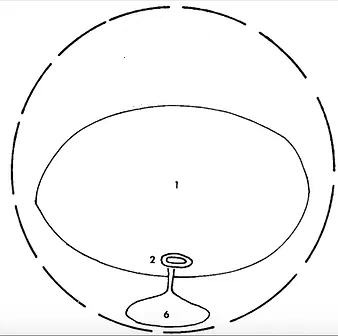
This diagram can be seen as a representation of the metaphysics and the physics of the traditional Malay cosmos. The Pokok Pauh Janggi is the axis mundi of the 1 Dunia (world) connecting the depths of the 6 Dasar Laut (Underworld) to the heights if the 5. Kayangan (Skyworld). Its location at the 2 Pusat Tasik Pauh Janggi puts it directly above the ‘Underworld’. In the tale of Haji Batu, the drew 7 nails that the Haji drove into the tree to make his way up might be a reference to the 7 levels of Hell as understood in Islam. His passage to from the top of the Pokok Pauh Janggi to Mecca by clinging to the mythical Burong Roc (Garuda) might equally signify his ascent towards the Heavens.

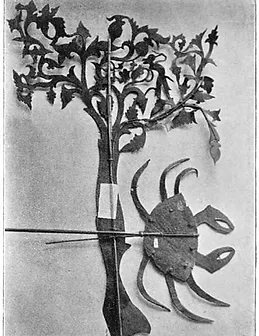
If the Pokok Pauh Janggi anchors the metaphysical model of the Malay cosmos, the physics of this world is represented by Giant crab that lives at its base. This crab blocks the opening of the drain of the waters at the bottom of the Pusat Tasek (whirlpool or navel of the seas) and it is the daily movements of this crab, that cause the oceans to rise and fall cyclically, giving us both the currents and the tides.  (see Walter William Skeat’s Malay Magic).

The above diagram combines the outlines of two Kelantan Wayang Kulit puppets (Pokok Pauh Janggi and giant crab) collected by Walter William Skeat in the late 19th Century, with an adaptation of a diagram of the Malay Cosmos by Md. Salleh Yaspar in Malaysian World View edited by Mohd Taib Osman.


https://www.gutenberg.org/files/47873/47873-h/47873-h.htm

https://books.google.com.my/books?id=-AR-V3ymAzoC&pg=PA274&lpg=PA274&dq=mohd+taib+osman+pusat+tasik&source=bl&ots=Ck_2ts5cvN&sig=ACfU3U189ige7-t0nqKA3yKcLDIurDnuoQ&hl=en&sa=X&ved=2ahUKEwi688zh_sDmAhVT8XMBHaXlC1QQ6AEwAXoECAwQAQ#v=onepage&q=mohd%20taib%20osman%20pusat%20tasik&f=false


The Koboi Returns 2023 – 10

In the Malay cosmology, 5. Kayangan is located above the Pokok Pauh Janggi which rises through the 2. Pusat Tasik Pauh Janggi, which is directly above the 6 Dasar Laut or ‘underworld’. In the Islamic cosmology, in the uppermost realm of Heaven, there is the Toba tree, “whose shade a rider could travel for a hundred years without crossing it.” Down below, in the realm of the seven hells, the Zaqqum tree rises out of the Hellfire with fruit-stalks like the heads of devils. Then there is the Sidrat al-Muntahā, which marks the boundary between the seven realms of paradise and the three realms of the domain of God. There is also the Tree of Immortality in the Garden of Eden which plays a significant role in Man’s descent into the world to experience the difficulties of life and death, by whose difference, the nature of paradise can be understiood. There is also the the Olive Tree that stands in no place, or every place. According to the Holy Koran, it stands “neither of the East nor West.” It’s oil is the source and being of earthly light.

I would like to suggest that the Pokok Pauh Janggi can be seen as a single tree that serves similar functions to the various Holy Trees of Islam. Anker Rentse offers an insight into the syncretic assimilation of the local Malay Cosmology with the Islamic one. “Shurga, Heaven, is on the top of Pauh Janggi, and Nuraka, Hell, is down below its roots. A gigantic hole between the roots causes the ocean water to disappear into hell’s big boiling-pot, kawah nufaka, whence the whirl-pool. Underneath the pot burns everlasting fire. A dragon guards the hole, the gate to hell (pintu nuraka) with its body in order to prevent the ocean from running dry.

Image: Eighteenth century Ottoman diagram from the Causus/ The Malay Cosmos diagram is adapted after Md. Salleh Yaspar in Malaysian World View edited by Mohd Taib Osman.

https://magictransistor.tumblr.com/post/121976939786/ottoman-diagram-of-heaven-and-hell-caucasus

https://www.islamcan.com/common-questions-about-islam/story-of-the-fall-of-man-in-quran.shtml

http://www.studiesincomparativereligion.com/public/articles/The_Tree_Symbol_in_Islam-by_Noble_Ross_Reat.aspx#_ftnref71

Rentse, Anker. “NOTES ON MALAY BELIEFS.” Journal of the Malayan Branch of the Royal Asiatic Society 11, no. 2 (117) (1933): 245–51. http://www.jstor.org/stable/41559822.

Image: https://magictransistor.tumblr.com/post/121976939786/ottoman-diagram-of-heaven-and-hell-caucasus

https://islamqa.info/en/answers/1920/trees-mentioned-in-the-quraan-and-sunnah

The Koboi Returns 2023 – 8

According to Edith Jachimowiczhe, Islamic cosmology echoew the geocentricity of the Aristotalian/ Ptolemaic Cosmos.  The space between the surface of the earth and the sphere of the Moon is known as the sub-lunary region. It is the realm of the elements, of minerals, plants, and animals, and of generation and corruption. In addition to the eight Ptolemaic spheres (Moon or falak al-kamar, Mercury or falak al-utarid,  Venus or falak al- zuhra, Sun or falak al- shams, Mars or falak al-Mirrikh, Jupiter or falak al-Mushtari, Saturn or falak al-Zuhal,  Fixed Stars or falak al-burudj), the Islamic cosmos has a ninth Sphere, the Sphere of Spheres or falak al-aflak. This astronomical (physical) model of the cosmos is integrated with a theological (metaphysical) cosmology.

In the explaining the relationship of the structure of the Islamic cosmos to the process of the primordial Creation, Jachimowiczhe cites theTasawwurat of Nasir al-Din Tusi, in which it is said that the creative force “reached the Throne of God, from the Throne reached the pedestal and, from the Pedestal again, descended to the sphere of Saturn and became attached to it. Again, it descended further, from one sphere to the other, until it reached the sphere of the moon. Then the exaltations and the rays of the stars, by the force of that energy and through the mediation of the sphere of the moon, fell upon the elements. This was certainly the cause which stirred the elements …” A line of force is drawn from the highest heaven down to the sublunary region and, given the notion of the ‘stirring’ of the elements, we might impute a turning movement to this force. In my own imagination, this line of force echoes the axial function and dynamics of the Pokok Pauh Janggi which links Dasar laut to Kayangan in the Malay cosmos.

Image: Jachimowicz, Edith (1975). Islamic Cosmology. In Carmen Blacker, Michael Loewe & J. Martin Plumley (eds.), Ancient Cosmologies. Allen & Unwin.


The Koboi Returns 2023 – 7


The Sidrat al-Muntahā or the Lote Tree of the Utmost Boundary, is mentioned in the Qur’an and Hadith in the context of the Holy Prophet’s ascent (Mi’raj) to receive the Islamic revelation. According to Edith Jachimowicz this tree marks the boundary between the outermost of the seven realms of paradise (astronomical Heaven) with the first of the three realms of God (theological Heaven). It is a boundary that no angel and no man other than the Holy Prophet has crossed.

Two rivers flow from the roots of this tree, watering Paradise (batinîya); and two more flow down through the seven realms of Paradise, to the earthly domain (zahiriya) to become the Euphrates and the Nile. The earth itself is divided horizontally into seven strata which are also known as the Mansions of Hell. The image shown is a detail from an illustration on page 31 of Mi’rajnameh, a fifteenth-century manuscript from Herat, now held in the National Library of France.

While there is no direct connection or association between the Sidrat al-Muntahā of the Islamic revelation and the Pokok Pauh Janggi of the Alam Melayu, there is a clear coincidence of placement within their respective cosmologies. If the Sidrat al-Muntahā is directly below the highest heavens, the Pokok Pauh Janggi is rooted at the threshold of underworld, directly above the Dasar Laut ’. Both trees seem to stand on a cosmic axis, perhaps with differing emphasis on cosmogonic (literal structure of the universe) and escathalogical (allegory of the soul’s final journey at the end of time) aspects of existance.

Jachimowicz, Edith (1975). Islamic Cosmology. In Carmen Blacker, Michael Loewe & J. Martin Plumley (eds.), Ancient Cosmologies. Allen & Unwin.

http://www.studiesincomparativereligion.com/public/articles/The_Tree_Symbol_in_Islam-by_Noble_Ross_Reat.aspx#_ftn2

https://id.wikishia.net/view/Berkas:%D8%B3%D8%AF%D8%B1%D9%87_%D8%A7%D9%84%D9%85%D9%86%D8%AA%D9%87%DB%8C.jpg

https://en.wikipedia.org/wiki/Miraj_Nameh

The Koboi Returns 2023 – 6

The Malay and Javanese word ‘kayangan‘ is synonymous with adnan, eden, firdaus, janah, nirwana, surga, indraloka, kedewaan, keindraan, suargaloka, suralaya, surgaloka and paradiso. In Malay cosmology, 5. Kayangan is inhabited by Dewa, Perman. This ‘skyworld’ is located directly above the Pokok Pauh Janggi which rises through the Pusat Tasik . This 2 Pusat Tasik Pauh Janggi is, in turn, directly above the 6 Dasar Laut which can be seen as the ‘underworld’. The combined downward spiral of the Pusat Tasek and the upward thrust of the enormous Pokok Pauh Janggi both pass through the 1 Dunia, combining to create the axis mundi of the Malay cosmos.

Anker Rentse explains, from ethnographic notes that seem to have been made in Ulu Kelantan“Shurga, Heaven, is on the top of Pauh Janggi, and Nuraka, Hell, is down below its roots. A gigantic hole between the roots causes the ocean water to disappear into hell’s big boiling-pot, kawah nufaka, whence the whirl-pool. Underneath the pot burns everlasting fire. A dragon guards the hole, the gate to hell (pintu nuraka) with its body in order to prevent the ocean from running dry. In Pusat Tasek an account is kept of the good and the bad deeds of every human being in the world. The accountant in Heaven is Ka’ Tebir, and in Hell, Kiraman. The last one is said to be so busy on occasions, that he gets angry, throws his pen on the floor and declares, Ini sekarang sudah chukup!”

The diagram is adapted after Md. Salleh Yaspar in Malaysian World View edited by Mohd Taib Osman.

https://en.wiktionary.org/wiki/kayangan

Rentse, Anker. “NOTES ON MALAY BELIEFS.” Journal of the Malayan Branch of the Royal Asiatic Society 11, no. 2 (117) (1933): 245–51. http://www.jstor.org/stable/41559822.

The Koboi Returns 2023 – 5

In Malay cosmology, the 1. Dunia of Man, animals, plants, objects, spirits is connected to 6. Dasar Laut, the domain of Raja Lebis, via the 2. Pusat Tasik Pauh Janggi which is inhabited by Nagas, Jins, and Garudas (Modified from a diagram after Md. Salleh Yaspar in Malaysian World View edited by Mohd Taib Osman.). This Malay motif of the pusat tasik pauh janggi appears to exemplify a more general Southeast Asian ontological structure

  1. The navel of the sea drains the waters of the world
  2. A submarine tree or world pillar at the navel links the human realm to both the underworld and the skyworld
  3. There are mythic creatures dwelling at the navel of the seas at the base of the tree or pillar
  4. The ebb and flow of tides are due to the movements of the creature blocking the drain at the navel 
  5. The ocean currents are due to water flowing in and out of the drain at the navel 
  6. Earthquakes are caused by creature at navel of the sea shaking the world pillar
  7. There are relationship between these flows to the movement of the Sun and Moon and events like eclipses
  8. Rising sea levels and flooding are associated with the navel of the sea.

https://books.google.com.my/books?id=-AR-V3ymAzoC&pg=PA274&lpg=PA274&dq=mohd+taib+osman+pusat+tasik&source=bl&ots=Ck_2ts5cvN&sig=ACfU3U189ige7-t0nqKA3yKcLDIurDnuoQ&hl=en&sa=X&ved=2ahUKEwi688zh_sDmAhVT8XMBHaXlC1QQ6AEwAXoECAwQAQ#v=onepage&q=mohd%20taib%20osman%20pusat%20tasik&f=false

http://sambali.blogspot.com/2008/04/kuroshio-current-and-navel-of-sea.html

The Koboi Returns 2023 – 4

According to Malay folklore, in the far depths of the ocean, there is a great whirlpool known as the ‘Pusat Tasek’ or the ‘navel of the seas’. At the centre of this whirlpool, there is an enormous tree known as the Pokok Pauh Janggi. This place, identified in Malay Cosmology as the Pusat Tasik Pauh Janggi, is inhabited by Nagas, Jins, Garudas and other such creatures. One of these creatures sits on the ocean floor, at the base of the tree blocking a gigantic opening at the root of the tree. This opening leads further down to the nether world of the Dasar Laut inhabited by Raja Lebis. Further, according to Anker Rentse, it is from the Dasar Laut, that the swirl of the Pusat Tasek rises in the course of ocean water draining down the opening. In some versions of this cosmology, a dragon guards this hole and its body also blocks the hole, preventing the ocean from running dry. In other accounts it is not a dragon but a giant crab that holds the waters up. It is the daily movements of this crab, unblocking and reblocking the hole, that cause the movement of the waters that we humans experience as currents and tides. The above Kelantan Wayang Kulit puppets of the Pokok Pauh Janggi and the giant crab were collected by Walter William Skeat from a Tok Dalang in the late 19th Century. They index the likelyhood that the Wayang repertoire was once replete with representations of indegenous Nusantara myths and ideas that have since been abandoned.

https://books.google.com.my/books?id=-AR-V3ymAzoC&pg=PA274&lpg=PA274&dq=mohd+taib+osman+pusat+tasik&source=bl&ots=Ck_2ts5cvN&sig=ACfU3U189ige7-t0nqKA3yKcLDIurDnuoQ&hl=en&sa=X&ved=2ahUKEwi688zh_sDmAhVT8XMBHaXlC1QQ6AEwAXoECAwQAQ#v=onepage&q=mohd%20taib%20osman%20pusat%20tasik&f=false

http://www.gutenberg.org/files/47873/47873-h/47873-h.htm

https://www.jstor.org/stable/41559822?seq=1

Dari Pusat Tasek 27

Taib Osman
Diagram by Niranjan Rajah combining the Malayy ontologies as described by Md. Salleh Yaspar and Anker Rentse.

According to Taib Osman, in the Malay cosmology, 1. Dunia is inhabited by Man, animals, plants, objects, spirits; 2. Pusat Tasik Pauh Janggi is inhabited by Nagas, Jins, Garudas; 3. Kayangan is inhabited by Dewa, Perman; 4. Dasar Laut is inhabited by Raja Lebis. Further, according to Anker Rentse, Syurga sits above the Pokok Pauh Janggi, while Neraka lies below it. It is from below the Dasar Laut, from hell’s boiling-pot or the kawah nufaka, that rises the swirl of the Pusat Tasek. A gigantic hole between the roots causes the ocean water to disappear into the boiling-pot. A dragon guards this hole that serves as the pintu Neraka. Its body also blocks the hole, preventing the ocean from running dry. In the Pusat Tasek an account is kept of the good and the bad deeds of every human being in the world.

https://www-jstor-org.proxy.lib.sfu.ca/stable/41559847

Dari Pusat Tasek 22

1. Dunia is inhabited by Man, animals, plants, objects, spirits; 2. Pusat Tasik Pauh Janggi is inhabited by Nagas, Jins, Garudas; 3. Padang Jauh dan Puncak Gunung is inhabited by Giants, jins; 4. Pulau Buah is inhabited by Ancestral spirits; 5. Kayangan is inhabited by Dewa, Perman; 6. Dasar Laut is inhabited by Raja Lebis. Modified from a diagram by Md. Salleh Yaspar.

The combined downward spiral of the Pusat Tasek and the upward thrust of the enormous Pokok Pauh Janggi combine to create an axis of Malay Ontology or cosmos. Anker Rentse explains, from ethnographic notes that seem to have been made in Ulu KelantanShurga, Heaven, is on the top of Pauh Janggi, and Nuraka, Hell, is down below its roots. A gigantic hole between the roots causes the ocean water to disappear into hell’s big boiling-pot, kawah nufaka , whence the whirl-pool. Underneath the pot burns everlasting fire. A dragon guards the hole, the gate to hell ( pintu nuraka) with its body in order to prevent the ocean from running dry. In Pusat Tasek an account is kept of the good and the bad deeds of every human being in the world. The accountant in Heaven is Ka’ Tebir, and in Hell, Kiraman. The last one is said to be so busy on occasions, that he gets angry, throws his pen on the floor and declares, Ini sekarang sudah chukup!”

The Dari Pusat Tasek exhibition will run at Percha Artspace, Lumut Waterfront, till 19 JAN 2020  Photographs of the Lumut performance will go towards making the 13th series of the Koboi Project tentatively titled Badan Aku Tubuh Negara. The draft of this work can be viewed at  https://koboibalikkampung.wixsite.com/sialjambalang

https://www-jstor-org.proxy.lib.sfu.ca/stable/41559847