The Koboi Returns 2023 -15

The Pohon Beringin represents the three levels to the Malay cosmos, with fishes, serpents, or crocodiles at the bottom level representing the lower Waterworld; land animals like monkeys or elephants in the middle level representing the earth; birds at the top level representing the Skyworld. This tripartite division maps on to 5. Kayangan (Skyworld), 1 Dunia (earth) and 6 Dasar Laut (Waterworld) of the more complex Malay Cosmology as laid out by Md. Salleh Yaspar. In this syncretic premodern Malay Cosmology that integrates all previous ontologies with that of Islam, 5. Kayangan is consonant with Syurga and 6 Dasar Laut with Neraka, above and below the 1 Dunia, respectively.

This structure arguably underpins the story of Haji Batu whose ship went down while crossing the fearsome Pusat Tasek, as he was journeying to perform the Haj, Haji Batu clung to the Pokok Pauh Janggi and drew himself up on 7 nails that he drove into the tree. When he reached the top, he attached himself to the Burong Roc (Garuda) and flew Westward on his Journey to Mecca. (see Walter William Skeat’s Malay Magic). The climbing up the 7 nails can be seen as being an analogy for rising from the seven realms of Hell (the 7 nails could equally represent the seven levels of Heaven of course, or both (seven is a number of multilayered cosmological and soteriological significance) and the flight of the Burong Roc, for an ascent into the Skyworld.

In fact, in the sufi understanding of being, which is based on the Quranic Jihad al-nafs (battle agains the self), there are seven nafs or states of desire through which the adept must rise. The lowest state is Nafsi Ammara, a manifestation of the animal soul in man.  In Nafsi Lawwama man hears the voice of his conscience and tries to resist carnal desires. Nafsi Mulhima is when man receives direct instructions from his Lord. In Nafsi Mutmainna, man is freed of self-indulgence and finds peace and tranquility in a state of piety and obedience to the Lord. Nafsi Radiyya is when man accepts all that happens without any resentment or pain, and when good and bad become equal to him. In Nafsi Mardiyya man assumes the Divine Attributes, leaving behind the material realm, and finally, in Nafsi Safiyya, man reaches the purity of perfect harmony.

https://ejournal.um.edu.my/index.php/MJPVA/article/view/13970/9368

http://www.gutenberg.org/files/47873/47873-h/47873-h.htm

https://sufipathoflove.com/seven-levels-of-being/

The Koboi Returns 2023 – 10

In the Malay cosmology, 5. Kayangan is located above the Pokok Pauh Janggi which rises through the 2. Pusat Tasik Pauh Janggi, which is directly above the 6 Dasar Laut or ‘underworld’. In the Islamic cosmology, in the uppermost realm of Heaven, there is the Toba tree, “whose shade a rider could travel for a hundred years without crossing it.” Down below, in the realm of the seven hells, the Zaqqum tree rises out of the Hellfire with fruit-stalks like the heads of devils. Then there is the Sidrat al-Muntahā, which marks the boundary between the seven realms of paradise and the three realms of the domain of God. There is also the Tree of Immortality in the Garden of Eden which plays a significant role in Man’s descent into the world to experience the difficulties of life and death, by whose difference, the nature of paradise can be understiood. There is also the the Olive Tree that stands in no place, or every place. According to the Holy Koran, it stands “neither of the East nor West.” It’s oil is the source and being of earthly light.

I would like to suggest that the Pokok Pauh Janggi can be seen as a single tree that serves similar functions to the various Holy Trees of Islam. Anker Rentse offers an insight into the syncretic assimilation of the local Malay Cosmology with the Islamic one. “Shurga, Heaven, is on the top of Pauh Janggi, and Nuraka, Hell, is down below its roots. A gigantic hole between the roots causes the ocean water to disappear into hell’s big boiling-pot, kawah nufaka, whence the whirl-pool. Underneath the pot burns everlasting fire. A dragon guards the hole, the gate to hell (pintu nuraka) with its body in order to prevent the ocean from running dry.

Image: Eighteenth century Ottoman diagram from the Causus/ The Malay Cosmos diagram is adapted after Md. Salleh Yaspar in Malaysian World View edited by Mohd Taib Osman.

https://magictransistor.tumblr.com/post/121976939786/ottoman-diagram-of-heaven-and-hell-caucasus

https://www.islamcan.com/common-questions-about-islam/story-of-the-fall-of-man-in-quran.shtml

http://www.studiesincomparativereligion.com/public/articles/The_Tree_Symbol_in_Islam-by_Noble_Ross_Reat.aspx#_ftnref71

Rentse, Anker. “NOTES ON MALAY BELIEFS.” Journal of the Malayan Branch of the Royal Asiatic Society 11, no. 2 (117) (1933): 245–51. http://www.jstor.org/stable/41559822.

Image: https://magictransistor.tumblr.com/post/121976939786/ottoman-diagram-of-heaven-and-hell-caucasus

https://islamqa.info/en/answers/1920/trees-mentioned-in-the-quraan-and-sunnah

The Koboi Returns 2023 – 6

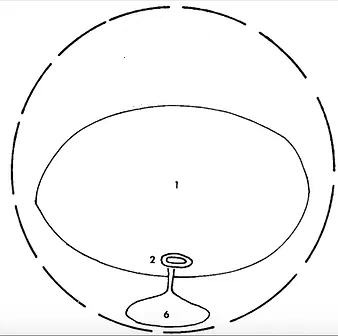
The Malay and Javanese word ‘kayangan‘ is synonymous with adnan, eden, firdaus, janah, nirwana, surga, indraloka, kedewaan, keindraan, suargaloka, suralaya, surgaloka and paradiso. In Malay cosmology, 5. Kayangan is inhabited by Dewa, Perman. This ‘skyworld’ is located directly above the Pokok Pauh Janggi which rises through the Pusat Tasik . This 2 Pusat Tasik Pauh Janggi is, in turn, directly above the 6 Dasar Laut which can be seen as the ‘underworld’. The combined downward spiral of the Pusat Tasek and the upward thrust of the enormous Pokok Pauh Janggi both pass through the 1 Dunia, combining to create the axis mundi of the Malay cosmos.

Anker Rentse explains, from ethnographic notes that seem to have been made in Ulu Kelantan“Shurga, Heaven, is on the top of Pauh Janggi, and Nuraka, Hell, is down below its roots. A gigantic hole between the roots causes the ocean water to disappear into hell’s big boiling-pot, kawah nufaka, whence the whirl-pool. Underneath the pot burns everlasting fire. A dragon guards the hole, the gate to hell (pintu nuraka) with its body in order to prevent the ocean from running dry. In Pusat Tasek an account is kept of the good and the bad deeds of every human being in the world. The accountant in Heaven is Ka’ Tebir, and in Hell, Kiraman. The last one is said to be so busy on occasions, that he gets angry, throws his pen on the floor and declares, Ini sekarang sudah chukup!”

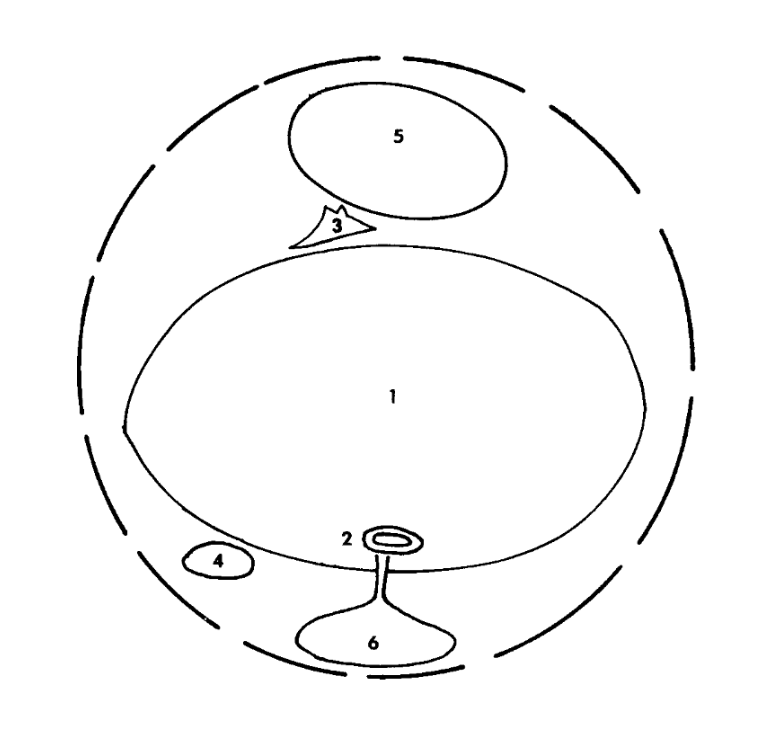
The diagram is adapted after Md. Salleh Yaspar in Malaysian World View edited by Mohd Taib Osman.

https://en.wiktionary.org/wiki/kayangan

Rentse, Anker. “NOTES ON MALAY BELIEFS.” Journal of the Malayan Branch of the Royal Asiatic Society 11, no. 2 (117) (1933): 245–51. http://www.jstor.org/stable/41559822.

The Koboi Returns 2023 – 5

In Malay cosmology, the 1. Dunia of Man, animals, plants, objects, spirits is connected to 6. Dasar Laut, the domain of Raja Lebis, via the 2. Pusat Tasik Pauh Janggi which is inhabited by Nagas, Jins, and Garudas (Modified from a diagram after Md. Salleh Yaspar in Malaysian World View edited by Mohd Taib Osman.). This Malay motif of the pusat tasik pauh janggi appears to exemplify a more general Southeast Asian ontological structure

  1. The navel of the sea drains the waters of the world
  2. A submarine tree or world pillar at the navel links the human realm to both the underworld and the skyworld
  3. There are mythic creatures dwelling at the navel of the seas at the base of the tree or pillar
  4. The ebb and flow of tides are due to the movements of the creature blocking the drain at the navel 
  5. The ocean currents are due to water flowing in and out of the drain at the navel 
  6. Earthquakes are caused by creature at navel of the sea shaking the world pillar
  7. There are relationship between these flows to the movement of the Sun and Moon and events like eclipses
  8. Rising sea levels and flooding are associated with the navel of the sea.

https://books.google.com.my/books?id=-AR-V3ymAzoC&pg=PA274&lpg=PA274&dq=mohd+taib+osman+pusat+tasik&source=bl&ots=Ck_2ts5cvN&sig=ACfU3U189ige7-t0nqKA3yKcLDIurDnuoQ&hl=en&sa=X&ved=2ahUKEwi688zh_sDmAhVT8XMBHaXlC1QQ6AEwAXoECAwQAQ#v=onepage&q=mohd%20taib%20osman%20pusat%20tasik&f=false

http://sambali.blogspot.com/2008/04/kuroshio-current-and-navel-of-sea.html

The Koboi Returns 2023 – 2

According to Md. Salleh Yaspat (in Malaysian World View edited by Mohd Taib Osman. Mohd Taib Osman) the Traditional Malay Cosmology can be visualized as in the above diagram, whose key is is as follows: 1. Dunia: inhabited by Man, animals, plants, objects, spirits; 2. Pusat Tasik Pauh Janggi: inhabited by Nagas, Jins, Garudas; 3. Padang Jauh dan Puncak Gunung: inhabited by Giants, jins; 4. Pulau Buah: inhabited by Ancestral spirits; 5. Kayangan: inhabited by Dewa, Perman; 6. Dasar Laut: inhabited by Raja Lebis.

In December 2019, I did a Koboi Performance for Percha Art Space in Lumut after which I left for Vancouver. I will now return to Malaysia in August this year (2023) and, to mark my return, I am working towards another Koboi Performance, the details of which will be announced shortly.

https://books.google.com.my/books?id=-AR-V3ymAzoC&pg=PA274&lpg=PA274&dq=mohd+taib+osman+pusat+tasik&source=bl&ots=Ck_2ts5cvN&sig=ACfU3U189ige7-t0nqKA3yKcLDIurDnuoQ&hl=en&sa=X&ved=2ahUKEwi688zh_sDmAhVT8XMBHaXlC1QQ6AEwAXoECAwQAQ#v=onepage&q=mohd%20taib%20osman%20pusat%20tasik&f=false

Dari Pusat Tasek 27

Taib Osman
Diagram by Niranjan Rajah combining the Malayy ontologies as described by Md. Salleh Yaspar and Anker Rentse.

According to Taib Osman, in the Malay cosmology, 1. Dunia is inhabited by Man, animals, plants, objects, spirits; 2. Pusat Tasik Pauh Janggi is inhabited by Nagas, Jins, Garudas; 3. Kayangan is inhabited by Dewa, Perman; 4. Dasar Laut is inhabited by Raja Lebis. Further, according to Anker Rentse, Syurga sits above the Pokok Pauh Janggi, while Neraka lies below it. It is from below the Dasar Laut, from hell’s boiling-pot or the kawah nufaka, that rises the swirl of the Pusat Tasek. A gigantic hole between the roots causes the ocean water to disappear into the boiling-pot. A dragon guards this hole that serves as the pintu Neraka. Its body also blocks the hole, preventing the ocean from running dry. In the Pusat Tasek an account is kept of the good and the bad deeds of every human being in the world.

https://www-jstor-org.proxy.lib.sfu.ca/stable/41559847

Dari Pusat Tasek 2

1. Dunia; 2. Pusat Tasik Pauh Janggi; 3. Padang Jauh dan Puncak Gunung; 4. Pulau Buah; 5. Kayangan; 6. Dasar Laut.  Diagram by Md. Salleh Yaspar in Malaysian world-view by Taib Osman

The Koboi Project exhibition and performance titled Dari Pusat Tasek will open at the Percha Art Space in Lumut on 25th Dec 2019. There will be an impromptu street performance, carried out as part of this exhibition, based on the malay myth of the ‘navel of the seas’ or the pusat tasik pauh janggi. The combined downward spiral of the Pusat Tasek and the upward thrust of the enormous Pokok Pauh Janggi combine to create an axis of the world, one that analogous with the Tiang Seri of the traditional Malay House. In the Malay Ontology or cosmos – 1. Dunia is inhabited by Man, animals, plants, objects, spirits; 2. Pusat Tasik Pauh Janggi is inhabited by Nagas, Jins, Garudas; 3. Padang Jauh dan Puncak Gunung is inhabited by Giants, jins; 4. Pulau Buah is inhabited by Ancestral spirits; 5. Kayangan is inhabited by Dewa, Perman; 6. Dasar Laut is inhabited by Raja Lebis. 

The Pusat Tasik Pauh Janggi appears to exemplify more general Southeast Asian structural and relational principles in which – 1. The Navel of the Seas drains the waters of the world; 2. A submarine tree or world pillar at the navel links the human realm to both the underworld and the skyworld; 3. There are mythic creatures dwelling at the navel of the seas at the base of the tree or pillar; 4. The ebb and flow of tides are due to the movements of the creature blocking the drain at the navel; 5; The ocean currents are due to water flowing in and out of the drain at the navel; 6. Earthquakes are caused by creature at navel of the sea shaking the world pillar; 7. There are relationship between these flows to the movement of the Sun and Moon and events like eclipses; 8. Rising sea levels and flooding are associated with the navel of the sea.

http://sambali.blogspot.com/2008/04/kuroshio-current-and-navel-of-sea.html