This is the Palestinian flag used in 1938 during the revolt against the British Mandate. As evident in the design, Christians and Muslims were represented equally in this movement. The Palestine Liberation Organization (PLO), formed in 1964, was also very much a secular resistance movement and remains so to this day. It was only after the Iranian revolution in the 1980s, that Islamic groups like Hezbollah, and Hamas began to take the lead in the Palestinian resistance. Even today Christian Palestinians identify with their fellow Muslim Palestinians in the struggle against occupation. Framing the struggle in religious terms, as a struggle between Jews and Muslims is at best a misunderstanding, and at worst, it serves to divide Palestinian identity, rendering Palestinians more vulnerable to Israeli subjugation.
1. Sejauh manakah budaya Melayu boleh diasingkan daripada akar-umbi pra Islamnya? 2. Sejauh manakah unsur-unsur budaya Melayu pra Islam boleh diterima oleh Islam Melayu sezaman? 3. Sejauh manakah budaya Melayu sezaman berkesinambungan dengan semangat Nusantara yang mengandunginya? 4. Sejauh manakah seseorang warga tanah Melayu sezaman boleh masuk Melayu tanpa masuk Islam? 5. Hanya orang bukan Melayu/Bukan Islam kah, yang mampu mengamal dan memelihara tradisi Melayu yang kini dianggap menentang hukum Islam?
Inilah hanya lima diantara banyak soalan yang tersirat didalam persembahan Pokok Pauh Janggi dan perbincangangan yang mengelilinginya. Soalan satu hingga tiga adalah berkenaan dengan isi atau pati budayaMelayu. Soalan keempat mempertikaikan peranaan saya sendiri sebagai orang bukan Melayu yang menerima dan mempersembahkan budaya ini.
1. To what extent can Malay culture be isolated from its pre-Islamic roots? 2. To what extent can the elements of pre Islamic Malay culture be accepted within contemporary Malay Islam? 3. To what extent does contemporary Malay culture remain contigious with the wider spirit of the Archipelago? 4. To what extent can a contemporary citizen of Malay lands be assimilated to Malayness without being a Muslim? 5. Can only non-Malay/Non-Muslims perform and preserve Malay traditions that are presently considered unIslamic?
These are just five of the many questions implicit in the Pokok Pauh Janggi performance and the discussion surrounding it. Questions one to three are about the content or essence of Malay culture. The fourth and fifth questions reflects on my own role as a non-Malay performing and identifying with these forms. In reflecting on the first three questions, albeit at a tangent, I suggest that Pak Dogol and Wak Long are pesonifications of the indigenous spirit (semangat) in the face of the Hindu/Buddhist ethos of Wayang Kulit. Hindu deities like Dewa Sinar Matahari (Surya), Dewa Sinar Bulan (Chandra), Siti Andang Dewi, (Lakshmi) and Dewa Berembun (Vishnu) are present in the narrative but have no puppets. Bentara Guru (Shiva) and Bentara Narada are the only two Hindu gods that appear as puppets. The highest god of the Wayang Kulit heaven (kayangan) is, however, Dewa Sang Yang Tunggal, who is not a Hindu deity but is, instead, derived from the Javanese Wayang Kulit tradition. Dewa Sang Yang Tunggal also does not have a distinct puppet but his earthly manifestation, Pak Dogol, does. As does Wak Long, who is said to have been created out of Pak Dogol’s spirit combined with dirt from his body. (See Wayang Kulit Kelantan: A Study of Characterization and Puppets)
Arguably, Pak Dogol and Wak Long are intermediaries, interlocutors, and interpreters, in the integration of Animistic and Hindu/Buddhist elements into the syncretic Islamic culture that characterizes the Malay Archipelago. According to Barbara S. Wright, one dalang held that the originator of the shadow play was the Angel Azizin, who first became Nenek Haji Mula, then became Dewa Sang Yang Tunggal who finally descended from heaven (kayangan) to the world (dunia) bearing the Wayang Kulit in the form of Pak Dogol. According to another dalang, Haji Mula gave the shadow play to the Prophet Mohammad, who gave it to Sang Yang Tunggal, who gave it to Betara Guru,.who gave it to Dewa Narada, who gave it to Wak Long. In yet another more involved version, “Haji Mula preceded Adam in Gods creation and when he was asked to bow down to Adam he refused. Allah refused to let him live under his sky and thus he fell into the sea and lay on a rock in the sea for forty years, unable to wash the dirt from his body. From the resulting bodily dirt he created a companion for himself, Wak Long, of course. Eventually, Allah relented and sent Haji Mula down to earth in Kelantan as the ugly Pak Dogol. He simultaneously descended as Semar in Jawa and in Epong inThailand (This is the Kelantan Malay undrestanding, not necessarily consonant with views in Jawa or Thailand). Allah gave Haji Mula a mission – to forcefully remind the forgetful about his grace. These origin myths of Wayang Kulit Kelantan, attest to the assimilative and proselytizing roles that Pak Dogol and Wak Long have played within the Islamic culture of the Malay Peninsula.
Soalan: Boleh tak tahi besi kita buat berobat nak pagar rumah, guna ayat Koran?
Jawapan: Boleh buat Tahi Besi buat pagar, tetapi pagar kawat itulah! (Hah, pasal dia besi … buat kawat 🙂 ) Yang tak boleh nya, tahi besi itu yang kita jaga rumah kita. Tak Boleh! Dan kalau Al Koran dengan selawat … boleh. Faham? Aaa!
The above extract.from a ceramah by Ustaz Azhar Idrus evidences a persistant syncreticism in the quotidian practice of Islam amongst the Malays of the peninsular. The Bahasa transcription is my best translation of the Ustaz’s loghat Kelate. I would appreciate corrections. Please send to nrajah@sfu.ca
The Pokok Pauh Janggi installation runs from 5th Aug – 30th Sept 2023 at the Kapallorek Artspace in Bandar Seri Iskandar, Perak.
The Pohon Beringin puppet of Kelantan Wayang Kulit is closely related to the Gunungan puppet from the Javanese Wayang, which as Fiona Wong E Chiong and Ghulam-Sarwar Yousofexplain, is used by the Dalang to bring a whole cosmos of gods, demons, humans and other creatures to life for the time of the performance. While this magical function is understated in the Kelantan tradition, the Pohon Beringin puppet is used to mark the opening and closing of the performance. The Pohon Beringin is a microcosm of the universe, with a central tree motif surrounded by flora and fauna, sky, water, flame, and mountain motifs. There are three levels to this cosmos, with fishes, serpents, or crocodiles at the bottom level representing the lower Waterworld; land animals like monkeys or elephants in the middle level representing the earth; birds at the top level representing the Skyworld. The Pohon Beringian is associated with the universal Tree of Life motif, which, in Islam, is called the Tree of Immortality or šajaratu l-ḫuld. If in Christianity, there are 2 trees in the garden of Eden – the tree of the knowledge of good and evil the fruit of which God forbade to Adam and Eve , in Islam, there is only one tree, the šajaratu l-ḫuldat located at the centre of the Garden of Eden.
According to Edith Jachimowiczhe, Islamic cosmology echoew the geocentricity of the Aristotalian/ Ptolemaic Cosmos. The space between the surface of the earth and the sphere of the Moon is known as the sub-lunary region. It is the realm of the elements, of minerals, plants, and animals, and of generation and corruption. In addition to the eight Ptolemaic spheres (Moon or falak al-kamar, Mercury or falak al-utarid, Venus or falak al- zuhra, Sun or falak al- shams, Mars or falak al-Mirrikh, Jupiter or falak al-Mushtari, Saturn or falak al-Zuhal, Fixed Stars or falak al-burudj), the Islamic cosmos has a ninth Sphere, the Sphere of Spheres or falak al-aflak. This astronomical (physical) model of the cosmos is integrated with a theological (metaphysical) cosmology.
In the explaining the relationship of the structure of the Islamic cosmos to the process of the primordial Creation, Jachimowiczhe cites theTasawwurat of Nasir al-Din Tusi, in which it is said that the creative force “reached the Throne of God, from the Throne reached the pedestal and, from the Pedestal again, descended to the sphere of Saturn and became attached to it. Again, it descended further, from one sphere to the other, until it reached the sphere of the moon. Then the exaltations and the rays of the stars, by the force of that energy and through the mediation of the sphere of the moon, fell upon the elements. This was certainly the cause which stirred the elements …” A line of force is drawn from the highest heaven down to the sublunary region and, given the notion of the ‘stirring’ of the elements, we might impute a turning movement to this force. In my own imagination, this line of force echoes the axial function and dynamics of the Pokok Pauh Janggi which links Dasar laut to Kayangan in the Malay cosmos.
Image: Jachimowicz, Edith (1975). Islamic Cosmology. In Carmen Blacker, Michael Loewe & J. Martin Plumley (eds.), Ancient Cosmologies. Allen & Unwin.
8. Theocracy: An archaic form of government, soon to make a comeback near you! In Malaysia, theocracy used to vie for power with ethnocracy but in GE15 these the forces pushing for these two systems of goverments have coalaced to an unprecedented degree.
Sivakumar Varatharaju Naidu is the Minister of Human Resources and the only Indian in Anwar Ibrahim’s cabinet. Gone are the glory days of the Pakatan Harapan government that followed GE 14 when there were 4 Indian ministers in a cabinet of 25 ministerial portfolios. Waytha Moorthy Ponnusamy was Minister in the Prime Minister’s Department responsible for National Unity and Social Well-being, Xavier Jayakumar Arulanandam was Minister of Water, Land, and Natural Resources, Kulasegaran Murugeson was Minister of Human Resources and Gobind Singh Deo was Minister of Communication and Multimedia. Today, in Anwar’s Unity Government there is only 1 Indian minister from a cabinet of 28 portfolios. Indeed, the ratio has gone down dramatically, and there is a lot of discussion in the media, about the implications for the place of Malaysian Indians in the political paradigm of Malaysia.
Malaysia is a nation founded in the wake of colonial immigration and postcolonial communalism. Race and religion are determinants of status and rights in our constitution and the majority of the political parties in our constitutional democracy are defined in terms of ethnic and religious interests. As East Malaysian parties figure more prominently in the political leadership of our nation (as they should in the cause of strengthening the Federation) the space for Indians in the leadership of the nation will naturally diminish in time.
In any event, while some Indians have risen to power based on communalist politics, Samy Vellu being the exemplar, this order has not really served the Indian community very well in the post Independent period. So, while I acknowledge the communal nature of the Indian Malaysian stake in the nation, I believe the time has come to pursue our community interests less directly, by perpetuating general principles of justice and citizenship for all. As the power dynamic shifts in Malaysian politics, Indians need to assert their needs and rights as citizens, rather than as a members of a community. They need to entrench themselves within the multiethnic political parties and contribute to the deepening of trans-communal ethos that may be emerging, in the Malaysian political landscape, albeit, with difficulty.
Our community is clearly on the way to losing its 3rd place in the triumvirate of Malaysian races – Malay/Chinese/XXX, we need to be at the forefront of the effort to transcend communalism in Malaysian life. This might be a losing battle in the face of the rising wave of Malay ethnoreligious sentiments, but I believe it is still the only way forward, and the best chance for Indians to have a say in a future Malaysia. We should stop worrying about the number of Indians in the Cabinet, and focus on deepening our role and influence at the back end of governance. Indian Malaysians have everything to gain from thinking and acting as Malaysians per se, and much to lose by being entrenched in the Indianness of our national identity. I believe that Indians can best serve our community by striving to raise the living conditions and opportunities for all Malaysians who have been left behind in the post-independence period.
Siapa Parasit? In Bong Joon-ho’s 2019 Academy Award-winning film Parasite, members of a poor family, are employed by a wealthy homeowning family. They infiltrate the household and attempt take over their wealth resources and lives. Post Malaysia’s GE15 Parti Islam Se-Malaysia (PAS) has accused the Democratic Action Party (DAP) of being a parasite riding on a Malay unity government that will in the end destroy the “weak” host. The Chinese-dominated multiethnic DAP was the 2nd most successful party in GE15 with 40 seats and will be part of the Unity Governmenmt under Malaysia’s 10th Prime Minister, Anwar Ibrahim. PAS was the party that won the most seats, numbering 47 and will be part of the opposition.
The revivification of religion in contemporary society leaves me with a sense of foreboding with regard to the future of humanity. There has been a resurgence of religious values in the politics of the 21st Century as theocratic and quasi-theocratic modes have made an impression, even in what were once staunchly secular democracies. The Christian right has brought socially conservative positions to the forefront of the politics of the USA. The Hindu right has turned India’s avowedly secular democracy into a nation-state steeped in Hindutva (Hinduness). Before these developments, there were the theocentric formulations of Islamic fundamentalism and Zionism. Tragically, all of these ‘post-traditional’ hybridizations of religious truths with modern politics have resulted in the division and alienation of peoples.
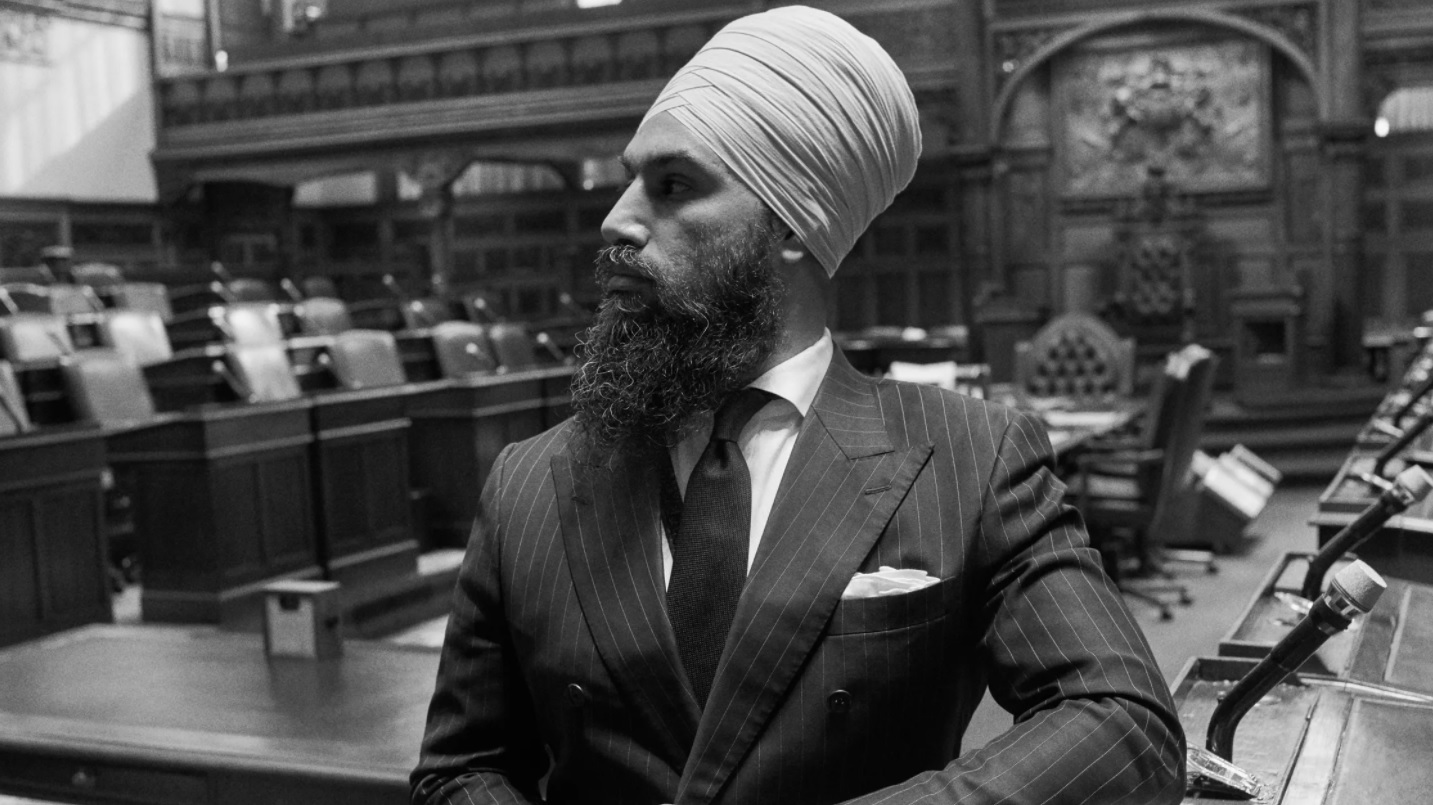
There are, however, examples of a more integrative incorporation of religious values at the forefront of human affairs. Canadian politician and leader of the NDP (New Democratic Party), Jagmeet Singh, is an exemplar of this more inclusive post-traditionalism. In a 2017 interview with GQ magazine, he articulates his religious approach to contemporary secular society, “My Sikh spirituality … influences my political style. We strongly believe in social justice as an element of our founding philosophy—that there is one energy and that we are all connected, kind of like the force. So if I see someone else suffering, as a Sikh I see that as me suffering. There’s this morality that flows from this idea that we are one and connected, and we celebrate diversity and people of different backgrounds, cultures, and religions..” He underscores his point by citing a Sikh mantra that wishes for the “betterment of all humankind.”


 The Koboi Project
You must be logged in to post a comment.