Pak Dogol and Wak Long 2

1. Sejauh manakah budaya Melayu boleh diasingkan daripada akar-umbi pra Islamnya?
2. Sejauh manakah unsur-unsur budaya Melayu pra Islam boleh diterima oleh Islam Melayu sezaman?
3. Sejauh manakah budaya Melayu sezaman berkesinambungan dengan semangat Nusantara yang mengandunginya?

4. Sejauh manakah seseorang warga tanah Melayu sezaman boleh masuk Melayu tanpa masuk Islam?
5. Hanya orang bukan Melayu/Bukan Islam kah, yang mampu mengamal dan memelihara tradisi Melayu yang kini dianggap menentang hukum Islam?

Inilah hanya lima diantara banyak soalan yang tersirat didalam persembahan Pokok Pauh Janggi dan perbincangangan yang mengelilinginya. Soalan satu hingga tiga adalah berkenaan dengan isi atau pati budaya Melayu. Soalan keempat mempertikaikan peranaan saya sendiri sebagai orang bukan Melayu yang menerima dan mempersembahkan budaya ini.

1. To what extent can Malay culture be isolated from its pre-Islamic roots?
2. To what extent can the elements of pre Islamic Malay culture be accepted within contemporary Malay Islam?
3. To what extent does contemporary Malay culture remain contigious with the wider spirit of the Archipelago?
4. To what extent can a contemporary citizen of Malay lands be assimilated to Malayness without being a Muslim?
5. Can only non-Malay/Non-Muslims perform and preserve Malay traditions that are presently considered unIslamic?

These are just five of the many questions implicit in the Pokok Pauh Janggi performance and the discussion surrounding it. Questions one to three are about the content or essence of Malay culture. The fourth and fifth questions reflects on my own role as a non-Malay performing and identifying with these forms. In reflecting on the first three questions, albeit at a tangent, I suggest that Pak Dogol and Wak Long are pesonifications of the indigenous spirit (semangat) in the face of the Hindu/Buddhist ethos of Wayang Kulit. Hindu deities like Dewa Sinar Matahari (Surya), Dewa Sinar Bulan (Chandra), Siti Andang Dewi, (Lakshmi) and Dewa Berembun (Vishnu) are present in the narrative but have no puppets. Bentara Guru (Shiva) and Bentara Narada are the only two Hindu gods that appear as puppets. The highest god of the Wayang Kulit heaven (kayangan) is, however, Dewa Sang Yang Tunggal, who is not a Hindu deity but is, instead, derived from the Javanese Wayang Kulit tradition. Dewa Sang Yang Tunggal also does not have a distinct puppet but his earthly manifestation, Pak Dogol, does. As does Wak Long, who is said to have been created out of Pak Dogol’s spirit combined with dirt from his body. (See Wayang Kulit Kelantan: A Study of Characterization and Puppets)

Arguably, Pak Dogol and Wak Long are intermediaries, interlocutors, and interpreters, in the integration of Animistic and Hindu/Buddhist elements into the syncretic Islamic culture that characterizes the Malay Archipelago. According to Barbara S. Wright, one dalang held that the originator of the shadow play was the Angel Azizin, who first became Nenek Haji Mula, then became Dewa Sang Yang Tunggal who finally descended from heaven (kayangan) to the world (dunia) bearing the Wayang Kulit in the form of Pak Dogol. According to another dalang, Haji Mula gave the shadow play to the Prophet Mohammad, who gave it to Sang Yang Tunggal, who gave it to Betara Guru,.who gave it to Dewa Narada, who gave it to Wak Long. In yet another more involved version, “Haji Mula preceded Adam in Gods creation and when he was asked to bow down to Adam he refused. Allah refused to let him live under his sky and thus he fell into the sea and lay on a rock in the sea for forty years, unable to wash the dirt from his body. From the resulting bodily dirt he created a companion for himself, Wak Long, of course. Eventually, Allah relented and sent Haji Mula down to earth in Kelantan as the ugly Pak Dogol. He simultaneously descended as Semar in Jawa and in Epong inThailand (This is the Kelantan Malay undrestanding, not necessarily consonant with views in Jawa or Thailand). Allah gave Haji Mula a mission – to forcefully remind the forgetful about his grace. These origin myths of Wayang Kulit Kelantan, attest to the assimilative and proselytizing roles that Pak Dogol and Wak Long have played within the Islamic culture of the Malay Peninsula.

… and what of the fourth and fifth questions? … Well, that is a story for another post or two!

https://www.researchgate.net/publication/313848278_Wayang_Kulit_Kelantan_A_Study_of_Chara cterization_and_Puppets

https://www-jstor-org.proxy.lib.sfu.ca/stable/1178141?seq=6

Wayang Kulit Kelantan in 1956

Some aspects of my Pokok Pauh Janggi performance were gleaned from this early cinematic record of Kelantanese Wayang Kulit from 1956.

  1. The puppets are painted only on one side – the side viewed by the Tok Dalang, so that he might be inspired during the performance.
  2. There is a blessing of the panggung (puja) with kemenyan (benzoin resin), food offerings and incantations (mantra).
  3. The puja involves a food offering consisting of telur rebus, nasi pulut kuning, daun sireh and a lighted candle on a ceramic plate.
  4. Bomoh and Dalang sit together during the upacara membuka panggung.
  5. The bomoh covers his head by draping his head cloth (destar) over himself at the climax of the ritual.

The Koboi Returns 2023 – 12

The Pohon Beringin puppet of Kelantan Wayang Kulit is closely related to the Gunungan puppet from the Javanese Wayang, which as Fiona Wong E Chiong and Ghulam-Sarwar Yousof explain, is used by the Dalang to bring a whole cosmos of gods, demons, humans and other creatures to life for the time of the performance. While this magical function is understated in the Kelantan tradition, the Pohon Beringin puppet is used to mark the opening and closing of the performance. The Pohon Beringin is a microcosm of the universe, with a central tree motif surrounded by flora and fauna, sky, water, flame, and mountain motifs. There are three levels to this cosmos, with fishes, serpents, or crocodiles at the bottom level representing the lower Waterworld; land animals like monkeys or elephants in the middle level representing the earth; birds at the top level representing the Skyworld. The Pohon Beringian is associated with the universal Tree of Life motif, which, in Islam, is called the Tree of Immortality or šajaratu l-ḫuld . If in Christianity, there are 2 trees in the garden of Eden – the tree of the knowledge of good and evil the fruit of which God forbade to Adam and Eve , in Islam, there is only one tree, the šajaratu l-ḫuldat located at the centre of the Garden of Eden.

.Image: Pohon Beringin puppet/Persian Sarouk Farahan Tree of Life Rug, Late 19th Century 

https://ejournal.um.edu.my/index.php/MJPVA/article/view/13970/9368

http://catholic.cafe/2020/02/04/what-is-the-tree-of-life-and-why-was-it-guarded-by-the-cherubim/

https://nazmiyalantiquerugs.com/antique-persian-fine-sarouk-farahan-tree-of-life-rug-48624/

K is for Kisona 3

In this post I will begin to unpack the meaning, possible meanings rather, of Bersatu Pasir Puteh division vice chairman Borhanuddin Che Rahim statement on social media, made with reference to Kisona Selvaduray, in the context of her recent defeat in the Sudirman Cup semi-final match in Finland. “BAM kutip india (keling) dlm mana lah jd pemain utama Malaysia” or “Which estate did BAM (The Badminton Association of Malaysia) fund this indian (keling) and make her Malaysia’s main player”.

As I noted in the previous post, my instinctive response is the same as that of most Malaysians. Surely, this statement is a racial slur. Still, given the immediate apology and resignation of the perpetrator, I now have some doubts as to the meaning of his text and as to his intention as well. To satisfy myself and to do justice to the accused, I will attempt interrogate the statement in terms of its semiotics in order to determine if indeed the statement is racist and if so, what exactly constitutes its racism. If it is not racist, I will ask if it is, nevertheless, a slur of some sort, and again how it achieves its harm. In doing this, I will unpack the syntax, semantics, and pragmatics of this utterance –

BAM kutip india (keling) dlm estate mana lah jd pemain utama Malaysia

  1. I will begin with some definitions. ‘Syntax’, is way in which the words are put together to form the offending phrase, ‘Semantics’ involves the meaning of words used independent of the context and ‘pragmatics’ is the meaning of the statement in relation to the context of its utterance. Pragmatics helps us approach the meaning as intended or implied by the speaker.

  2. The obvious trigger word here is ‘keling’ and while it is clearly used in a derogatory manner as exemplified and evidenced by the infamous ‘Keling Babi” video, the word is deeply complex both in its etymology and in its current usage. It is in fact a mainstay of Malay idiomatic expression (Please see my exhaustive Keling Lexicon). In semantic terms, to define ‘keling’ as having a racist denotation, or even a necessary connotation of racism, would mean denying the benign etymology of the word. At the very least it would mean that the contemporary negative connotations (which one can in fact see even in the older idiomatic expressions of the lexicon), have displaced other more neutral denotations of Indian origins and Indianness.

  3. Further, in this question of usage, there is a clear geographical diversity in the understanding the word. I have come to understand anecdotally, that the word is used freely by Malays in Kelantan, under the impression that it is not a slur and that Indians do not take it as one. I am yet to gain any insight about the Kelate Indian communities position in this matter but I consider my Malay informers astute, sensitive and reliable. If indeed this is the position in Kelantan, the explanation given by Borhanuddin Che Rahim stands corroborated. He states in his apology, “Saya tidak berniat menghina kaum India dengan panggilan tersebut, ia sebaliknya bahasa percakapan di Kelantan yang merujuk kepada orang India”.

  4. There is also syntactical indication that the use of the term might not be as a slur. It is used, not instead of ‘India’ but, as an ancillary to ‘india,’ and it is set within brackets, as if to indicate that it is an adjective modifying the noun. If the word ‘india’ is being explained by the more Kelate appellation of ‘keling’, or if ‘india’ is being qualified – indicating which type of ‘india,’ ‘keling’ or perhaps ‘mamak’, then there arises the possibility that no racial slur arises in the use of the word, at least not from the perspective of intention.

To be continued in the following post …

https://www.badmintoncentral.com/forums/index.php?threads/s-kisona.183894/

https://www.differencebetween.com/difference-between-semantics-and-vs-pragmatics/

https://www.dailymotion.com/video/x2urrs8

https://www.utusan.com.my/terkini/2021/10/saya-minta-maaf-tidak-ada-niat-hina-kaum-india/

Dari Pusat Tasek 21

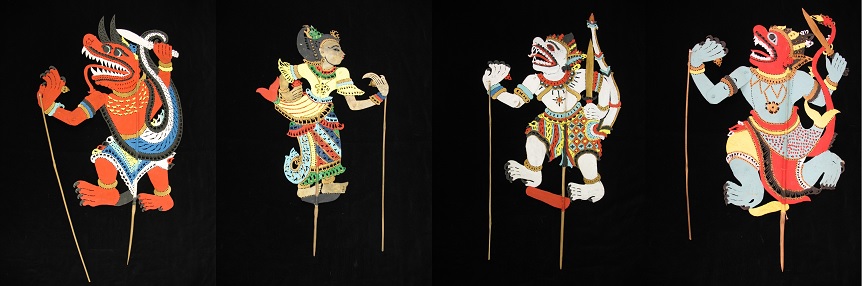
Nenek Sepit Pentala Naga | Tuan Puteri Ikan Selar Banum | Hanuman Kera Putih | Hanuman Ikan

In the Mak Yong Endeng Tajali, when the Great Raja dies, his sons the Elder Raja, the Middle Raja and the Young Raja fight for the throne. The Elder Raja is victorious and Middle Raja flees to the forest to became a Jin Gergasi haunting the land, while the Young Raja goes to the Laut Buih Gelombang Tujuh to become the Nenek Sepit Pentala Naga. At the centre of this lautan is, of course, the Pusat Tasek Pauh Janggi.

In the Kelantan Wayang Kulit at the bottom of, presumably, the same Pusat Tasek, there also lives a Nenek Sepit Pentala Naga. He is the Raja of the Negeri Lautan Buih. He has a beautiful daughter, the Tuan Puteri Ikan Selar Banum who marries the great warrior, Hanuman Kera Putih and has a child named Hanuman Ikan.

https://peabody.yale.edu/

http://rahimidinzahari.blogspot.com/2009/03/kembara-kata-di-balik-warna-rahimidin.html

Telinga Keling (1999)

Telinga Keling, Silver Halide Print, Niranjan Rajah, 1999. Permanent Collection of the National Visual Art Gallery, Kuala Lumpur

Updated on March 29th 2021:

With reference to the recurrent controversies around the use of the term ‘keling’, and with particular reference to the recent Dewan Bahasa dan Pustaka (DBP) inclusion of the word “keling” in its definition of “tambi,  there is no need for hysterical reaction from Indians about the presence of the word Keling in the Malay lexicon and publications in the Malay Language. After all if Indians think about it carefully, ‘thambi’ itself is problematic, as it can reflect status, class and cast when used to refer to adults. In fact it is far more troubling that we use the word ‘pariah‘ as a put-down in English as well as in Malay with scant criticism. However, it reveals an extremely poor standard of scholarship and professionalism on the part of the DBP that they have used the term ‘keling’ as an index for ‘Indian’ in the contemporary setting. Yes, this failure to recognize that the main contemporary usage of of the term is to put Indians down, might even reflect a systemic (unconscious) racism in the esteemed authority in whose care we have put the future of the Malay Language.

Telinga Keling (1999) is in the collection of the National Visual Art Gallery in KL. It is currently (oct 15 2019) on display again in a selection from the collection. ‘Keling’ is a today taken as a derogatory term for ‘Indian’ although, from its etymology, it is clear that this was not always so. The items obscuring my ears in the image are Malay sweets which are colloquially referred to as ‘Telinga Keling’ (Indian Ears). More formally and publicly, given our multi-racial Malaysian society, these cakes are referred to as ‘penyaram’ or ‘denderam’. Ironically, this Telinga Keling sweet is quite likely to be of Indian origin. My mother used to make something that tastes exactly the same that we call it ‘athirasam’

The idea of the piece is that I can engage the Malay viewers regarding this juncture of ‘sweetness’ and ‘derision’ while excluding the others, who would likely be unfamiliar with the cake’s colloquial name. Of course, there’ll be some Indians who know, particularly those from Kelantan where the sweet is prevalent, but empirically speaking, during the opening of its inaugural exhibition in Kuala Lumpur, the Indians had no idea and kept asking, ‘Why did you insult yourself in this work? ’, The Malays, however, smiled at me in and nodded in awkward acknowledgement.

https://malaysia.news.yahoo.com/ramasamy-tells-dbp-remove-racist-020100995.html