The main component of the Pokok Pauh Janggi installation is the Kobol Balik Lagi series of photographs (Duratrans). This 3rd series of the Koboi Project is based on photography done during the Seni Di Kota Symposium and Exhibition curated by Zanita Anuar at the National Art Gallery, Kuala Lumpur in December, 2015. In the original Koboi Balik Kampung series, I presented the Koboi within the vast panorama of the Malaysian culture, politics and life, photographed in and around Kuala Lumpur over a time span of three weeks. In the Koboi Balik Lagi series, I take on the challenge of finding and presenting the same significations, metonymically, within the reduced narrative time and pictorial space of one morning at the National Art Gallery. Koboi Balik Lagi is thus a more narrowly focused and self-reflexive Koboi narrative. The photography for this series was done by Zuraini Anuar who is the award winning art director and production designer in Malay cinema
In December 2019, The Koboi Projectpresented Dari Pusat Tasek at the Percha Artspace, Lumut, Perak. This presentation was realized as an installation in the gallery accompanied by a performance in the public space of the Lumut waterfront. Dari Pusat Tasek addressed salient themes of contemporary Malaysian society while also engaging with the forms and meanings of traditional Malay ritual and folklore. Documentary images of this earlier Percha Artspace performance forms the content of the Panji Pauh Ulungphotographic series of the Koboi Project. The Koboi now returns to Malaysia again, to present Pokok Pauh Janggi, a related performance and exhibition at Kapallorek Artspace, Bandar Iskandar, Bota, Perak. The exhibition features the Koboi Balik Lagi series of photographs and runs from 5th Aug – 30th Sept 2023. OPENING EVENTS on 5TH AUG: Performance 6pm, Reception 8pm, Artist Talk 9pm.
About the Koboi Project … a search for integral identity, across an inter-generational diasporic experience … The Koboi Returns 2023 – …Anwar Ibrahim has become the 10th Prime Minister of the nation …
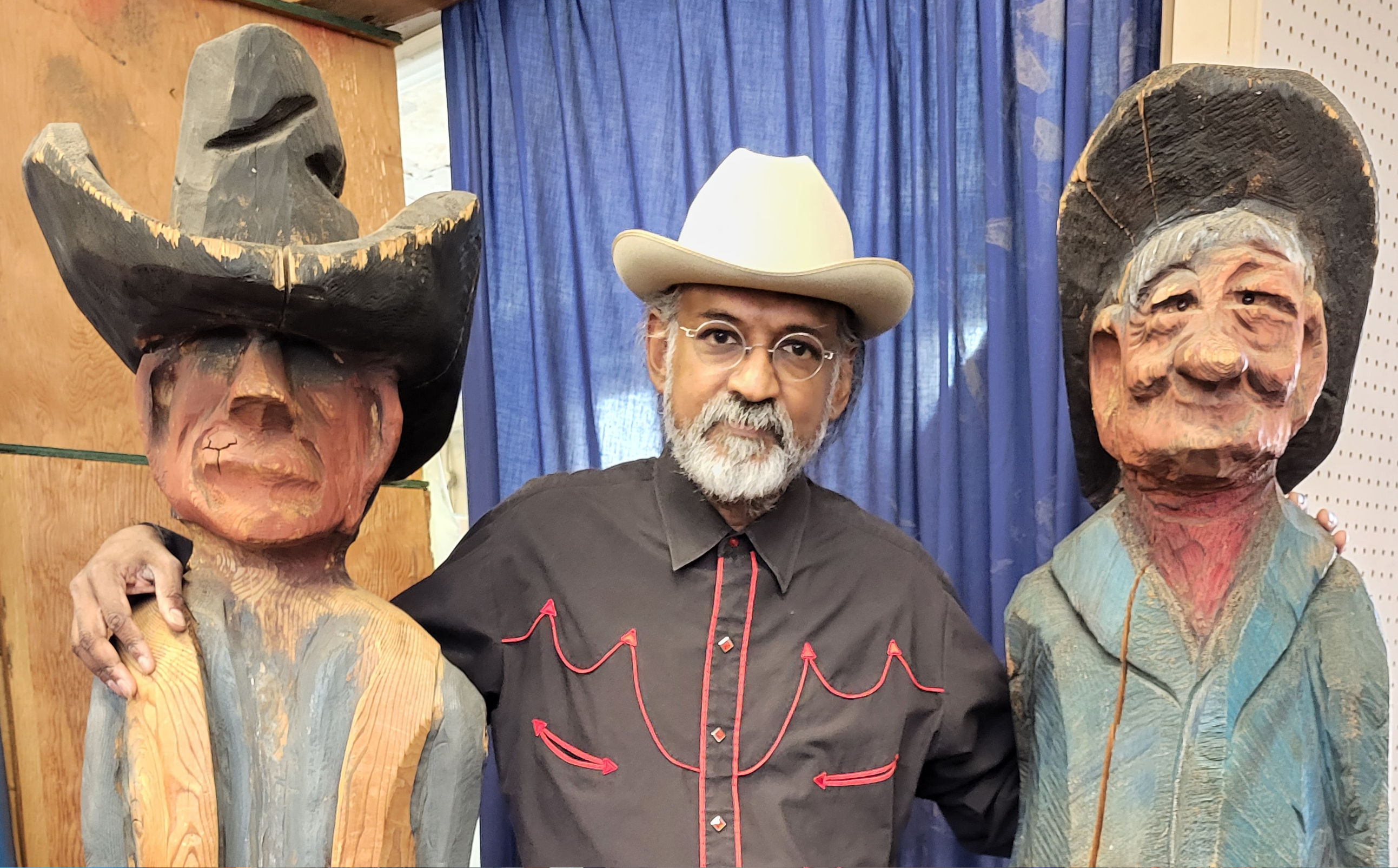
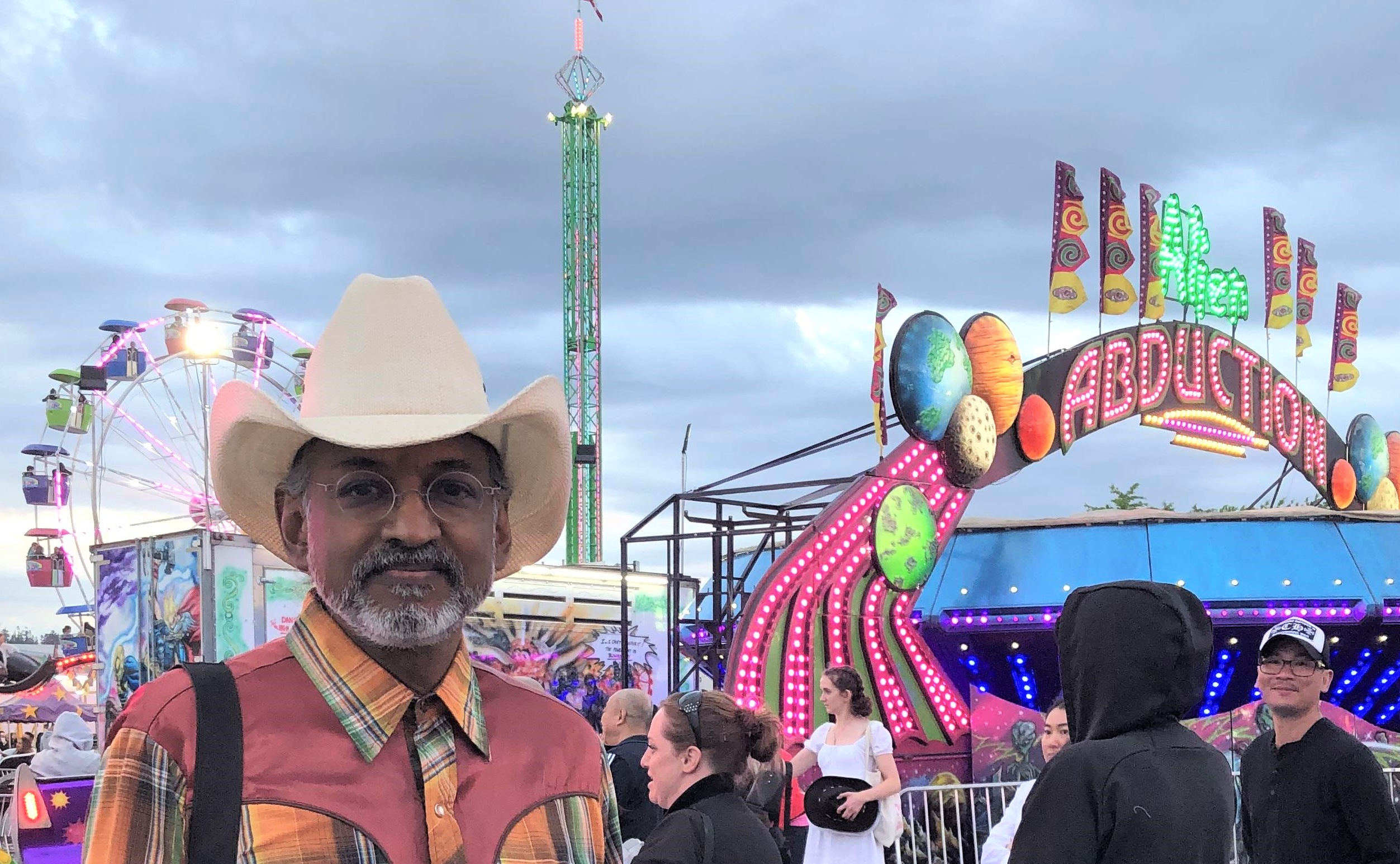
The Koboi Project centres on the question of identity and its relationship to authenticity. I dress as a cowboy, both in performance situations and in my private life. Indeed, I am very comfortable with this eccentricity of mine, so much so that, in some ways, I feel that I am a cowboy, albeit an urban cowboy who has never ridden a horse and has very little to do with cows. As a vegetarian, I do not even eat them. In my daily life, you could say it is my style. When I perform in Southeast Asia it stands for my return from the West. But what happens to the authenticity of my persona when I venture into real cowboy country.
Recently, at the Cloverdale Rodeo, I gained some insight into the nature of my Koboi persona and even the nature of cowboy persona itself. At the heart of the rodeo is the image of the pesky, spunky cowboy prevailing over the ornery Bronco, kicking and bucking to get him off its back. In my observation at Cloverdale, however, there seemed to be a little bit of a disconnect. Indeed, the horses buck violently, and the Cowboys hang on valiantly and skillfully, but are the horses bucking to get the cowboys off or are they bucking for some other reason? There is, in this context, a debate about the use of spurs and the application of pressure around the horse’s belly with what is called a flank strap. Some say the strap brings pain that causes the bucking and others that it merely gives form to the buck.
The BC SPCA says that the flank strap “applies pressure on their sensitive underbelly, causing discomfort. The rider also uses … spurs, to cause discomfort which leads to more bucking. While bucking is a natural behaviour of these animals, in rodeo it is a behaviour rooted in discomfort, not in play.” In other words, it is not as it appears, that the horse is bucking to get the rider off, but as a response to the discomfort caused by the flank strap. The cowboy’s art of hanging on is incidental or secondary to the main action. Proponents of rodeo however, counter with the argument that the horse bucks because it is in its nature and breeding to do so, and that the “flank strap alters the bucking action of the horse by encouraging him to kick out straighter and higher with his hind legs, thus making himself harder to ride. The flank strap stacks the odds in favor of the horse. It cannot make him buck.” With regard to the spurs, they insist that they are required to be blunt and spinning and that they also put the odds in favor of the horse, as the forward position of the feet required to spur the horse in the shoulders makes it much harder for the cowboy to stay on.
Even within the proponents’ terms, it can not be denied that there is a sense that the bucking is being induced and conditioned independently of the horse’s impulse to get the rider off its back. The horse is just bucking independantly and the rider holds in an illusion of relationship. The question of cruelty aside, the rodeo cowboy’s ride is a performance, and not unlike my own Koboi performance, an artifice or fiction of sorts.
Having lived in Vancouver, so close to Western Canada’s cowboy country, and having been a cowboy of sorts myself, since 2013, it is of note that the Cloverdale Rodeo and County Fair 2023 is ‘my first rodeo’. Jane and I were given VIP tickets to the Stetson Suite by Dave from the Rockin Cowboy, where I have acquired much of my Western gear since the start of the Koboi Project. In fact, Dave had invited me before but I have always, evaded his kind invitation due to my concerns about animal welfare. You see, I am a vegetarian Cowboy. Yes, an oxymoron! This time, however, I accepted. After a decade of being the Koboi, I wanted to be able to use the expression – this aint my first rodeo, meaningfully! While I did feel concerned for the animals involved, not to mention the cowboys being bucked about, I can’t say I did not enjoy myself. Thanks Cowboy Dave!
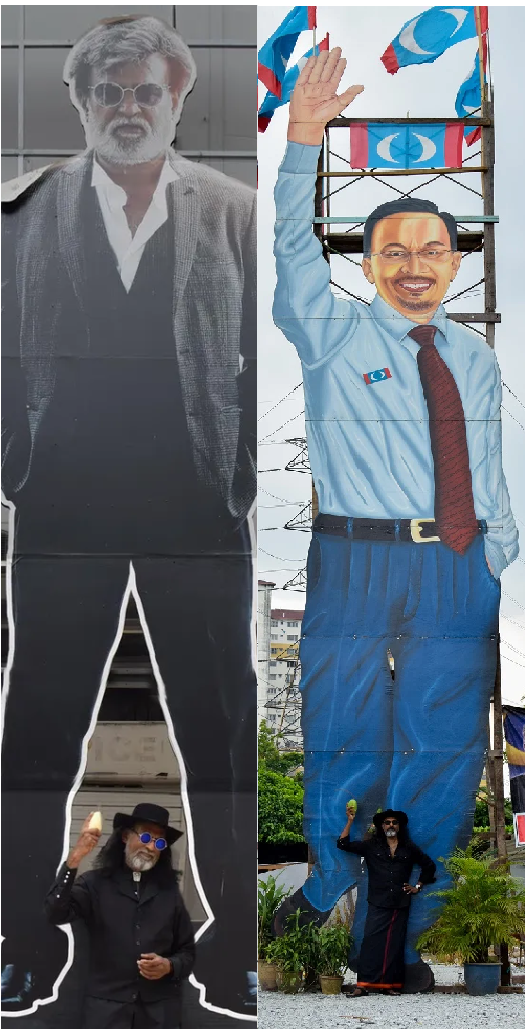
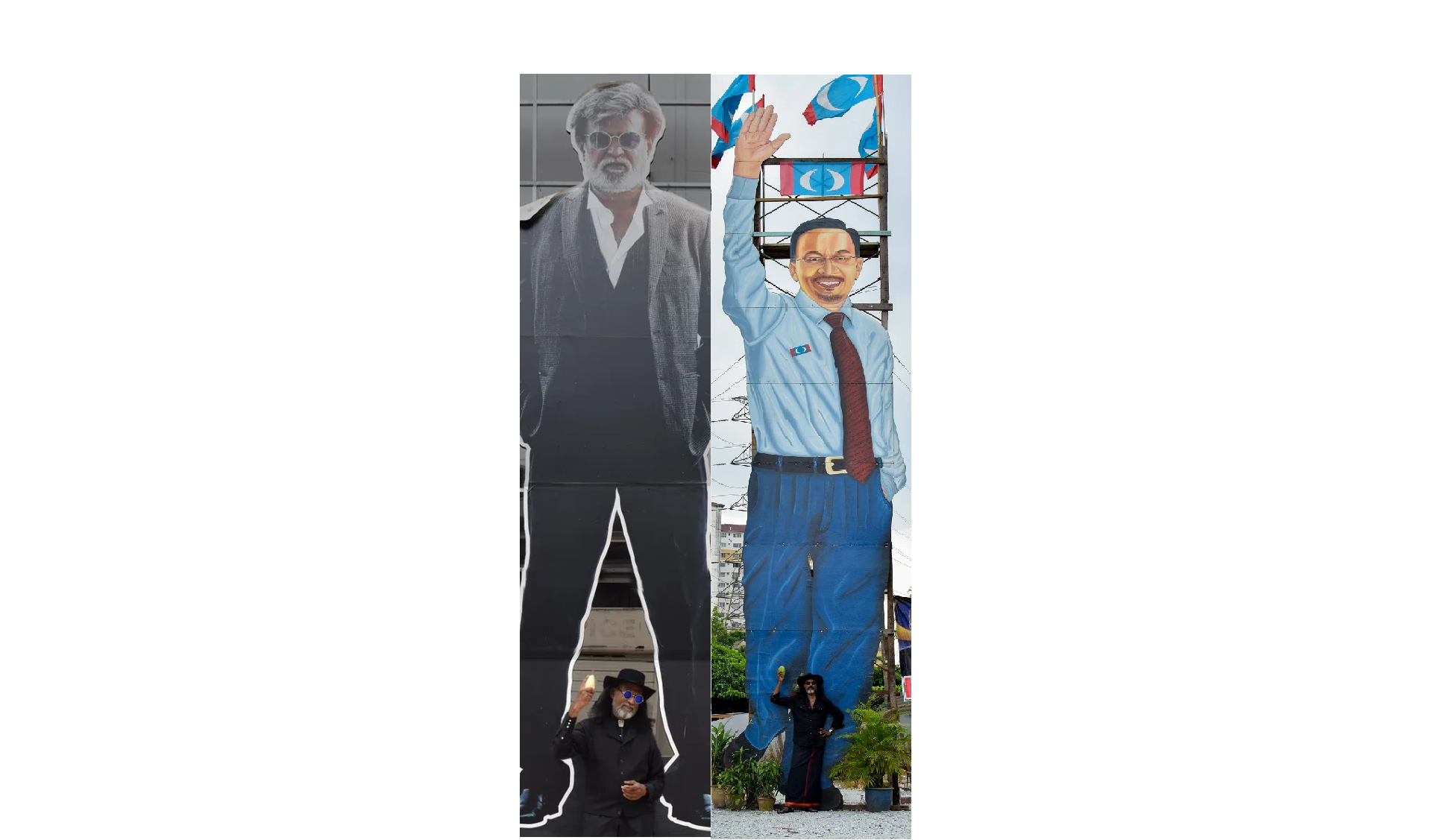
In December 2019, I did a Koboi Performance for Percha Art Space in Lumut, in which I raised a new SUPERSTAR banner depicting a giant hoarding of Anwar Ibrahim. I performed a cleansing ritual on the Lumut waterfront and left for Vancouver soon after. I will return to Malaysia in August this year (2023).
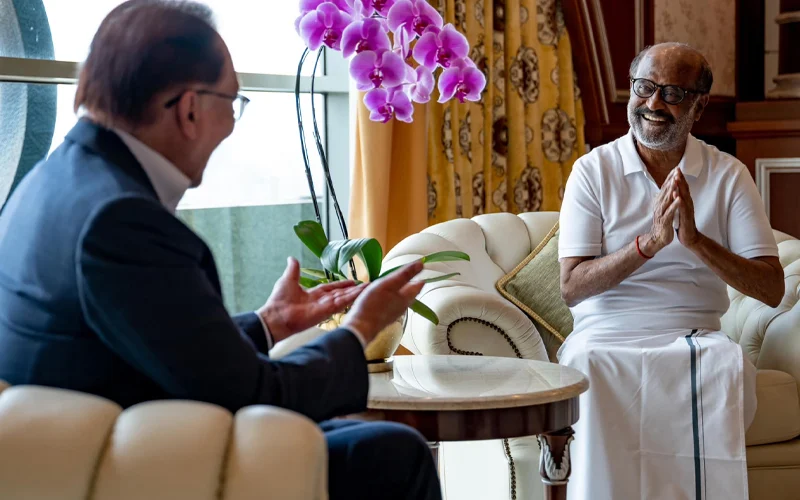
Since my performance, and after a long struggle, Anwar Ibrahim has become the 10th Prime Minister of the nation and holds on to this seat by the skin of his teeth. Anwar incredible return to power, after a quarter-century perjuangan, is an exemplary Hero’s journey – a striking display determination, endurance and a sense of destiny. To mark my own much less momentous return, I am working towards another Koboi Performance the details of which will be announced shortly.
With the coffin shaped sculpture, May 13, 1969 by Redza Piyadasa as a blurry backdrop, this image, titled 8 My Country, from the Dendang Koboi Gelap, 2016, raises the question of nation in contemporary Southeast Asian art. It marks the irony that one of the few art works that contemporaneously addressed our national tragedy, does not stand proudly and self-reflectively in the light of the Balai Seni Lukis Negara, Malaysia, but instead, presents itself nakedly to the gaze of others at the National Gallery of Singapore.
For those who are not familiar with South East Asian Art and Malaysian history -Essentially May 13th 1969 is an infamous day of racial rioting for Malaysia. Many people died. Reza Piyadasa is one of the few artists of that time who made contemporaneous artworks that have ‘survived’, which in the art world, means collected and written about, and in this particular case, commissioned and remade. This piece memorializes the tragedy and explores its meaning for the nation.
My photo above, which is a simple art gallery selfie type shot, carries within it the possibility of a critique of both Malaysian and Singaporean institutional attitudes – 1. Why has the Malaysian institution of record not bothered to collect this important work of national self-reflection and, in not doing so, missed the opportunity to interrogate and explore its meanings? May 13, 1969 is a work that should stand proudly in the National Gallery in Malaysia. 2. While National Gallery of Singapore is entitled to collect any work it finds interesting and should be commended for recognizing and preserving this important work, I can’t help but ask – what happens to the reading of May 13, 1969, when this this racially and politically provocative work is presented to the gaze of global others, outside of its meaningful context, far from its original function of affording self-reflection?
May 13, 1969 was remade in 2006, the original having been destroyed by the artist in a performative act.






 The Koboi Project
You must be logged in to post a comment.