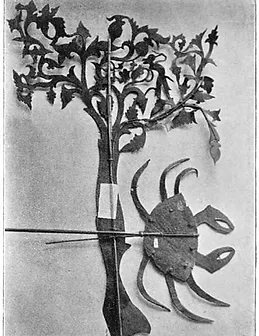
For the Pokok Pauh Janggi performance at Kapallorek Artspace, I worked with Greta Burley to remake two Kelantan Wayang Kulit puppets that seem to be known only from a photograph in Walter William Skeat‘s Malay Magic. The Pokok Pauh Janggi and the Ketam Gergasi puppets were collected by Skeat in the late 19th Century. The new puppets were made in Vancouver from deerhide using a laser cutter.
Pokok Pauh Janggi performance and installation by Niranjan Rajah runs from 5th Aug – 30th Sept 2023.
Soalan: Boleh tak tahi besi kita buat berobat nak pagar rumah, guna ayat Koran?
Jawapan: Boleh buat Tahi Besi buat pagar, tetapi pagar kawat itulah! (Hah, pasal dia besi … buat kawat 🙂 ) Yang tak boleh nya, tahi besi itu yang kita jaga rumah kita. Tak Boleh! Dan kalau Al Koran dengan selawat … boleh. Faham? Aaa!
The above extract.from a ceramah by Ustaz Azhar Idrus evidences a persistant syncreticism in the quotidian practice of Islam amongst the Malays of the peninsular. The Bahasa transcription is my best translation of the Ustaz’s loghat Kelate. I would appreciate corrections. Please send to nrajah@sfu.ca
The Pokok Pauh Janggi installation runs from 5th Aug – 30th Sept 2023 at the Kapallorek Artspace in Bandar Seri Iskandar, Perak.
MEMBUKA PANGGONG Hei Jin Tanah, Hantu Tinggi, Hoi Jembalang Wayang ! Dato’ jangan membisakan, Aku tahu asal ‘kau jadi : Dato jangan membe’ngkakkan : Bintang Timor asal ‘kau mula jadi. Biar sagala makhluk suka permainan kita, Berkat Dato’ Batara Guru Menyaksikannya.
MEMBUANG BADI O Si Lanang, Si Lambaun, Si Ketor, Si Becheh, orang yang berampat, Ambil kembali bahagian-kau dari rusa ini!
O Mentala Guru Asa sabulan, dua sabulan,Tiga sabulan, ampat sabulan, Lima sabulan, anam sabulan, Tujoh sabulan, malam di-angkau, Siang di-aku. Sa’ekor aku bawa balik, Sa’ekor aku tinggalkan!
MENGHIDUPKAN PATONG POKOK PAUH JANGGI Hei Toh Mambang Puteh, Toh Mambang Hitam Yang diam di bulan dan matahari Melempahkan sakalian ‘alam asal-nya pawang, Menyampeikan sakalian hajat-ku, Melakukan sagala kahandak-ku, Hidulaplah Pokok Pauh Janggi!
MENGHIDUPKAN PATONG KETAM GERGASI
Al-salam ‘aleikum ! Hei sahabat-ku Mambang Tali Harus, Yang berulang ka pusat tasek Pauh Janggi, Sampeikan-lah pesan-ku ini, Bangunkan Jambalang Ketam Gergasi!
In December 2019, The Koboi Projectpresented Dari Pusat Tasek at the Percha Artspace, Lumut, Perak. This presentation was realized as an installation in the gallery accompanied by a performance in the public space of the Lumut waterfront. Dari Pusat Tasek addressed salient themes of contemporary Malaysian society while also engaging with the forms and meanings of traditional Malay ritual and folklore. Documentary images of this earlier Percha Artspace performance forms the content of the Panji Pauh Ulungphotographic series of the Koboi Project. The Koboi now returns to Malaysia again, to present Pokok Pauh Janggi, a related performance and exhibition at Kapallorek Artspace, Bandar Iskandar, Bota, Perak. The exhibition features the Koboi Balik Lagi series of photographs and runs from 5th Aug – 30th Sept 2023. OPENING EVENTS on 5TH AUG: Performance 6pm, Reception 8pm, Artist Talk 9pm.
About the Koboi Project … a search for integral identity, across an inter-generational diasporic experience … The Koboi Returns 2023 – …Anwar Ibrahim has become the 10th Prime Minister of the nation …
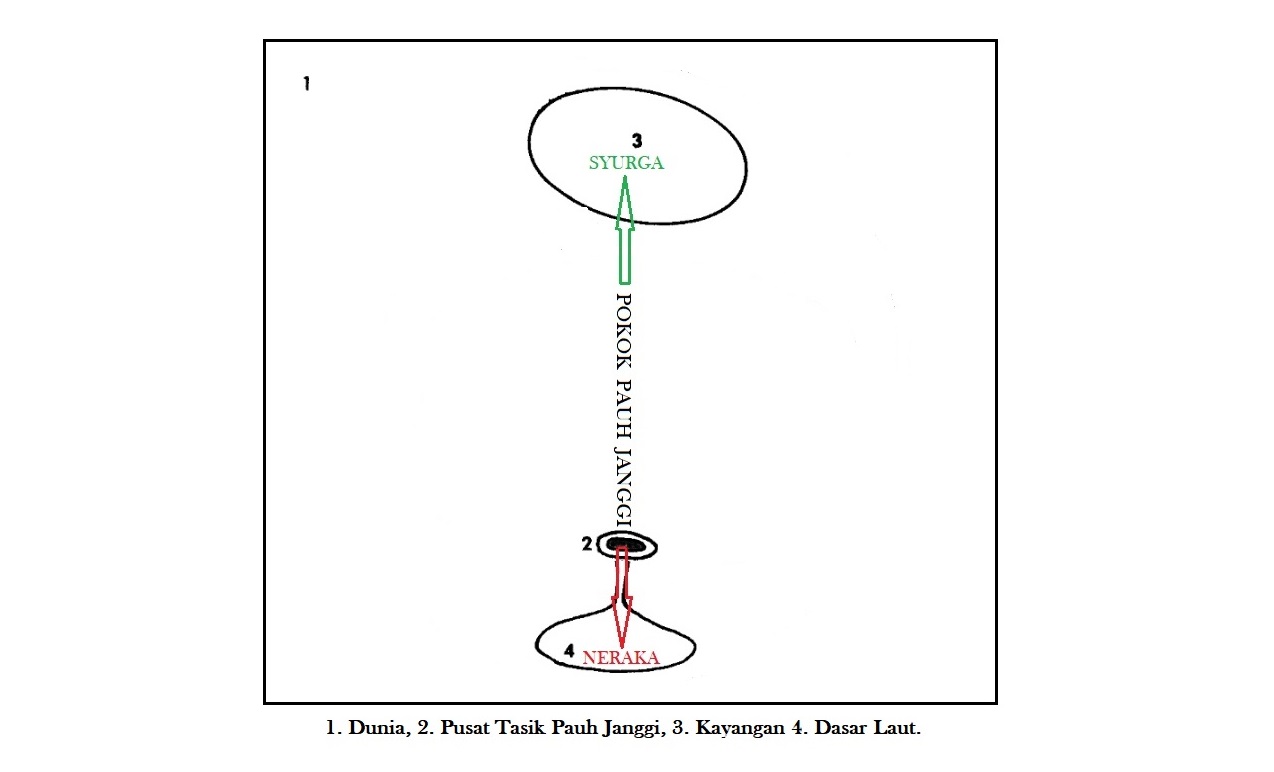
The Pohon Beringinrepresents the three levels to the Malay cosmos, with fishes, serpents, or crocodiles at the bottom level representing the lower Waterworld; land animals like monkeys or elephants in the middle level representing the earth; birds at the top level representing the Skyworld. This tripartite division maps on to 5. Kayangan (Skyworld), 1 Dunia (earth) and 6 Dasar Laut (Waterworld) of the more complex Malay Cosmology as laid out by Md. Salleh Yaspar. In this syncretic premodern Malay Cosmology that integrates all previous ontologies with that of Islam, 5. Kayangan is consonant with Syurga and 6 Dasar Laut with Neraka, above and below the 1 Dunia,respectively.
This structure arguably underpins the story of Haji Batu whose ship went down while crossing the fearsome Pusat Tasek, as he was journeying to perform the Haj, Haji Batu clung to the Pokok Pauh Janggi and drew himself up on 7 nails that he drove into the tree. When he reached the top, he attached himself to the Burong Roc (Garuda) and flew Westward on his Journey to Mecca. (see Walter William Skeat’s Malay Magic). The climbing up the 7 nails can be seen as being an analogy for rising from the seven realms of Hell (the 7 nails could equally represent the seven levels of Heaven of course, or both (seven is a number of multilayered cosmological and soteriological significance) and the flight of the Burong Roc, for an ascent into the Skyworld.
In fact, in the sufi understanding of being, which is based on the Quranic Jihad al-nafs (battle agains the self), there are seven nafs or states of desire through which the adept must rise. The lowest state is Nafsi Ammara, a manifestation of the animal soul in man. In Nafsi Lawwama man hears the voice of his conscience and tries to resist carnal desires. Nafsi Mulhima is when man receives direct instructions from his Lord. In Nafsi Mutmainna, man is freed of self-indulgence and finds peace and tranquility in a state of piety and obedience to the Lord. Nafsi Radiyya is when man accepts all that happens without any resentment or pain, and when good and bad become equal to him. In Nafsi Mardiyya man assumes the Divine Attributes, leaving behind the material realm, and finally, in Nafsi Safiyya, man reaches the purity of perfect harmony.
According to Edith Jachimowiczhe, Islamic cosmology echoew the geocentricity of the Aristotalian/ Ptolemaic Cosmos. The space between the surface of the earth and the sphere of the Moon is known as the sub-lunary region. It is the realm of the elements, of minerals, plants, and animals, and of generation and corruption. In addition to the eight Ptolemaic spheres (Moon or falak al-kamar, Mercury or falak al-utarid, Venus or falak al- zuhra, Sun or falak al- shams, Mars or falak al-Mirrikh, Jupiter or falak al-Mushtari, Saturn or falak al-Zuhal, Fixed Stars or falak al-burudj), the Islamic cosmos has a ninth Sphere, the Sphere of Spheres or falak al-aflak. This astronomical (physical) model of the cosmos is integrated with a theological (metaphysical) cosmology.
In the explaining the relationship of the structure of the Islamic cosmos to the process of the primordial Creation, Jachimowiczhe cites theTasawwurat of Nasir al-Din Tusi, in which it is said that the creative force “reached the Throne of God, from the Throne reached the pedestal and, from the Pedestal again, descended to the sphere of Saturn and became attached to it. Again, it descended further, from one sphere to the other, until it reached the sphere of the moon. Then the exaltations and the rays of the stars, by the force of that energy and through the mediation of the sphere of the moon, fell upon the elements. This was certainly the cause which stirred the elements …” A line of force is drawn from the highest heaven down to the sublunary region and, given the notion of the ‘stirring’ of the elements, we might impute a turning movement to this force. In my own imagination, this line of force echoes the axial function and dynamics of the Pokok Pauh Janggi which links Dasar laut to Kayangan in the Malay cosmos.
Image: Jachimowicz, Edith (1975). Islamic Cosmology. In Carmen Blacker, Michael Loewe & J. Martin Plumley (eds.), Ancient Cosmologies. Allen & Unwin.
The Sidrat al-Muntahā or the Lote Tree of the Utmost Boundary, is mentioned in the Qur’an and Hadith in the context of the Holy Prophet’s ascent (Mi’raj) to receive the Islamic revelation. According to Edith Jachimowicz this tree marks the boundary between the outermost of the seven realms of paradise (astronomical Heaven) with the first of the three realms of God (theological Heaven). It is a boundary that no angel and no man other than the Holy Prophet has crossed.
While there is no direct connection or association between the Sidrat al-Muntahā of the Islamic revelation and the Pokok Pauh Janggi of the Alam Melayu, there is a clear coincidence of placement within their respective cosmologies. If the Sidrat al-Muntahā is directly below the highest heavens, the Pokok Pauh Janggi is rooted at the threshold of underworld, directly above the Dasar Laut ’. Both trees seem to stand on a cosmic axis, perhaps with differing emphasis on cosmogonic (literal structure of the universe) and escathalogical (allegory of the soul’s final journey at the end of time) aspects of existance.
Jachimowicz, Edith (1975). Islamic Cosmology. In Carmen Blacker, Michael Loewe & J. Martin Plumley (eds.), Ancient Cosmologies. Allen & Unwin.
According to Malay folklore, in the far depths of the ocean, there is a great whirlpool known as the ‘Pusat Tasek’ or the ‘navel of the seas’. At the centre of this whirlpool, there is an enormous tree known as the Pokok Pauh Janggi. This place, identified in Malay Cosmology as the Pusat Tasik Pauh Janggi, is inhabited by Nagas, Jins, Garudas and other such creatures. One of these creatures sits on the ocean floor, at the base of the tree blocking a gigantic opening at the root of the tree. This opening leads further down to the nether world of the Dasar Laut inhabited by Raja Lebis. Further, according to Anker Rentse, it is from the Dasar Laut, that the swirl of the Pusat Tasek rises in the course of ocean water draining down the opening. In some versions of this cosmology, a dragon guards this hole and its body also blocks the hole, preventing the ocean from running dry. In other accounts it is not a dragon but a giant crab that holds the waters up. It is the daily movements of this crab, unblocking and reblocking the hole, that cause the movement of the waters that we humans experience as currents and tides. The above Kelantan Wayang Kulit puppets of the Pokok Pauh Janggi and the giant crab were collected by Walter William Skeatfrom a Tok Dalang in the late 19th Century. They index the likelyhood that the Wayang repertoire was once replete with representations of indegenous Nusantara myths and ideas that have since been abandoned.
The downward spiral of the Pusat Tasek and the upward thrust of the enormous Pokok Pauh Janggi combine to create the axis of the Malay cosmos (ontology). Anker Rentse explains, from ethnographic notes that seem to have been made in Ulu Kelantan “Shurga, Heaven, is on the top of Pauh Janggi, and Nuraka, Hell, is down below its roots. A gigantic hole between the roots causes the ocean water to disappear into hell’s big boiling-pot, kawah nufaka , whence the whirl-pool. Underneath the pot burns everlasting fire. A dragon guards the hole, the gate to hell ( pintu nuraka) with its body in order to prevent the ocean from running dry. In Pusat Tasek an account is kept of the good and the bad deeds of every human being in the world. The accountant in Heaven is Ka’ Tebir, and in Hell, Kiraman. The last one is said to be so busy on occasions, that he gets angry, throws his pen on the floor and declares, Ini sekarang sudah chukup!”
The Dari Pusat Tasek show runs at the Percha Art Space in Lumut till the 5th Jan 2020 (EXTENDED TILL 19 JAN 2020).
In the Hikayat Jaya Langkara, a quest for the healing saffron flower leads the Princess Ratna Kasina to a mountain at the pusat tasek where the rising tide brings the miraculous flower up within her reach. While there is no mention of the Pokok Pauh Janggi in this fable, the buah Pauh appears twice in the list of similes used to extoll the beauty of Princess. Princess Ratna Kasina is said to have cheeks like sliced mango (pipi-nya saperti pauh di-layang), and heels like turned (or peeled) mango (tumit-nya saperti pauh di-larek).
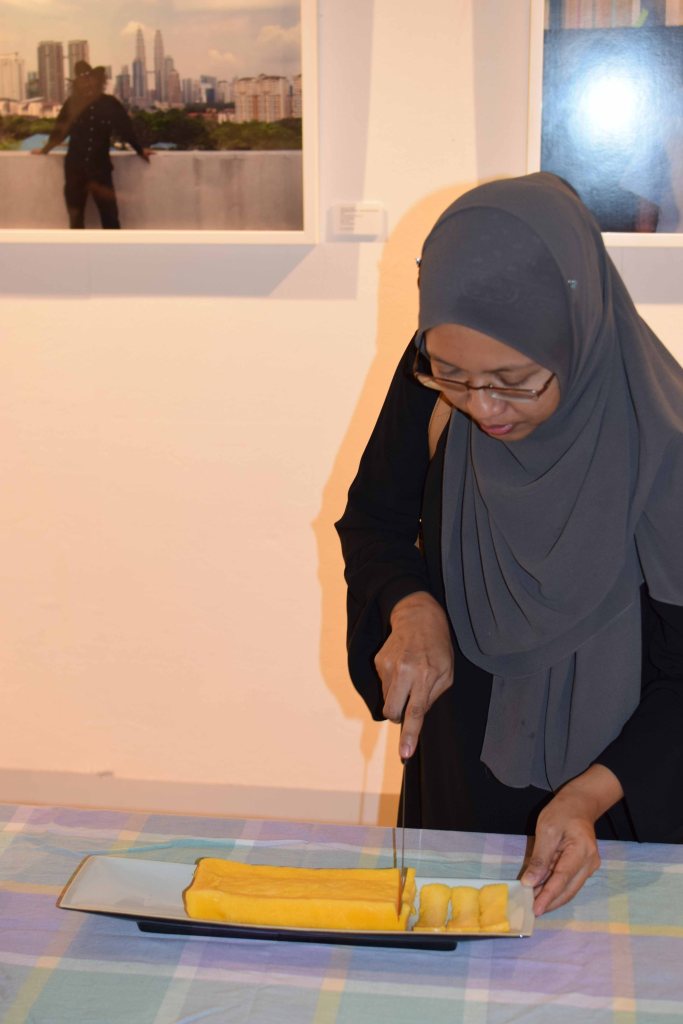
For the opening reception of the show at Percha Art Space, Percha Director, Suhaila Hashim, steamed her first Kueh Pauh Dilayang after experimenting with recipes found online. The cake was sliced (dilayang) and served to locate the mango within Malay mythology and aesthetics, and to articulate the core symbolism of the Dari Pusat Tasek happening which includes –
a performance based the mythic realities of the ‘navel of the seas’ or the Pusat Tasik Pauh Janggi.
a gallery installation featuring the Koboi Balik Kampung series of 12 photographic prints and presents an autobiographical take on the complexities of contemporary Malaysian art and society.
and the serving of this rare Kelantan sweet – the Kueh Pauh Dilayang.



 The Koboi Project

You must be logged in to post a comment.