In my Pokok Pauh Janggi performance at Kappalorek Artspace the embroidered Eagle motif on a Western Bib shirt becomes a signifier for the Giant Burong Roc.

The Koboi Project is a photo-performative instantiation of identity across the discontinuities of a multi-generational diasporic experience.
In my Pokok Pauh Janggi performance at Kappalorek Artspace the embroidered Eagle motif on a Western Bib shirt becomes a signifier for the Giant Burong Roc.

Hamzah Yazd composed a new sajak titled Dari Pusat Tasek for the opening of the Pokok Pauh Janggi performance/exhibition at Kapallorek Artspace, Seri Iskandar, Perak in August 2023. This poem was completed in July 2023 but the last stanza was initially presented at the Dari Pusat Tasek performance/ Installation in December 2019 at Percha Artspace, Lumut.
Dari Pusat Tasik
titis titis puitis
titik titik puitik
ritma koma sabdu
bunyi noktah seru
titis
titik
titis menitis
titik menitik
menitis menitik
menitis menitik
menitis menitik
tik tik tik
tis tis tis
ritma koma sabdu
bunyi noktah seru
datanglah…
tujuh mata air
air mata tujuh
semburkan
dalam tujuh lautan
kesunyian
bisikan tujuh nafsu
pemilik akar keramat
memanggil namamu!
tujuh kali terkoyak!
lalah
leleh
lalah melalah
leleh meleleh
melalah meleleh
melalah meleleh
melalah meleleh
menggeliat!
geliat pohon
pauh janggi
berselimut maghrib
sunyi terperi diri
lepaskan segala-galanya
binasa-kegelapan lahir
purnama bersuluk pergi
siuman tengah malam
sajak sajak redam
koboi balik kampung
menghiris pauh ulung
Hamzah Yazd
Lumut
9/7/2023
5.30ptg
See a video recording of the reading: –https://www.facebook.com/niranjan.rajah/posts/pfbid0XiZ8q8nyNpwxMGFjo5cNAuQkTR2xzzjXyXq18UjW8RdhQjxKkCquZeajVpHRpGhVl
The whole reasing fo 4 poems is here –
https://www.facebook.com/nadiya.abdullah.1/videos/686602420190497

In this late career engraving by Dutch painter Johannes Stradanus (1523-1605) commerating Ferdinand Maggellen’s discovery of the passage around the globe, there is a representation of the ‘Roc.’ In his essay analysing this complex collection of realistic, emblematical, and mythological representations, Rudolph Wittkover makes two references that locate the abode of the creature in what must be the South China Sea. He notes that Maggellen’s companion and chronicler, Antonio Pigafetta, locates its home in the “Chinese Seas”. Indeed, as the ship in the illustration, is coming out of the Magellen Straits and facing the open Pacific Ocean, the South China Sea might be located in the North Westerly direction from whence the Roc could be interpreted as approaching the scene. Wittkover also cites the Maghrebi explorer and scholar, Ibn Batuta, who tells how, again, in the Chinese Seas, a massive form that he and his fellows thought was a flying mountain, turned out to be the Roc. These accounts tie in with the notion that the Roc nests in the Pokok Pauh Janggi at the center of the Pusat Tasek, located somewhere in the South China Sea.
https://www-jstor-org.proxy.lib.sfu.ca/stable/pdf/750014.pdf

The Pohon Beringin represents the three levels to the Malay cosmos, with fishes, serpents, or crocodiles at the bottom level representing the lower Waterworld; land animals like monkeys or elephants in the middle level representing the earth; birds at the top level representing the Skyworld. This tripartite division maps on to 5. Kayangan (Skyworld), 1 Dunia (earth) and 6 Dasar Laut (Waterworld) of the more complex Malay Cosmology as laid out by Md. Salleh Yaspar. In this syncretic premodern Malay Cosmology that integrates all previous ontologies with that of Islam, 5. Kayangan is consonant with Syurga and 6 Dasar Laut with Neraka, above and below the 1 Dunia, respectively.
This structure arguably underpins the story of Haji Batu whose ship went down while crossing the fearsome Pusat Tasek, as he was journeying to perform the Haj, Haji Batu clung to the Pokok Pauh Janggi and drew himself up on 7 nails that he drove into the tree. When he reached the top, he attached himself to the Burong Roc (Garuda) and flew Westward on his Journey to Mecca. (see Walter William Skeat’s Malay Magic). The climbing up the 7 nails can be seen as being an analogy for rising from the seven realms of Hell (the 7 nails could equally represent the seven levels of Heaven of course, or both (seven is a number of multilayered cosmological and soteriological significance) and the flight of the Burong Roc, for an ascent into the Skyworld.
In fact, in the sufi understanding of being, which is based on the Quranic Jihad al-nafs (battle agains the self), there are seven nafs or states of desire through which the adept must rise. The lowest state is Nafsi Ammara, a manifestation of the animal soul in man. In Nafsi Lawwama man hears the voice of his conscience and tries to resist carnal desires. Nafsi Mulhima is when man receives direct instructions from his Lord. In Nafsi Mutmainna, man is freed of self-indulgence and finds peace and tranquility in a state of piety and obedience to the Lord. Nafsi Radiyya is when man accepts all that happens without any resentment or pain, and when good and bad become equal to him. In Nafsi Mardiyya man assumes the Divine Attributes, leaving behind the material realm, and finally, in Nafsi Safiyya, man reaches the purity of perfect harmony.
https://ejournal.um.edu.my/index.php/MJPVA/article/view/13970/9368

In the Malay cosmology, 5. Kayangan is located above the Pokok Pauh Janggi which rises through the 2. Pusat Tasik Pauh Janggi, which is directly above the 6 Dasar Laut or ‘underworld’. The downward spiral of the Pusat Tasek and the upward thrust of the enormous Pokok Pauh Janggi both pass through the 1. Dunia, combining to create the axis mundi of the Malay cosmos. In the Islamic cosmos (see Jachimowicz) the force of creation moved down from the Throne of God, through the planetary spheres to the sublunary realm where its moment stirs the elements into becoming the manifest world. A line of force is drawn from the highest heaven down to the sublunary region echoing the axial function and dynamics of the Pokok Pauh Janggi.
Image: Diagram of the physical cosmos from Jachimowicz, Edith (1975). Islamic Cosmology/ The Malay Cosmos diagram is adapted after Md. Salleh Yaspar in Malaysian World View edited by Mohd Taib Osman.
Jachimowicz, Edith (1975). Islamic Cosmology. In Carmen Blacker, Michael Loewe & J. Martin Plumley (eds.), Ancient Cosmologies. Allen & Unwin.
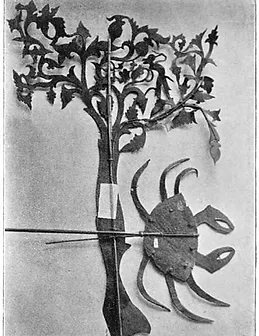
According to Malay folklore, in the far depths of the ocean, there is a great whirlpool known as the ‘Pusat Tasek’ or the ‘navel of the seas’. At the centre of this whirlpool, there is an enormous tree known as the Pokok Pauh Janggi. This place, identified in Malay Cosmology as the Pusat Tasik Pauh Janggi, is inhabited by Nagas, Jins, Garudas and other such creatures. One of these creatures sits on the ocean floor, at the base of the tree blocking a gigantic opening at the root of the tree. This opening leads further down to the nether world of the Dasar Laut inhabited by Raja Lebis. Further, according to Anker Rentse, it is from the Dasar Laut, that the swirl of the Pusat Tasek rises in the course of ocean water draining down the opening. In some versions of this cosmology, a dragon guards this hole and its body also blocks the hole, preventing the ocean from running dry. In other accounts it is not a dragon but a giant crab that holds the waters up. It is the daily movements of this crab, unblocking and reblocking the hole, that cause the movement of the waters that we humans experience as currents and tides. The above Kelantan Wayang Kulit puppets of the Pokok Pauh Janggi and the giant crab were collected by Walter William Skeat from a Tok Dalang in the late 19th Century. They index the likelyhood that the Wayang repertoire was once replete with representations of indegenous Nusantara myths and ideas that have since been abandoned.
http://www.gutenberg.org/files/47873/47873-h/47873-h.htm
https://www.jstor.org/stable/41559822?seq=1

Malaysia has recently been beset by an epidemic of betrayal and disloyalty in the political arena. There seems to be no penchant for integrity in the accelerating realignments of opportunity. In this never ending saga, this interminable tragedy, that is contemporary Malaysian politics, one figure stand out as a complex of qualities. A relentless fighter, a hopeless loser, beacon of hope, a focus of hatred and an object of ridicule, Anwar Ibrahim is all of these in one. He seems to be all things to all Malaysians, and while he is still the leader of the parliamentary opposition, his recent u-turn on around challenging the incumbent Bersatu-led government on the budget vote may signal an the end of his long and arduous quest to become Prime Minister.
Anwar purports to stand reform and unity over corruption and ethnocentric politics, but his past and his present actions indicate that this may just be the position he finds himself in. Anwar began as a firebrand Malay/ Islamic youth leader in the late 1960’s who was co-opted to the mainstream of Malaysian politics by Dr Mahathir Mohamed in 1982 and then dramatically ejected from his place of power in the United Malays National Organisation (Umno) and imprisoned on the basis of a sodomy conviction, arguably under the auspices of by the very same Dr M in 1993. His recent return to a place of power has, once again, been on the coat-tails of Dr. M and, once again, he has been severely let down. This recent collaboration between these two bitter political political foes was arrived at on the basis of the utter repugnance and destructiveness of the present UMNO leadership. Now, in the increasingly fragmentary and multivalent political scenario, there is some well reasoned speculation that Anwar is contemplating alignment with these very folks. As the Financial Times puts it, some might say that his journey “has been Janus-faced and opportunistic.”
The Asia Times suggests that Anwar faces such a situation today, that he might prefer to “choose to withdraw PKR from the PH coalition to stand in the general election on its own, affording him more room to negotiate with UMNO or form a new coalition with whichever parties are expedient depending on the outcome of the polls.” Disappointing though this all is from the point of view of the mandate and manifesto, I suggest that, either by reason of true conviction or pure circumstance, Anwar Ibrahim remains the best hope for a progressive and inclusive Malaysia. I am not, however, optimistic that, if Anwar pursues such a hardcore realpolitik , it will play out for the good of all the rakyat.
Related Posts –
1 Kibaran Bendera
Harapan 9
Politik Ulangan (1993 -2020)
Politik Mahathir (1998 – 2020)
Politik Melayu (1969 – ?)
Saudara Baru 2
Antara Saudara Mara 17
The above image from the from the Panji Pauh Ulong Series was shot in on the Lumut Waterfront, Perak in the course of the Dari Pusat Tasek performance presented by Percha Artspace on 25th Dec 2019. A 15 ft banner image of Anwar Ibrahim was raised on an 18ft flagstand in a performance that was loosely based on a Perak Malay cleansing ritual using cut limes. After 7 points of my body were rubbed with lime, I faced East and spat 7 times. I then threw the remains of the limes in the Westerly direction saying, “Pergi-lah semua sial jambalang daripada badan aku dan dari tubuh negara, pergilah ke Pusat Tasek Pauh Janggi“ (‘Misfortune and spirits of evil begone from my body and from the body of the nation, begone to the Navel of the Seas!). Water was then poured over me in order to complete the cleansing.
https://www.ft.com/content/8d5407c8-b262-11e2-8540-00144feabdc0
https://asiatimes.com/2020/12/first-notes-of-anwars-swan-song-in-malaysia/

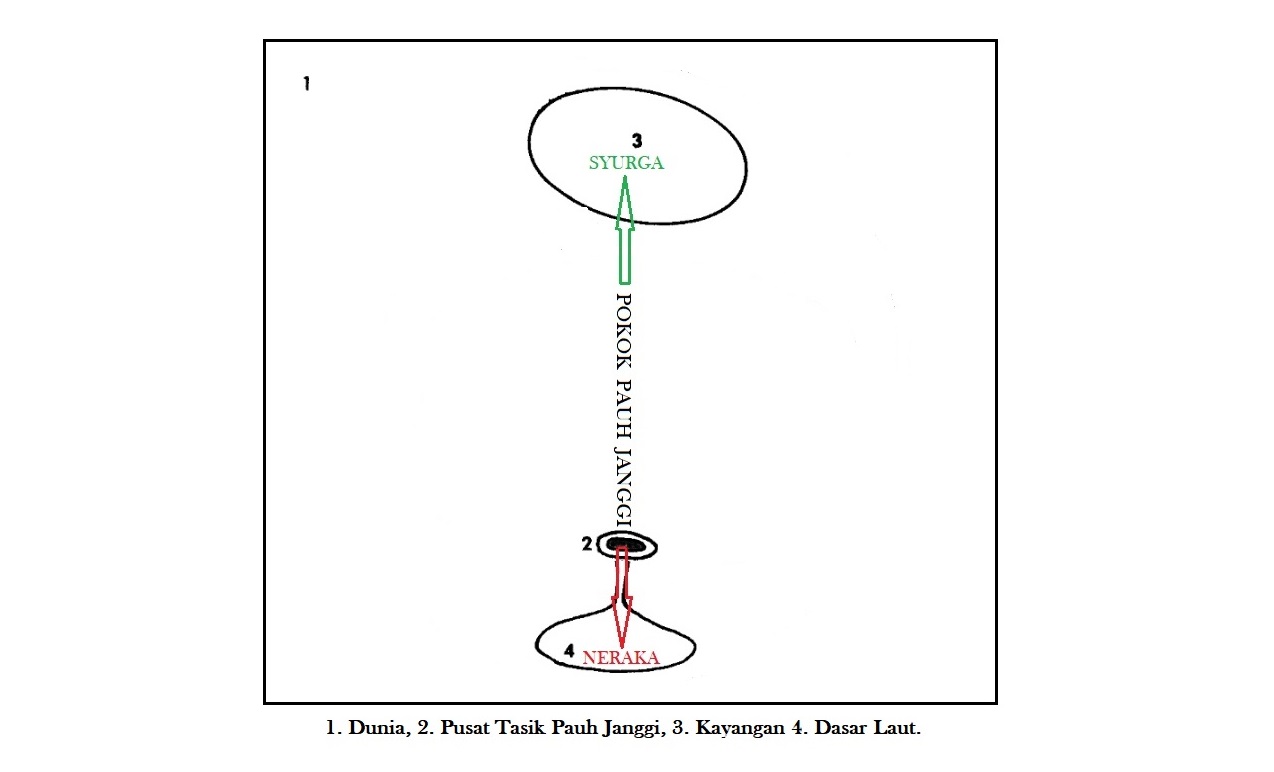
The downward spiral of the Pusat Tasek and the upward thrust of the enormous Pokok Pauh Janggi combine to create the axis of the Malay cosmos (ontology). Anker Rentse explains, from ethnographic notes that seem to have been made in Ulu Kelantan “Shurga, Heaven, is on the top of Pauh Janggi, and Nuraka, Hell, is down below its roots. A gigantic hole between the roots causes the ocean water to disappear into hell’s big boiling-pot, kawah nufaka , whence the whirl-pool. Underneath the pot burns everlasting fire. A dragon guards the hole, the gate to hell ( pintu nuraka) with its body in order to prevent the ocean from running dry. In Pusat Tasek an account is kept of the good and the bad deeds of every human being in the world. The accountant in Heaven is Ka’ Tebir, and in Hell, Kiraman. The last one is said to be so busy on occasions, that he gets angry, throws his pen on the floor and declares, Ini sekarang sudah chukup!”

In the Dari Pusat Tasek performance, I was assisted by Sang Nabil Utama who is musician, sound engineer, sonologist and a committed Malay culture activist. We were introduced by Azizan Paiman the afternoon before the event at which time we first discussed the underlying ideas and possible controversies of the performance. We refined and rehearsed the performance that night, and went on to execute the event the next afternoon (25 Dec 2019).
This intervention in the public space of the Lumut Waterfront, which was based on a Perak Malay cleansing ritual, was grounded and given poignancy by the fact that Sang Nabil Utama is a native orang Perak. It was also great working with Nabil as he showed great sensitivity to my approach and generously offered his own ideas about Malay ritual form in a way that brought the best out of the performance.

According to researcher Ariffin Mohd Dahlan, in 1528, on the request of some Perak nobles, Sultan Mahmud Shah, the deposed Sultan of Malacca, sent his son Raja Muzaffar to take over the Sultanate. As he made his way with the Malacca Royal accoutrements such as the nobat (drum), naifiri (woodwind), pedang Chura Simanjakini (sword) and the cop mohor halilintar (seal) and several other tools his vessel was hit by a storm as passed Pusat Tasek (Navel of the Seas) which was near the Beting Beras Basah at the mouth of the Perak river, and his vessel ran aground on the sandbank. They discarded all many weighty items and even the acctruments, but the vessel would not move. Finally, the Jin of the Navel of the Seas instructed the Raja to, throw his crown to the sea. Only when the Raja obliged the Jin, did the storm subside and the vessel move on to its destination.
According to some versions of this dynastic legend, the Raja had to dive into the sea at the Pusat Tasek and spend 7 days and 7 nights in negotiations with the Jins and other supernatural beings before this arrangement was arrived at. The prince was installed as Sultan and to this day the air to the throne of Perak is known as the Raja Muda (Young Raja) and not the Raja Mahkota (Crown Prince). It is also known that mysteries still abound in the area of the Beting Beras Basah which is a place where any new Sultan of Perak must perform a rite of passage (Istiadat Mencecah Kaki) in order to take up the throne.
https://sifuliterapi.wordpress.com/2015/11/02/beting-beras-basah-pusat-kerajaan-jin-dunia/
http://tengkusyah.blogspot.com/2015/05/istiadat-mencecah-kaki-ke-beting-beras.html
 The Koboi Project
You must be logged in to post a comment.