Art as a Vocation: Funding

26910466_10155243138128803_6512208499616877076_oZainub Verjee recently published a terrific piece in Canadian Art titled ‘Are Canada’s Municipal Art Galleries in Crisis?’ In this essay she presents and critiques the background and the mechanics of the funding of municipal art institutions in Ontario and Canada. While the piece is written with a view to finding specific and practical institutional corrections, in my usual theorizing manner, I took up the most general aspect of this fine piece, and submitted a post on ‘the place of ART in the neo-liberal economy’ in the comments section of the article.

While the evisceration of funding in this scenario has diminished ART in its aspect of ‘GIFT’ (be it from artist, patron, province or municipality), ART has gained in its aspect of ‘ENTERPRISE’ (profits, accounting and so on). This has had consequences for the relationship between audience orientation (appeasement) and curatorial integrity (elitism). As we hurtle through this uncultured epoch (Kali Yuga no less!), I suggest the foregrounding of the aspect of art as ‘VOCATION’ in the understanding that will, paradoxically, be radical and ameliorative at the same time. This intervention will, of course, have to be set within the wider re-configuring (it might take a revolution or two!) the global political-economy.

A crisis is coming to our societies, heralded by the technologically driven ‘END OF WORK!” Economic entities – nations, provinces and municipalities need to develop new valuation and funding criteria and practices for creative life endevours … We (cultural actors) should all be sustained by our societies for doing what we do … perhaps going beyond contemporary definitions of quality, professionalism and connoisseurship. After all, as implied in Zainubs piece,  the neoliberal dearth of arts funding has brought about a crisis about who determines ART – Audiences or Curators! We should develop new models of presentation and, as a corollary of this, new modes of funding for galleries in Ontario, Canada and elsewhere in the world!

Thank you Zainub for setting up the perfect ground for this long and critical process!

Zainub Verjee is an accomplished writer, critic, artist, arts administrator and public intellectual. Verjee was the co-founder and festival director of In Visible Colours: An International Film/Video Festival and Symposium for Third World Women and Women of Colour (1988–90) and is currently the executive director at the Ontario Association of Art Galleries, which fosters a sustainable, healthy, diverse, public art gallery sector to further the visual arts as a key component of the cultural life of the province.

Image: https://www.facebook.com/zainub.verjee

https://canadianart.ca/features/are-canadas-municipal-art-galleries-in-crisis/#comment-1444273
 

Cowboys & Indians:Tokyo 2

truth

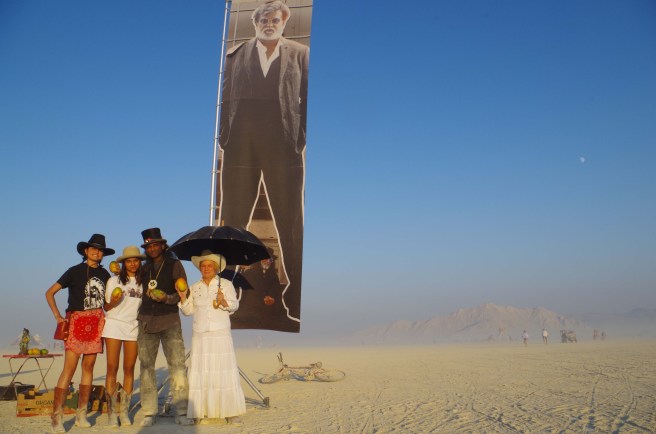
Cowboys and Indians: Tokyo Edition, to be presented at Courtyard Hiroo Gallery on 11th May 2018, is the sencond installation/ performance of ‘Cowboys and Indians’, the 6th series of the Koboi Project. The first edition was presented at the Burning Man Festival in the Nevada Desert in 2017. The overarching Koboi Project is photo-conceptual work involving installations, traditional icons, story telling and performance elements. It is a transnational epic, presented as the adventures of my persona – the ‘Black Hat’ Cowboy, through whom I present my life as my art, as I explore my identity as a Malaysian, as an Indian, as a British Columbian and as a citizen of the world.

https://koboibalikkampung.wixsite.com/momo/proposal

Cowboys & Indians: Tokyo

momo2

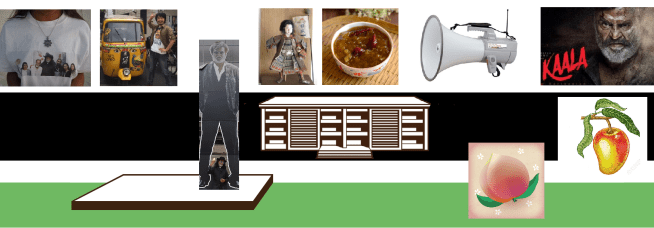
Cowboys and Indians: Tokyo Edition will be presented at Courtyard Hiroo Gallery, in a show titled ‘Home’ in the Expanded Field’ curated by and John Tran and Hana Sakuma. This exhibition explores ‘home’ as ‘a place that can be transitory, imaginary, and whose meaning is unstable or elusive’. I will present an installation/ performance around my on-going theme of the mango and the Indian myths that give meaning to this wondrous fruit. I will engage with Japanese myth and traditions via of the legend of Momotaro (the Peach Boy). During the performance, will present a Momotaro doll made by the Kyugetsu Company (esteemed doll makers dating back to 1835) in the 1920’s or 1930’s, and develop an association between Indian and Japanese symbolism centered on the substitution of the peach for the mango.

https://koboibalikkampung.wixsite.com/momo/proposal

A Humbling Review

DSC01821

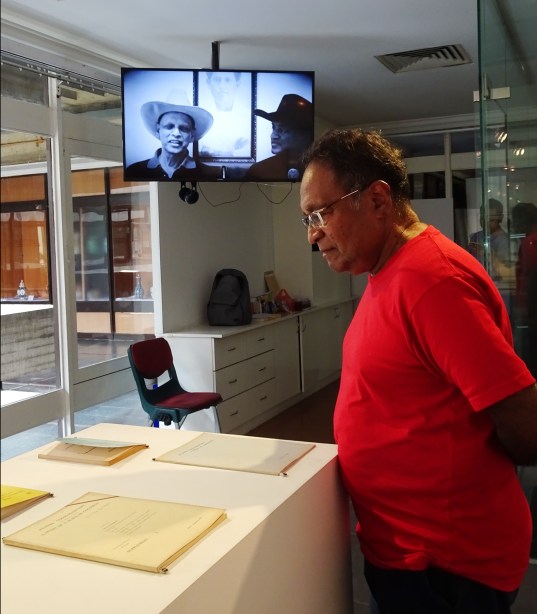
Two days before the Gift of Knowledge Symposium I received an email from renowned Southeast Asian art historian TK Sabapathy, conveying generous and gratifying reflections on my ‘The Gift of Knowledge’ installation, which commemorates the life work of Durai Raja Singam. Below is an edited extract published with his kind permission –

“I visited your exposition … in the Piyadasa Gallery. As a bibliophile I was enthralled…reaching over the divide to other bibliophiles. I attach [a photograph] in which I am ensconced in the installation … I requested that the video image of your conversation be prominently included so as to register myself in moments of history…and possibly, posterity even! … As you know Coomaraswamy is deeply etched in my being, since I encountered him during my second year of undergraduate studies in art history in 1958 – I have written on this, on two occasions. I regret not meeting with your uncle … you may or may not know that I have been video-recorded, musing on Coomaraswamy … The abiding interest in this recording was in his Art of India and Indonesia, especially in Coomaraswamy’s perspectives on Southeast Asia as they appear in this volume. I recall reading it painstaking, painfully, and with immense labour and difficulties during undergraduate years … So, Niranjan, all our paths intersect on account of AKC. I thank you for your installation, for instating Coomaraswamy and your uncle as a transmitter and transformer…… tangibly, requisitely and demandingly in our midst and in our time.”

To contextualize these reflections in terms or Kanaga’s and my own personal and intellectual engagement, I would like to note that I met Mr Sabapathy in 1995 when I went to Singapore for the ASEAN COCI Symposium held at the newly inaugurated Singapore Art Museum. I had been introduced by Redza Piyadasa and was kindly  received by this renowned art historian and his wife Dorine. Before the Symposium Kanaga presented me with some of his publications, one of which was a paper titled ‘Preliminary Observations on Art Historiography in Southeast Asia’, presented at the SEAMEO SPAFA Symposium, “Towards A Southeast Asian Perspective in Art History and Aesthetics”. In this paper he critiqued Coomaraswamy’s overview of the art of India and the Indianized art of Southeast Asia, eliciting and dispelling any notion of a ‘greater India’ in the construction of the history of the art of our region.  I too was reading and applying Coomaraswamy in my writing. During the symposium, of which Kanaga was  the chair, I presented my own critique of Southeast Asian art historiography, dosavowing the emphasis on aesthetic progression, and calling for a dual socio-historical/ metaphysical approach. My thesis was founded on a remix of poststructuralism, the new left and, of course, Ananda Coomarasway.

Thank You Dr. M

While I am completely behind Tun Dr. Mahathir in terms the honourable etymology of the term Keling, I have personally felt it used against me in the derogatory fashion. This apology  from Tun should have come as soon as the Tun was put on notice, instead of his initial and rather archaic defense of his use of the term. Indeed, the history of the term since the 1960’s makes it clear that some if not most Indians would take offence. I stress that in-spite of my commentary, I am not offended. I have even used the term candidly in my own works – Telinga Keling, Taubat Keling, with even more Keling works to come! So thanks Dr M … No hard feelings!

Ini Saja India Mau! 2

CdeMq-LVAAA54-g

While the failure of Barisan Nasional to uplift the Indian community is acknowledged by Barisan itself, by way of MIC’s accusation of Dr Mahathir’s neglect of the Indians during his 22 year tenure, this failure is ironically underscored by Mahathir himself who blames, in turn, his the former ally and MIC leader Samy Vellu for this situation. In terms of my ongoing concern the plight of stateless Indians, it is indeed, clear that in the post-independence years, there has been no proactive attempt to embrace and incorporate these most underprivileged constituents of the Malayan legacy into the Malaysian polity. This is undeniably an abysmal failure, in humanitarian terms, of Barisan governance.

Still it must be acknowledged, while the stake of Indians within Barisan is severely weakened since the heady days of Samy Vellu, it is still defined and perceivable. I do not, however, see the equivalent Indian leverage within Harapan. This lack has been viscerally, if casually, revealed in the dismissive remarks of the coalition’s chairman and Prime Ministerial candidate in what I shall call the ‘Keling Gate’ debacle. But, returning once again to the issue at hand, how does Harapan stand on the all-important question of Indian statelessness? On the face of it, they seem to be doing well. They have diligently called the government out their ineffective and/or disingenuous efforts to solve the problem with programmes like MyDaftar. Members of the Harapan opposition have claimed that there are around 300,000 stateless Indians in Malaysia. A shockingly large number indeed.

It must however, be noted that the Development of Human Resources for Rural Areas (DHRRA), Malaysia, a voluntary non-profit and non-political organization, has stated categorically that their research has revealed only 12,392 stateless Indians as of June 2017. Their president Saravanan M Sinapan has further noted that 2,225 of these have already been granted citizenship, leaving just over 10,000 stateless Indians in Malaysia today. If DHRRA is correct Pakatan Harapan’s promises to the Indian community in the GE-14 Manifesto ring hollow and untrue. These promises to Malaysian Indians include, as first on the list, the following, “1. Menyelesaikan masalah komuniti India yang tidak mempunyai status kewarganegaraan (stateless Indians) dalam tempoh 100 hari pentadbiran kami“. Indeed, given their apparent ethno-electoral hyperbole of 300,000 stateless Indians, even if Harapan scoops every stateless Indian up in the 100 days, they will, by the logic of numbers, surely fall short of their own alleged target of 300,000.

So if DHRRA is correct, Pakatan Harapan has failed on a key election promise to the Indian community even before polling day! Even if we forgive them their numbers, and even if they institute some ameliorative policy quickly, this is not a 100 day problem. People who have been living for generations in the shadow of the nation are not going to be easily found and rehabilitated. Given this, and the recent evidence of Harapan’s attitude in ‘Keling Gate’, the coalition had better pull its finger out in terms of winning over the Indian community – if they want the best from the upcoming elections. Or … am I just not getting it …. could the masterful ‘old man’ of Malaysian politics be knowingly spinning his perfectly pitched racial attitude in the direction of the much needed Malay heartland, fully cognizant of the fact that Indians just do not figure in the Harapan calculation for GE-14!

Image: https://twitter.com/encikail/status/709235617498996736 (edited)

https://www.devex.com/organizations/development-of-human-resources-for-rural-areas-dhrra-malaysia-74304

http://www.freemalaysiatoday.com/category/nation/2017/11/13/ngo-finds-12000-stateless-people-in-four-states/

http://kempen.s3.amazonaws.com/pdf/Buku_Harapan.pdf

Pantun Keling Kedah!

Keling Kedah

Berpatah mengikut peradaban negerinya,
katanama ‘keling’ harus diterima!

Tetapi mengikut sekalangan warganya,
panggilan itu memaki rasanya.

Dalam kandang mengembek bermakna,
diluar, nadanya mengganggu sahaja!

While I am completely behind Tun Dr. Mahathir in terms the benign, even honourable, etymology of the term Keling, I have personally experienced its use in a derogatory fashion. There is no question that it is uttered and understood as a racial slur in the contemporary lexicon. Indeed, it is important to note that, in the context of the then fast-approaching GE 14, Tun backtracked from his contextual defense (the lexicon of his youth) and apologized for his insensitive use of the term.

Orang Kedah, India Muslem depa pangge Kelin, kat tempat laen depa pangge Mamak! Diantara orang yang dipanggil Keling, ada juga mereka yang dikenali sebagai Keling Pelikat, lagipun diantara mereka yang bergelar Melayu sekarang, kononnya, ada sebahagian yang dipanggil Keling dahulu!

https://www.thestar.com.my/news/nation/2018/04/10/dr-m-apologises-for-keling-remark/

https://prpm.dbp.gov.my/Cari1?keyword=keling&d=150348&#LIHATSINI

Al-Kesah Tiga Abdul

3 abdul split

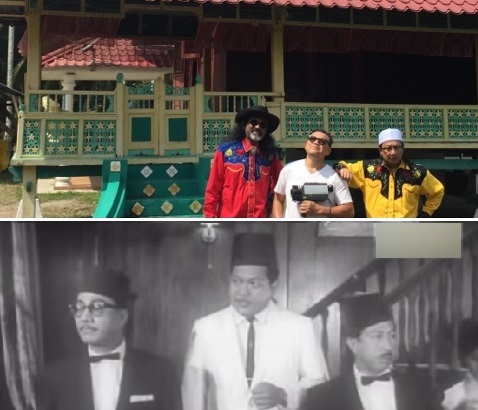
Teka teki – “Di atas langit, di bawah bumi, apa di tengah-tengah nya?” While the image I was trying to produce during my Koboi photo-shoot at Merlimau with Paiman and Hasnul was supposed to index Al-Kesah, Ismail Zain, Digital Collage, Electronic Art, Globalization, Post-tradition and a host of other referents, there is no denying the unintended match up with the characters of P Ramlee’s 1964 film, Tiga Abdul (Abdul Wahab, Abdul Wahib and Abdul Wahub).Yang bongsu namanya Wahub – dialah yang berbaju putih di tengah-tengahnya!!

So Apa di tengah-tengah nya?
Untuk dapat jawapan, tonton lah clip wayangnya

http://hasnulsaidon.blogspot.ca/2018/03/al-kesah-koboi-balik-kampung.html

Valayan Katti

3 abdul


The following is extracted and translated from a post titled AL-KESAH KOBOI BALIK KAMPUNG (28th MArch 2018) on Kebun JiwasHalus’ Blog – Yesterday we went to Merlimau, Melaka. Our guide was Azizan Paiman. The mission was a photo-shoot for the latest Koboi Balik Kampung series by Niranjan Rajah. Niranjan’s Koboi series plays on the problematics of a cosmopolitan identity in the context of contemporary trans-national mobility. Niranjan has taken the photo-conceptual Koboi Project everywhere, the Singapore Biennale, the Burning Man Festival and the KL Biennale. For the photo-shoot in Merlimau, Niranjan continued his discourse, this time with ‘me’ and ‘Melaka traditional house’ as ‘texts’ in his image. The traditional Melaka house refers to my teacher Ismail Zain’s digital collage dot matrix print entitled ‘Al-Kesah’ (1988). This work remains one of Ismail Zain’s most enduring intellectual legacies. “Al-Kesah” features a traditional Malay house as the backdrop for JR Ewing’s family photo (from the popular TV series of the early 80’s, Dallas). Pak Mail touches on the ‘modernization’ of the village landscape – in the context of globalization (or globa-lu-kasi, globalisasau, also gooblelibasi) connecting the impact of mass media and internationalist architecture in a semiotic and inter-textual play.

Hasnul asked me – Whats the term you use for my role in your photo bro? Am reflecting on koboi for my blog now.

I sent hasnul a hasty answer that is included in his post, and now take the opportunity to correct and elaborate on my reply – The Image (which is yet to be finalized and is not the one above) is being developed around the Tamil term valayan katti, which means pengikat dawai or person who ties wire. This is a term which, according to the ostentatiously  named author Sheikh Moinudeen Chisti Syed Abdul Kadir (is this a pen name for some other person of mischievous intent?), was “invented by Tamil estate workers but which became widely used by most Tamils including Indian Muslims to describe Malays”. In his rather informative , if controversial, posting about Malaysian Mamak or Indian Muslim identity the suspiciously illusive Sheikh Moinudeen explains, “…’valayan‘ means wire. ‘Katti‘ means to tie something. So ‘valayan katti means ‘a person who ties a wire’”. He continues, “In the early days of the rubber industry, the British tried to get the Malays to tap the rubber trees. However the native Malays had problems tapping the rubber tree in the proper manner and ended up injuring the tree, reducing the output of rubber. The British had better luck getting the trees properly tapped with the Tamils from India. Malays were then delegated the simpler job of using wire (valayan) to tie (katti) the little latex cups to the rubber tree. Hence the name valayan katti“. While this etymology is corroborated in various other online sources this term and its origins needs further confirmation.

Regardless of my doubts about the veracity of this reading of the term … it allows me to continue the approach I developed in my Telinga Keling (2000) in which I attempt to deconstruct and even to reconstruct a derogatory term that speaks to the depths of our national psyche. You (Hasnul) as a Malay are nominally the valayan-katti in my image. Then again, in electronic art days at UNIMAS,  we were both Valayan Katti – your wire carried the electronic video signal and mine, the new internet data. This brings me to the Ismail Zain reference of this image. You are his student and in a sense his heir … and me too … indirectly … Indeed, I think I can claim to be the valayan katti of Malaysian Internet art. Bringing this allegorical play into the present … despite a decade and a half of separation, given your Gemabelas and my Anugraham, we are somehow still connected or WIRED … working independently yet synchronously with tradition, compassion, physics and metaphysics. Indeed, now our network is metaphysical.

Image: http://hasnulsaidon.blogspot.ca/2018/03/al-kesah-koboi-balik-kampung.html

https://www.malaysia-today.net/2008/03/05/kimma-kurma-and-karma/

https://www.facebook.com/Gemabelas2017/

https://koboibalikkampung.wixsite.com/anugraham

Ini Saja India Mau!

samat keling 2

As a Malaysian living abroad, I am troubled by the electoral scenario unfolding at home. We have to choose between, on the one hand, a leader of government whose family and associates have been implicated in criminal proceedings on the global stage on a scale that threatens to beggar our nation. On the other, as challengers, we have two former political combatants, who between them are responsible for sowing the nearly all the seeds of our contemporary dysfunction. Indeed these two have accused each other heinous offences – one of corruption on a scale that, if adjusted for inflation would approach that of the current debacle, and the other of homosexual acts that are abhorrent to both the law and the official religion of the land. Nevertheless, choose we must and I too have a favorite in the race. All this is, however, just context for the kernel of my post – as as much as I am a Malaysian abroad, I am also an Indian!

What I really want to raise here is my disappointment at not hearing the issue of Indian statelessness being raised sufficiently loudly at this possibly, however marginally, opportune moment for Indians in Malaysian politics. As far as I can measure this is the gravest Indian problem that needs to be addressed by our polity. What else is there that we need as a community while our brethren remain stateless – equality as citizens, favourable quotas, strengthened Tamil language education, projects and contracts, all these possible Indian asks seem hollow to me, while there are those of us who have for generations been left stateless on mere technicalities. As lawyer Eric Paulson has put it “While these people of Indian origin are not denounced as non-citizens by the authorities, they are nonetheless stateless as they are not considered citizens under the operation of law.” If indeed, we Indians are still a force of consequence in the national equation, then this is what we should want, what we should demand. Before we worry about anything else Indian Malaysians should fight for the status for our kin. I venture to suggest that even financial corruption on the scale alleged and believed by many to have come to pass in our nation today, pales in comparison to the moral bankruptcy of a set of communal concerns that does not foreground and prioritize this matter.

http://www.lawyersforliberty.org/time-to-resolve-malaysian-indian-statelessness/