Zainub Verjee: From Signifier to Signified
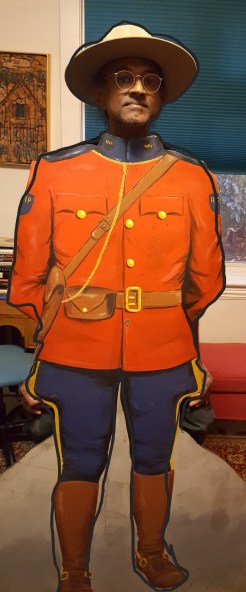
 Zainub (Untitled), Leraian, Draft image for Silver-Halide Dye Print, Niranjan Rajah
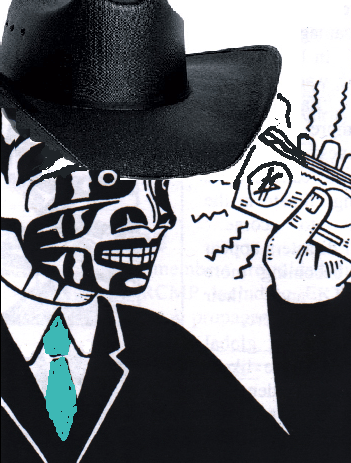
Zainub (Untitled) is part of a set of twelve images that comprise the upcoming Leraian ( Denouement) series of my Koboi Project. The overarching narrative of the Koboi Project can be summarized as follows – The diasporic Koboi returns home to Kuala Lumpur from Vancouver. He looks to his Tamil origins while acknowledging his own miscegenation. The Koboi returns again with an understanding that his home is constituted in relationships. He stakes his claim in Southeast Asian art as an Indian Malaysian artist. The Koboi reflects on his migration to native Indian land in the Americas. He critiques the relationship between Malaysia and British Columbia in the context of global LNG investments. He explores Canadian art and the cultural mosaic. He finds he is at home in both his places. He reveals the underpinnings of his work.
In Zainub (Untitled), I celebrate Zainub Verjee as a friend, as a guide in my diasporic wanderings and as a prominent figure in the Canadian Art landscape. I met Zainub in 2004 soon after I had immigrated to Canada, and while I was developing an International Conference at the Vancouver Art Gallery for the New Form Festival. She was Senior Program Officer Media Arts at the Canada Council for the Arts and was supporting the conference in that capacity. In the course of New Forms, I was able to develop and apply a new post-traditional theory whose framework informs my work to the present day. This engagement with Zainub confirmed for me the indispensability of enlightened art administrators to the cause of alternative and critical approaches in the arts.
In my consequent encounters with Zainub I have learned that she is a highly professional administrator, a generous provider of networks and an astute participant in critical discourse. Working with as much regard for the center as for the periphery, her modus operandi has been one of promoting counter positions for the different constituents of the Canadian artistic community, thereby enabling a transparent and ethical framing of the whole. In her own words “it is always a question of building coalitions and alliances.” Zainub has always managed to give effective voice to innovation and dissent, while directing the attendant energies towards attaining a degree of functional harmony.

Ecoute, S’il Pleut Video Still 1993. Zainub Verjee
Zainub was part of the seminal Vancouver Conceptualism of the 1980’s and 90’s and has shown her art at the Museum of Modern Art and the Venice Biennale. The epitome of Zainub’s enmeshment in the avant-garde milieu of her home on the Northwest coast is the inclusion of her video work Ecoute, S’il Pleut (1993) (Listen, if it is Raining) in Road Movies from a Post-colonial Landscape in 1997. This exhibition was curated by Judith Mastai at the Portland Institute of Contemporary Art. Zainub’s piece transposes the poetics of water and space from the inner courtyards of Islam onto Montreal’s urban gardens. She evokes the sense of the space of text on the page and at the same time alludes to the fundamental extrusion of the nation upon the native landscape. This exhibition was the British Columbia component of a three part Traversing Territories series, the other two parts being centered on Washington and Oregon. These exhibitions explored developments in contemporary art on the West coast that were emerging outside of the institutional frame. Traversing Territories II comprised work from Zainub and nine other artists including the luminary Jeff Wall, Rodney Graham and Ian Wallace.
In 1997 Zainub produced a 4 channel video installation titled Through the Souls of My Mother’s Feet. It was presented within the precincts of the Jamatkhana Ismaili centre in Burnaby. This work was centered on the idea of ‘nomadic architecture’ or the physical and social structures that peoples carry with them to maintain communal coherence over space and time. It was developed over the period of four years beginning in 1993. Zainub used auto-ethnographic methods that would become the norm for reflective subaltern artistic practice throughout the 1990’s. This is what Hal Foster had theorized as the ‘ethnographic turn’ in a paper titled ‘The Artist as Ethnographer?’ This ‘turn’ was understood in terms of notions like ‘fieldwork’, ‘the politics of representation’ and a ‘dialectic with globalization’. As an artist, Zainub seems to have been moving with both regional and global currents.
Having made her mark as an important emerging Canadian Artist in the 1980’s and 90’s Zainub shifted the emphasis of her contribution to the administrative and policy arenas of art. Indeed, in the latter half of the 20th Century Canadian arts administration was a field of ideals, excitement, contestation and intense activity and it is here that Zainub found her niche. The impact of her work must be set in the context of postmodern developments in art practice and theory which meant the end of the innocent or unreflective art object. As the nexus of artistic production moved out of the object and into the process, the installation, the performance, the concept and ultimately, into the institutional framework, curatorial and administrative imperatives began to take on a more overt creative function. There emerged an interpenetration of the workings of administration, politics and aesthetics and an attendant interoperability of their levers. In all her good works Zainub has brought the creativity and insight of an important artist to bear on the task of raising the individual talents as well as the collective profile of Canadian visual and media arts.
 Entertainment for Surrey Video Still 1978. Ken Lum. Collection Surrey Art Gallery and Vancouver Art Gallery
Zainub (Untitled) is a re-make of the work of another major Vancouver artist with whom I have a connection. When I was studying for my MA Fine Art at Goldsmiths College in the early 1990’s, we had a visiting lecture from Ken Lum. It was exciting to see his deadpan post-pop, post-conceptual identity blasting photographic works but what really struck a chord with me, as an artist who was intent on divining his art in the gap between names and things, was his presentation and explication of a performance video titled Entertainment for Surrey (1978). In this documented performance Ken stood by the side of a highway for a number of days during the morning rush hour and at the end of the cycle replaced himself with a cardboard cut-out. The attention and honking responses of the drivers diminished as they became familiar with his presence on their route, and by the time he came to the cardboard substitution the responses had attenuated – Ken might as well have been a cardboard cutout and then … he was! While there must be issues of neighborhoods, immigration, identity and class being raised in the work , what got to me was the clarity with which he had achieved the marking of the transition of substance to sign.
 Zip, La Folie De La Peinture scrolling page from Internet (offline), 1998. Niranjan Rajah
In 1995 I returned to Malaysia to take a posting at the Faculty of Applied and Creative Arts, Universiti Malaysia Sarawak. It was a new university built at the height of Malaysia’s ambitious bid to be a centre in the burgeoning Internet economy. The World Wide Web had just opened Internet communications to the masses and we had world class infrastructure and information specialists at our University. I immediately saw the correlation between my photo/conceptual/installation aesthetic and the multimedia, hypertext and virtual geography of the internet. In 1996 I made The Failure of Marcel Duchamp/ Japanese Fetish Even! This work, to the best of my knowledge, stands as the first work of Internet art in Southeast Asia. Technically simple though it was, this piece articulated the time, space and textuality of the internet in order to effect a critique of the relationships between the local and the global. In 1998 I made a second Internet work, La Folie De La Peinture. These works involved photo-performative actions at the Philadelphia Museum of Art and at the Parc de La Villette, Paris, respectively. I feel that these works may have had their initial stirrings in my understanding of Entertainment for Surrey (1978). I am happy to say that I have since been able to develop a friendship with Ken in Vancouver and to apprise him of this debt.
 Untitled (Zainub), Mixed Media 1984 Ken Lum. Collection M+ Museum for Visual Culture, West Kowloon Cultural District
I first met Ken in 1992 in London, and then met Zainub in Vancouver, in 2004. In 2011 Ken Lum had his 30 year retrospective at the Vancouver Art Gallery, and I went, with great excitement, to catch up with the wider body of his work. I was, of course, hoping the ‘highway piece’ would be on display. The route we happend to take through the gallery led us away from the video piece and, momentarily forgetting the search at hand, I began enjoying the show. Between this absorption and the underlying anticipation of finding the video piece, I was totally blown away when I turned around to see, larger than life, and younger than ever, my dear Zainub Verjee. My family was with me and we all relished this moment of defamiliarization together. Ken’s art, which had attained its status as such by parody, pastiche and inversion of everyday Vancouver kitsch, was itself turned around. In our collectively surprised and sentimental gaze, high art had turned into to the simple kitsch of – hey look its Zainub! And so was I, the jaded and astute artist, no longer in possession of my critical eye –my gaze had turned to a gape … it was a rare moment, and of course this moment is the genesis of the upcoming remake, 5 Zainub (Untitled).
 Ken Lum and Zainub Verjee at A Matter of Life and Death, Art Gallery of Mississauga, March 2017
When I told Zainub of this encounter with her image in Untitled (Zainub), she was delighted and explained a deeper connection at this wonderful nexus of art and life. She and Ken had been very close in their early explorations of art, its politics and its aesthetics. They had been students together at SFU, both of whom were not art students but still gravitated to its expression and its critique. They have remain close friends.
In concluding this writing, I want to return to the semiological understanding I gained from considering Entertainment for Surrey. If the incremental familiarity of a body standing by the road turns its substance into a sign of itself, then it seems to me that renown and reputation might also diminish the capacity of a body to be a signifier of things other its person. When Ken made his Untitled (Zainub) it was early in her career and ‘Zainub’ seems to represent certain qualities: ethnicity, gender and by her dress perhaps, class and profession as well. The figure in the image takes on the quality of a ‘signifier’ for other qualities or concepts that are ‘signified’. While the title anecdotally informs us that she is a real person with a name (Zainub), she is not presented as a known quantity. Over 30 years have passed since Ken’s image was made in 1984 and ‘Zainub’ now has a strong identity within the Canadian arts community. She is known in a much wider circle than before. Given the accretion and sublimation of qualities into this identity, it appears that the slightly defamiliarized figure in the red Cowboy Hat in my Zainub (Untitled) can now only index the very singularly signified – ‘Zainub Verjee’.
Note: This post has since been developed into an essay for an important anthology of writings on Media Arts titled Other Places: Reflections on Media Arts in Canada.
https://www.otherplaces.mano-ramo.ca/


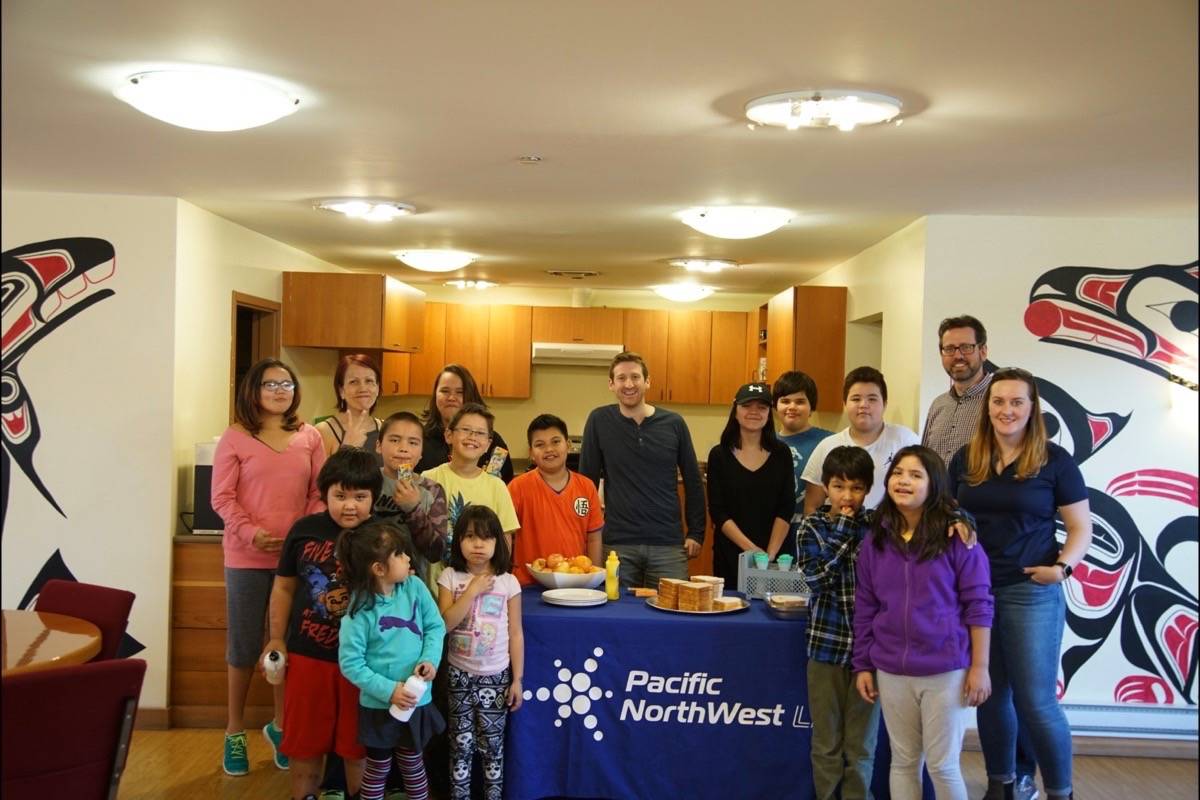
 The official opening of an
 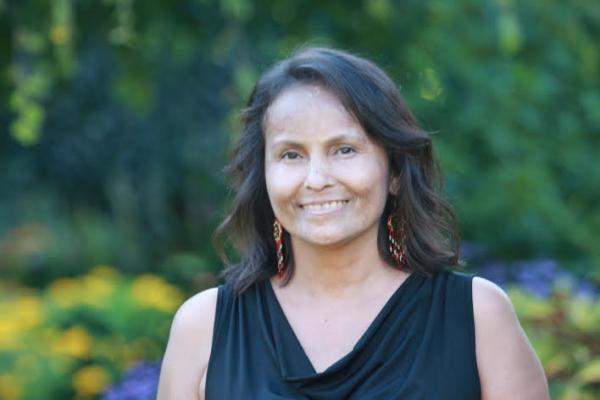 While the Canadian media’s indifference to native sensitivities in the context of cultural appropriation is counter to the promised reconciliation between the state and the first nations, this reconciliation may in itself be understood as a Trojan horse when set within a more assertive indigenous analysis. Tamara Starblanket, Co-Chair of the North American Indigenous Peoples Caucus (NAIPC) observes that this apparently benign process of reconciliation is, in fact, cause for concern. It is packaged with the implementation of the United Nations Declaration on the Rights of Indigenous Peoples (UNDRIP) which, Starblanket claims, is ultimately aligned with state interests. This is because the UN only recognizes government approved native organizations and, in effect, affirms the state’s claims to the underlying title to native territories. Reconciliation is the new assimilation.
 The Koboi Project
You must be logged in to post a comment.