Applying the Sri Lanka Genocide Model in Gaza 4

A significant aspect of the Sri Lanka Genocide model (for an explanation of this term, see Applying the Sri Lanka Genocide Model in Gaza 2) is the suppression of news and expression in the media. I will go into the similarities of censorship in the wars in Sri Lanka and in Gaza later but, in the present post, I would like to address a suppression I have just experienced on Facebook. My previous WordPress post, titled Applying the Sri Lanka Genocide Model in Gaza 3, was originally headed by the image of a Tamil Elam flag. This is very similar to the LTTE flag but it is not the same; the difference being in inscriptions in Tamil and English. This difference is explained clearly on Tamilnation.org as follows, “The Tiger symbol of Liberation Tigers of Tamileelam (LTTE) created in 1977, was designated as the National Flag of Tamileelam in 1990 differentiating it from the LTTE’s emblem by leaving out the letters inscribing the movement’s name. The Restructure site explains further, “Yes, the Liberation Tigers of Tamil Eelam created and use the Tamil Eelam flag. It makes sense since they support the Tamil Eelam. However, not everyone who supports the Tamil Eelam supports the Liberation Tigers of Tamil Eelam. The Liberation Tigers of Eelam supporters are a proper subset of Tamil Eelam supporters.”

When I re-posted my WordPress post on on Facebook, I received a warning about posting offensive material, and my post was blocked. I have also had many Facebook privileges removed for a period of one month as some kind of penalty. In this context, it is important to note that, while the LTTE is a proscribed organization and that it would be reasonable for their flag to be prohibited on Facebook, the Tamil Elam flag is different from the LTTE flag, and its display is permitted in many nations around the world that have prohibited the LTTE. Canada, where I reside, is a case in point, as here it is not only legal but also promoted by representatives of different levels of Canadian government.

The scene pictured above is of the Tamil Eelam National Flag Day being celebrated in Brampton Ontario in Nov 2023. Brampton Mayor Patrick Broey, who officiated at the ceremony at the town hall where the Tamil Eelam flags were flown, said, “Today and every day, we celebrate the resilience of the Tamil community and the contributions that Canadian Tamils have made in enriching our communities in Brampton and across the country. We will never forget the atrocities and human rights abuses of the Tamil genocide. We celebrate the resilience of the Tamil community.” Other government representatives who made statements of support on this Tamil Eelam National Flag Day include,  Shaun Collier, Mayor of Ajax;  Jagmeet Singh, Leader of the New Democratic Party (NDP); Ruby Sahota, Member of Parliament for Brampton North; David West, Mayor of the City of Richmond Hill; Iqra Khalid, Member of Parliament for Mississauga-Erin Mills; Shaun Chen, Member of Parliament for Scarborough North; Shafqat Ali, Member of Parliament Brampton Centre: Logan Kanapathi, Member of Provincial Parliament for Markham-Thornhill; and Elizabeth Roy, Mayor of the City of Whitby.

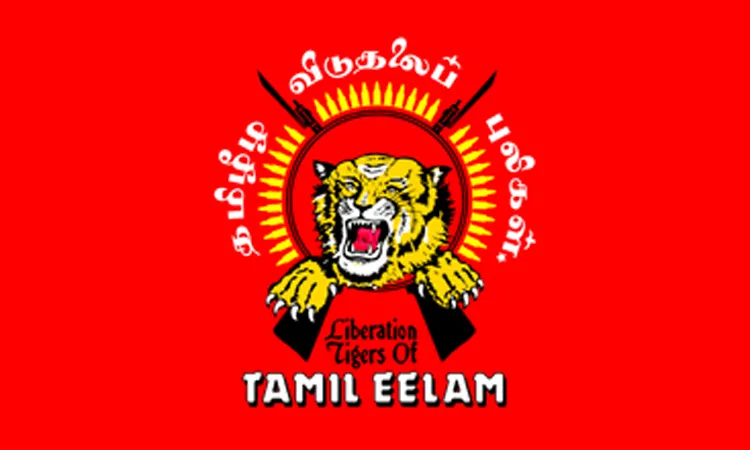
Image: https://www.tamilguardian.com/content/tamil-eelam-flags-fly-high-canada-and-uk

Image: https://www.reddit.com/media?url=https%3A%2F%2Fi.redd.it%2Fzjmyfgv6buu51.png

Image: https://i1.wp.com/www.errimalai.com/wp-content/uploads/2015/05/ltte-flag-1.jpg

https://tamilnation.org/tamileelam/defacto/flag.htm

https://restructure.wordpress.com/2009/05/15/tamil-eelam-flag-versus-tamil-tiger-flag/

|https://www.cbc.ca/news/canada/toronto/tamil-flags-flown-at-protest-legal-toronto

https://www.tgte-homeland.org/2023/11/18/tamil-eelam-national-flag-day-to-be-observed-around-the-world-on-november-21st-tgte/

Applying the Sri Lanka Genocide Model in Gaza 3

As I have said in previous posts (see Applying the Sri Lanka Genocide Model in Gaza and applying the Sri Lanka Genocide Model in Gaza 2), I am having a sense of deja vu as I follow the recent events in Gaza. I am brought back to the state of psychic shock that I found myself in early 2009 as the short-lived Tamil nation of Elam came to its crushing end. In this post, I will outline the history of the formation of the de-facto Tamil state.

The island of Sri Lanka gained independence from the British in 1948 with the majority Sinhalese taking the reins of a unitary state which incorporated ancestral Tamil areas in the North and the East. After decades of discrimination and futile non-violent resistance, some Tamils organized to take up arms to wage a violent struggle. Indeed, in 1972 Velupillai Prabhakaran and others formed the Tamil New Tigers (TNT). In 1976, the TNT became the Liberation Tigers of Tamil Eelam (LTTE) under the leadership of Prabhakaran. In July 1983 the LTTE killed 13 Sri Lankan soldiers in an action in the Jaffna peninsula, and this led to race riots in Colombo in which hundreds of Tamils were killed and thousands more were displaced. This was the start of a full-fledged guerrilla war referred to as the “First Eelam War.”

In 1987 India brokered the Indo-Lanka Peace Accord and deployed peacekeeping troops in Northern Sri Lanka to enforce it. When the LTTE refused to disarm, a full-scale war between the LTTE and India. After incurring heavy losses, the Indian troops withdrew in 1990 and the Tigers took control of large sections of northern Sri Lanka, and the fighting resumed between them and Sri Lankan troops. This was the beginning of the “Second Eelam War” which ended in a truce in 1995, with the LTTE controlling one-third of all Sri Lankan territory and two-thirds of the island’s coastline.

The “Third Elam War” began with the breakdown of the short-lived truce in April 1995 and a brutal 6 year war ensued across the North and East of the island. It was during this war, that the United States declared that the LTTE was a terrorist organisation. This US declaration was made in 1997. It was followed a British declaration in 2001 and other nations then followed suit. This “third Elam war” ended in 2001 when a ceasefire was instituted through a Memorandum of Understanding which was formalized in the 2002 Ceasefire Agreement, made under the auspices of Norwegian mediation.

From 1984 onwards the LTTE set up a functioning government in the territory under their control. They ran a sophisticated administration comprising a judicial system, a civil police force, Human Rights organizations, health and education systems, a Bank, as well as radio and Television stations Periods of Sri Lankan military occupation not withstanding, this de-facto Tamil state was fully functional and was recognized by many global institutions; notably, the World Bank’s Sri Lanka representative made the following statement in 2005, ‘Given the fact that there is an officially recognized LTTE-controlled area, a kind of unofficial state, and since it is a party to the ceasefire agreement with the Government, the LTTE has the status of a legitimate stakeholder’

Note: This WordPress post was originally headed by the image of a Tamil Elam flag. I re-posted it on Facebook and was warned about posting offensive material and my re-post was blocked. In this context, it is important to understand that, the Tamil Elam flag (above) is different from the LTTE flag (the LTTE is a proscribed organization). For a detailed explanation please see Applying the Sri Lanka Genocide Model in Gaza 4.

Images: https://naimnikmat.blogspot.com/2019/10/siapa-ltte-dan-mengapa-ltte-ni-tiba.html
https://koboiproject.com/wp-content/uploads/2023/11/78545-save_20191011_122638.jpg

The cronology presented above has been compiled from the following three articles:
https://www.reuters.com/article/us-srilanka-war-timeline-sb-idUSTRE54F16620090518/
https://www.wionews.com/photos/a-timeline-to-tamil-tigers-37-year-marathon-struggle-against-lankan-army-for-separate-state-219592
https://en.wikipedia.org/wiki/Tamil_Eelam#cite_note-sunday-42

https://academic.oup.com/isq/article/61/2/337/3078982?login=false

https://www.tandfonline.com/doi/abs/10.1080/01436590600850434

https://www.tamilguardian.com/content/tamil-eelam-flags-fly-high-canada-and-uk

Applying the Sri Lanka Genocide Model in Gaza

I am a Malaysian who was born in Jaffna and although I identify unequivocally as a Malaysian, I recognize the Tamil struggle for justice and self-determination in their ancestral lands in the north and the east of the Island of Sri Lanka. After decades of non-violent struggle for justice was met with intransigence by the Sinhalese hegemons of the Sri Lankan state, the Liberation Tigers of Tamil Elam (LTTE) emerged to wage an armed struggle for an independent Tamil state. Through a brutal conflict that ensued, the LTTE succeeded in setting up a defacto Tamil state. I have observed this violent Elam struggle which has involved terror and counterterror, from afar. I have felt its pain vicariously, through my mother’s responses to the experiences of her family. The LTTE reign ended in 2009 when their organization was completely destroyed by the Sri Lankan Army (SLA). In the crushing final battle of this War, it is estimated that between 20,000 and 100,000 Tamil civilians were massacred with impunity by the Sri Lankan Army. As I have followed the ongoing Israeli massacre of Palestinians in Gaza, I have been reminded of the genocide of the Tamil people by the Sri Lankan state.

See also the series of posts begining with On Being a Malaysian Tamil 1

Image https://thediplomat.com/2020/05/post-war-sri-lanka-fractured-and-unjust-for-tamils/

https://www.ptsrilanka.org/wp-content/uploads/2017/04/ppt_final_report_web_en.pdf

6 Heroes

Keling Maya: Post-traditional Media, Malaysian Cyberspace and Me, presented at the Aliran Semasa Symposium, 2013, at the National Art Gallery, Kuala Lumpur.

0 Performance
1 Keling Maya
2 Cyberspace
3 Model
4 Heterotopia
5 Rajinikanth
7 Telinga Keling
8 Keling Babi
9 Duchamp
10 MGG Pillai
11 Pantun
12 Praxis
13 Dochakuka
14 Post-tradition
15 Philosophia Perennis

On Being Malaysian Tamil 12

I am delighted to note that according to Malaysiakini the Malaysian Attorney General has discontinued proceedings against the 12 Indians on trial for alleged links to the Liberation Tigers of Tamil Eelam (LTTE) with immediate effect.In his statement he reveals the poverty of reasoning behind the charges as follows, ” the common thread among all of them was that they simply had photos of slain LTTE leaders such as Velupillai Prabhakaran in their phones or Facebook accounts”, and quite rightly, if belatedly, he acknowledges that “If such conduct can constitute a criminal offence, it would bring the law into disrepute.” He has saved the nation’s legal system from the absurdity that was arising in the context of these charges against Indians for celebrating the cause of Tamil Elam and the defunkt Tamil Tigers! The Attorney General’s full statement is available here and is definitely worth a read!

As an aside, I can not help but speculate on the implications of the timing of this withdrawal of charges against the 12 Indians, which comes on the heels of the announcement of the transfer of the policeman responsible for these arrests, Malaysian counterterrorism chief Ayob Khan Mydin Pitchay, to a new position as head the police force in Johor state.

https://www.malaysiakini.com/news/511720

https://www.benarnews.org/english/news/malaysian/counterterror-chief-02072020184651.html

On Being Malaysian Tamil 7

So what makes Prabhakaran and the LTTE meaningful, beyond their obvious significance to the Ceylon Tamils of Malaysia, to the wider group of Malaysian Tamils. Is it that the Tigers said NO to abject racial discrimination and marginalization? Is it because they fought as Tamil nationalists and triumphed against incredible odds. Is it because they carved an autonomous Tamil domain out of the Sinhala state? Is it because they did this, ultimately, without the patronage of colonial or neo-colonial masters? Is it because they created a short but impactful ‘Elam‘ era in modern history? Whatever it is that is so appealing, it all ended with their defeat in 2009

So why do some Indian Tamils and Diaspora Tamils still have such a passion for the after-image of a long vanished LTTE, when the Sri Lankan Tamils have themselves moved on and are looking for new political solutions to the desperate situation for Tamils in Sri Lanka. The one word answer is Maanam. Or in Bahasa Melayu … Maruah. Yes, pride or dignity or that great Asian tradition of giving or saving ‘face.’ That’s what, and perhaps, this is all, the LTTE and their leader Prabhakaran mean to the global Tamil diaspora today. This Maanam is connected with many complex issues issues that were central to the lost Elam regime – issues of caste abolishment, Dravidianism, socialism, feminism and ethno-nationalism. Some of these issues are powerful currency in the vibrant and emotional political theatre of the Tamil motherland, Tamil Nadu. Charismatic figures like Senthamizhan Semaan, whose party Naam Tamilar Katchi plays on deeply ethnocentric themes, exploit and revivify the symbolism of the defunct LTTE. This brings us to the Malaysian connection. Malaysian Tamils of Indian origin seem to have invested in LTTE symbols as a means to uplift their Maanam in the face of Malaysian communalism. The Indians are without doubt amongst the losers in the Malaysian social arrangement. It is in this light that I, from the perspective of a Jaffna Tamil, see the wider Malaysian Indian communities’ passionate and heartfelt engagement with symbols and the cause of Elam.

Tomorrow, on 29 december, the High Court in Kuala Lumpur will give its decision on whether to allow the bail application of Gadek state assemblyman, G Saminathan, one of the 12 detainees charged with LTTE involvement and detained under the Security Offences (Special Measures) Act 2012. The LTTE has was defined as a terrorist outfit under Malaysia law in 2014. It is reasonable to understand this definition as applying to participants in the organization before its demise who are still at large. In fact, there have been a few arrests of such alleged LTTE members in Malaysia before and after 2014. If it can not be shown that the LTTE terrorist organization continues to exist or that it is presently being revived, those caught in possession of LTTE symbols, those caught in acts of LTTE commemoration, and those caught in the act of distributing LTTE symbols can not not rightly be deemed to be engaging with terror related activities. They are more appropriately seen as being engaged in the remembrance of symbols associated with a historical organization that has been associated with terrorism. Such actors are more appropriately understood as being involved with the myth of the LTTE, the dream of Thamil Elam and the quest for Maanam at home, not a mission of terrorism.

Please visit On Being a Malaysian Tamil 6

On Being Malaysian Tamil 6

Despite my origins in Jaffna, I am far removed from the Tamils of Sri Lanka in my lived identity. I am a Malaysian first and, as a Malaysian, my ethnic identification is with the wider group of Malaysian Indians. Historically Ceylonese Tamils have tried to preserve a distinct identity as Malaysians and officially we are not classified as Indians. Nevertheless, I believe that it is appropriate and meaningful that, to the extent that the Indians will accept us, Ceylon Tamils should join Indian Tamils and be absorbed into the identity of ‘Malaysian Indian’. I do not renounce my Jaffna background. Rather, I feel it should be integrated into the wider Malaysian Indian mosaic. With my recent immigration to British Columbia, I am even further removed from my Sri Lankan Tamil identity.

The LTTE fought a vicious war for a Tamil homeland. They exchanged terror for terror with the Sri Lankan state actors and proxies,. They valiantly fought the mighty Indian army. They even set up and ran up a de facto state but in the end they seemed to have pitted themselves against the whole world. They were utterly defeated and now the ordinary Tamil people are picking up the pieces after an alleged genocide, under the demeaning conditions of a Sinhala occupation. Although I have relatives (my mother’s family) who were directly impacted by this war, I have generally lived my own life beyond the reach of the emotions raised by this communal tragedy. Nevertheless, I have followed the situation and when I reflect upon it closely, I feel the pain of my kith and kin!

Meanwhile the ongoing Malaysian LTTE fiasco seems quite perverse and unrelated to the Sri Lankan Tamil realities. So, I wonder, what does the LTTE signify in the Malaysian political scenario? Indian Tamils in Malaysia are mainly descendants of indentured labourers brought over to work in the rubber estates. Their fellows worked on tea estates in Sri Lanka. I must note, not without a sense of shame, that the Ceylon Tamils have set themselves apart from the estate Indians in Malaysia. In Sri Lanka we let the estate Indians down over the issue of citizenship in the early post-independence decades. Nevertheless, the Elam struggle has been a potent signifier and catalyst of a cogent Tamil identity within Dravidian politics of the Indian state of Tamil Nadu. Tamil ethno-nationalists, have hoisted the Elam flag as their own. Their sense of Dravidian pride was invested in the Elam struggle and, one could say that with the LTTE destroyed, they have stolen its fire for their own political engines.

Now, in Malaysia the Indians are a minority. One that is caught within the discriminations of a postcolonial communalism. They are diminished in political agency vis a vis the Malay majority and even the Chinese minority. They have been, in the last decades seeking catalysts for a vigorous political mobilization. For instance, the Hindraf agitation centred around Hindu identity and temple demolition. Perhaps the symbols of the LTTE play a similar moral boosting and formenting role in Malaysian Indian politics. The ethos of the LTTE may have had its origins in a just cause in Sri Lanka but its xtreme violence is disproportionate to the situation faced by Indians in Malaysia.

With regard to the 12 Malaysian Indians recently arrested and charged with terrorism related offences, while their allegedly excessive engagement with LTTE symbols might reasonably raise the government’s concern, there has as yet been no charge that clearly suggests a resurgent global LTTE. Nor is there any sign in the charges of a Malaysian based LTTE organization being set up. The possession of LTTE paraphernalia, the promotion of the defunkt LTTE cause on social media and the commemoration of dead LTTE heroes do not, in my view, suggest anything more than an entanglement with Tamil pride, Tamil sorrow and Tamil myth. The suggestion by the PDRM (police) of massive financial movements, which might by indicative of an imminent LTTE revival has not been actualized by way a related charge against even one of the 12 detainees. ,,, More in On Being a Malaysian Tamil 7

On Being Malaysian Tamil 2

I find the recent arrests and charges laid against 12 Malaysian Indians, including 2 DAP parliamentarians, in connection with the defunct LTTE (since 2009) troubling in the same way Anwar Ibrahim’s arrest and conviction on sodomy charges was troubling in 1998 . Anwar’s alleged, and later proven (by Malaysian legal standards), criminal acts were significant, not in themselves, but in terms of who Anwar was in the context of Malaysian politics! Is something similar afoot here? Can these Malaysian Tamils’ alleged acts of possession of paraphernalia and of support on social media be significant in themselves? Is something similar afoot here? Can these Malaysian Tamils’ alleged acts of possession of paraphernalia and of support on social media be significant in themselves? There is now as there was then, the sense that there some other tangential purpose is at play. One wonders if, given widely held sympathies of Malaysian Tamils towards the Elam struggle, there are other individuals who have, naively or otherwise, been involved in similarly questionable acts over the 5 years of the LTTE’s proscription (2014 -2019). It is however these unfortunate men who have been charged, and the charges have come at this particular moment. One wonders why? … More in On Being a Malaysian Tamil 3

On Being Malaysian Tamil 3

There are many separatist organizations fighting battles for sovereignty in our world of nation states. While the methods many of these groups use include acts of terror, whether or not a given group is a terrorist organization in a given jurisdiction, at a given time, is simply a matter of legal definition. In Malaysia, possibly due to the combination of the pro Elam sentiments of Malaysian Tamils and the complexity of our communal politics, the LTTE was not so designated during the course of the Elam conflict which ended in 2009. It was only in 2014 that Malaysia finally designated the LTTE a terrorist organization. Technically speaking, regardless of emotional, political or moral considerations, this designation can not be disputed. There is, however, one very pertinent question that can be asked – Does this terrorist organization – the LTTE, even exist!

The Tamil separatist struggle ended with the decimation and the dissolution of the LTTE. The utter destruction of this organization was confirmed in a European Court of Justice ruling that stated that the LTTE should be removed from the EU’s terrorism list as there was no evidence of a risk of attacks after its military defeat in 2009. In this light, the cases of the 12 Malaysian Indians, charged with supporting the LTTE, might turn an ontological question – can it ‘be’ a crime to support a criminal organization that has ceased to ‘be’? … beginning to look like a Monty Python Norwegian Blue! … the Dead Parrot sketch no? … more in On being a Malaysian Tamil 4