
Nazi Germany, Fascist Italy, Franco’s Spain, Salazar’s Portugal, Papadopoulos’ Greece, Pinochet’s Chile, and Suharto’s Indonesia are the 7 regimes that Laurence W. Britt analyzed to develop his set of fascistic characteristics. Like Umberto Eco before him, he came up with 14 key characteristics, which he construed as fascist and proto-fascist means of obtaining, expanding, and maintaining power. He presented this list in an Op-Ed titled Fascism Anyone? in Volume 23, No. 2 Spring 2003 of ‘Free Inquiry’ as follows –
1. Powerful and continuing expressions of nationalism.
2. Disdain for the importance of human rights.
3. Identification of enemies/scapegoats as a unifying cause.
4. The supremacy of the military/avid militarism.
5. Rampant sexism.
6. A controlled mass media.
7. Obsession with national security.
8. Religion and ruling elite tied together.
9. Power of corporations protected.
10. Power of labor suppressed or eliminated.
11. Disdain and suppression of intellectuals and the arts
12. Obsession with crime and punishment.
13. Rampant cronyism and corruption.
14. Fraudulent elections.
While, as Daniel Malmer notes this list was not intended to be used to diagnose fascism in present governments, but rather characterize historical fascist governments, it is nevertheless interesting to see how many of these fascistic characteristic apply to the purported democracies of the world.
As a Malaysian, I find that the polity of my country seems to exhibit a good 11 of the Britt’s 14 traits. If this were not worrying enough for the long view, we have just joined a list of dysfunctional nations that have suspended parliamentary rule and instituted emergency powers in the context of the Covid-19 epidemic. This is the first such declaration of emergency since the aftermath of the race riots of May 13th 1969.
According to Bloomberg, the state of emergency was declared soon after some key leaders in the ruling coalition’s largest partner, United Malays National Organisation had called for a fresh election. They also report that the Pakatan Harapan opposition has admonished the Prime Minister for burdening the people with a declaration of emergency for the sake of saving himself. Oh Ei Sun, a senior fellow at the Singapore Institute of International Affairs has described the emergency as “totally unnecessary” and that “If you’re not careful, we will slip from parliamentary democracy into a rule by diktat.”
https://secularhumanism.org/2003/03/fascism-anyone/
https://medium.com/@danielmalmer/the-long-complicated-history-of-the-14-defining-characteristics-of-fascism-e366412932f
https://www.bloomberg.com/amp/news/articles/2021-01-12/malaysia-pm-says-it-s-not-a-coup-but-critics-see-a-power-grab


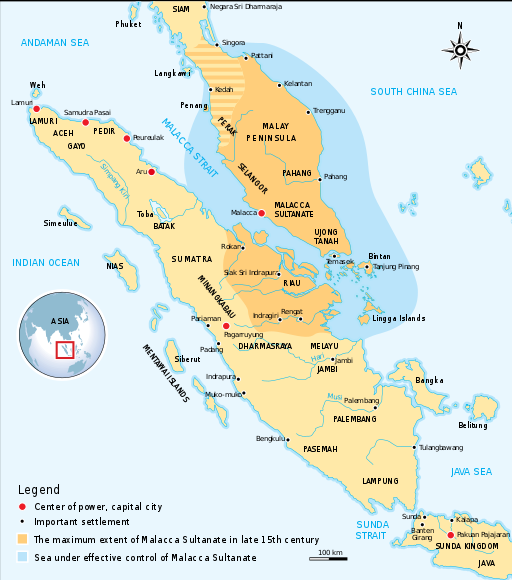 So what is the significance of Malaca (Portuguese), or Malacca (English) or, indeed, Melaka (Bahasa Melayu)? Founded around the 1400 by Raja Parameswara, later known as Raja Iskandar Shah, the Melaka Sultanate rose to the height of its power towards the end of the 15th Century. At this time, the Melaka suzerainty extended over most of the Malay Peninsula, the Riau Islands and parts of the Eastern coast of Sumatra. The port of Melaka, strategically located, as it is, at the mid-point of the
  Or perhaps ‘Post Photo-conceptual Performance’ … a tag I have been developing to locate my practice at the junction of photography and performance. While the tag needs much refinement, I think the praxis itself seems now, after 5 years of the Koboi Project, to be reasonably developed. I had the privilege of delivering a Masterclass in Performance Art as Faculty at the International Ismaili Diamond Jubilee Arts Festival in Lisbon, which ran from the 5-9 July 2018.
 The Koboi Project
You must be logged in to post a comment.