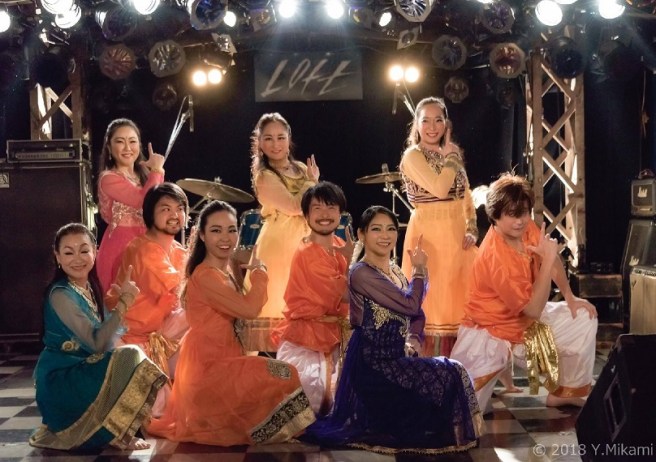
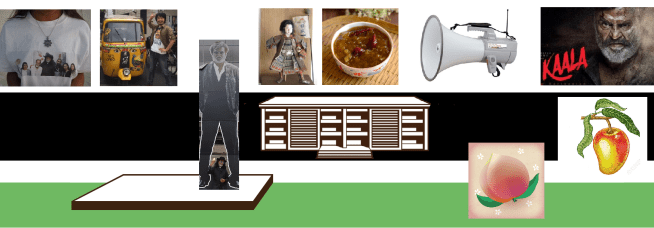
I am happy to announce that the SANDOSHAM Indian Movie Dance Team will perform as a part of Cowboys and Indians at Courtyard Hiroo Gallery, Tokyo,on 11th May 2018. The Koboi Project (Cowboy Project) is series of a photo-conceptual installations and performances, involving photographic images, traditional icons, story telling, collaborations and conviviality. During the performance, I will present an 18ft banner of Tamil movie Superstar Rajinikanth as well as an antique Momotaro doll made by the Kyugetsu Company. SANDOSHAM will dance to Oruvan Oruvan Mudhalali from the film ‘Muthu’, cheoreographed by the Team leader, Mikan Bindu.
Baasha meets Kaala!! Like Godzilla meets King Kong! Well, actually it is Masalawala meets Koboi Balik Kampung! For Cowboys and Indians: Tokyo Edition, at Courtyard Hiroo on 11th May 2018 at 7pm, I am privileged to be collaborating with Masalawala (Hiroyoshi Takeda) who is an artist, a linguist, a South Indian chef and a renown Rajinikanth fan. With his support the performance will include –
2. Mango Pachadi Dango (a traditional Japanese dumpling form with an Indian filling with the definitive Ayurveda flavours – sweet, sour, salty, pungent, bitter, astringent) will be ritually offered to the Momotaro and then to a member of the audience. This symbol in taste (rasa) was conceived by Niranjan Rajah and developed by Masalawala.
3. Indian movie dancing by the SANDOSHAM Dance Team will performance to Oruvan Oruvan Mudhalali from the film ‘Muthu’,cheoreographed by Mikan Bindu.
As the May 8th polling date approaches in Malaysia, there has been an interesting turn of events with regard to the use of images. According to the Straits Times of Singapore, the Election Commission just issued new guidelines stipulating that, other than the photograph of the candidate standing for election in a given constituency, the only other photographs can be used on campaign materials are photos of the candidate’s party president and deputy president. This effectively removes images of Dr Mahathir and Anwar Ibrahim from the iconography of the campaign. Reflecting on the power of images in the contemporary media, and the interdiction against images in Islam in this context might be quite enlightening ……. as might pondering on the Superstar Cutouts that populate the box-office and polling landscapes of Asia!
Cowboys and Indians: Tokyo Edition will be presented at Courtyard Hiroo Gallery, in a show titled ‘Home’ in the Expanded Field’ curated by and John Tran and Hana Sakuma. This exhibition explores ‘home’ as ‘a place that can be transitory, imaginary, and whose meaning is unstable or elusive’. I will present an installation/ performance around my on-going theme of the mango and the Indian myths that give meaning to this wondrous fruit. I will engage with Japanese myth and traditions via of the legend of Momotaro (the Peach Boy). During the performance, will present a Momotaro doll made by the Kyugetsu Company (esteemed doll makers dating back to 1835) in the 1920’s or 1930’s, and develop an association between Indian and Japanese symbolism centered on the substitution of the peach for the mango.
As we eagerly await Kaala, Rajinikanth SUPERSTAR’s first movie after his entry into Tamil Nadu politics, it is pertinent to reflect on the messages embedded in this and his last release, Kabali. Both films are the directorial works of PA Rajinth, the rising Kollywood auteur of Dalit origins who has successfully presented critical social messages with mass commercial appeal. Rajinth is vocal on Dalit issues off the screen and here is an important document evidencing his rage and articulating his core message – TAMILS ARE DIVIDED BY CASTE … ADMIT IT! – It is a message that is steeped deep in Ambedker Blue and, incredulously, one that SUPERSTAR Rajinikanth seems to be taking upon his crisp new political mantle whose own native hue is allegedly a Hindutva Saffron.
The boss is back and his colour is Black but it seems a to be a Black tinted with strong hues of Blue. The eagerly awaited trailer for Kaala is out and for me, and most of the 10 million other early viewers, the thrill ain’t gone! SUPERSTAR adulation aside however, there has been a lot of talk about Rajinikanth’s colour in the context of his recent entry into Tamil Nadu politics. The concern has been, as his friend and rival in life, art and now in politics, Kamal Haasan, has put it, that Rajinikanth’s hue is Saffron. Saffron is the colour of the Hindu nationalist (Hindutva) politics of India’s ruling BJP, with whose values Rajinikanth has shown some affinities.
In my own view the equation of nation state with religion, that Hindutva represents, is a tragic and disastrous misunderstanding and misuse of both religion and nation. Nevertheless, there is still hope that Rajinikanth is not on the Hindutva page and that his colour may not be saffron after all! Kaala is the followup to Rajni Sir’s earlier collaboration with activist director PA Rajinth. Rajinth is a ground breaking mainstream Kollywood director who is of Dalit origins, and who brings Dalit issues to the central forum of contemporary Indian cultural life. In their previous collaboration, Kabali, this dark duo addressed the caste issue both with external references and reflexive dialogue that deconstructs character roles in Tamil cinema.
In the Kaala trailer Black is presented as the colour of class resistance, but the colour of our hero’s the Mumbai ghetto is clearly blue. Blue is the dominant roof colour in an ariel shot of the ghetto. As observed in an Indiaglitz.com commentary, it is also the colour of the hero’s ghetto flag, the colour of co-star Huma Qureshi’s dress, and also of the drapery that surrounds her in a dance sequence. Blue is the colour associated with the great Indian and Dalit leader B R Ambedkar, who always wore blue suits. Indeed, Blue is the colour of Buddhism and, symbolically speaking, the opposite of the aforementioned Saffron. Blue has become the colour of the Dalit resistance that Ambedkar set into motion at the time of Indian independence. While it must be noted that the hero’s own spouse (one presumes) is seen dressed in a saffron saree, one is not unjustified in hopefully speculating that Rajinikanth’s Black is, indeed, just the darkest shade of Blue.
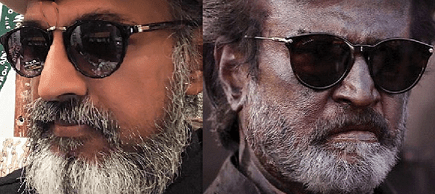
As Rajinikanth fans anticipate the April 27th 2018 release of Kaala Karikaalan, the Koboi Project is glancing off the SUPERSTAR’s look for the movie. While as a fan, I relish the simple pleasure of ‘being’ the Thalaiva, as an artist, I am cognizant of the aesthetic and critical connotations of my play. Is this a pastiche or a parody, and if it is a parody – what is it a parody of? What is the measure of similitude, how much ‘looking like’ does it take to ‘look like’ or signify another person or persona? What is the threshold of sufficiency? Is such similitude founded on ethnic, even ethnocentric, notions of identity? What is the inner dimension of such a representation? Hoe does one actually form a meaningful image of another? When does homage become piracy? What, beyond context, is the difference between a popular and a fine art image in the contemporary taxonomy of the arts? Most poignantly and pertinently, Kaala may be the last of my easy and heartfelt appropriations of the SUPERSTAR’s image as, having launched his political party in Tamil Nadu, he is now on the cusp of announcing his manifesto. Along with Thalaiva’s long-time college in the Movie business, and now political co-aspirant, Kamal Haasan, I fear that Rajinikanth’s avowed ‘spiritual politics’ will take on the saffron hues of Hindutva.
While I would love to accept all Thalaivar legends without question or qualification I have to say that after making my post on Rajinikanth’s famed avoidance of brand endorsements, I had a sudden flashback. I remembered a billboard I saw in Singapore in 2016 when I was there for the Biennale. It was for Lebra a global media and mobile services company. I then realized that while our Thailavar may not do personal endorsements his brand is associated with many others via the various movies he has starred in. I did some research and quickly found a list of Brand associations for Kabali. The associated brands include including AirAsia Airlines, Cadbury, Muthoot Fincorp, Airtel, PVR Cinemas, Amazon, Citi Bank, VS Hospitals. Most telling and disappointing of all was the apparent association of the Rajinikanth brand with Emani’s Fair and Handsome skin lightening cream which involves a contest in which 50 winners will get to attend the film’s success meet. A truly ironic pairing of brands – that of Kolywood’s first black SUPERSTAR with a Brand that addresses those who want to lighten up.
While Rajinikanth seems generally to have, as the myth goes, eschewed all commercial product endorsement. the above Palm Cola advertisement is a notable exception. It was made for the Tamil Nadu Co-operative, some say (see comments accompanying the above Youtube video) to support the Palm climbers. The advert seems to have been made during the shooting of Thillu Mullu in 1981. The ad features Thalaiva, Mahdevi and even director Balachandar. The sheer magnetism of the young Rajinikanth gives us a sense of the brute force he might have wielded in the endorsement of products, had he deigned to deploy his brand to this end. The fact that he has not done so is clearly a testament to his integrity with regard to his fan base, his ambition to partake in public life, or both.
Here is the Rajinikanth and Meena snack pack on a grocery shelf in a Japanese store. This is a rare image. Thalaivar has strong brand value but the point is that he does not offer it out for hire. I wonder if the above packaging is unauthorized as according to Kalayani Subramani, over the whole of his 42-year career our Thailaivar has not endorsed a single product. This is a significant characteristic of his fame and SUPERSTAR status he has attained as Kalayani explains, quoting industry experts. Rohitash Srivastava says, “He connects at a higher level. His fans don’t expect him to tell them what to consume.” Anirban Blah observes, “He is far bigger and has more goodwill and emotional resonance than any corporate brand. In fact the brand loyalty and goodwill he enjoys is bigger than any brand in India — corporate, political or individual. You cannot put a monetary value to that.” And Theron Carmine emotes, “You don’t see god selling coke, do you?” In fact while all this is the rule there seem to be an exception, an advertisement for… well …. not Coke but another cola nonetheless!! A Palm Cola Product made, it seems, for the Tamil Nadu Cooperative to support the Palm climbers. Indeed, Rajinikanth has attained something akin to the status of a living god among the members of his massive fan-base and, as he turns his attention to the political arena, the purity of his brand will certainly be an invaluable asset.


 While I would love to accept all Thalaivar legends without question or qualification I have to say that after making my post on Rajinikanth’s famed avoidance of brand endorsements, I had a sudden flashback. I remembered a billboard I saw in Singapore in 2016 when I was there for the Biennale. It was for Lebra a global media and mobile services company. I then realized that while our Thailavar may not do personal endorsements his brand is associated with many others via the various movies he has starred in. I did some research and quickly found a list of Brand associations for Kabali. The associated brands include including AirAsia Airlines, Cadbury, Muthoot Fincorp, Airtel, PVR Cinemas, Amazon, Citi Bank, VS Hospitals. Most telling and disappointing of all was the apparent association of the Rajinikanth brand with Emani’s Fair and Handsome skin lightening cream which involves a contest in which 50 winners will get to attend the film’s success meet. A truly ironic pairing of brands – that of Kolywood’s first black SUPERSTAR with a Brand that addresses those who want to lighten up.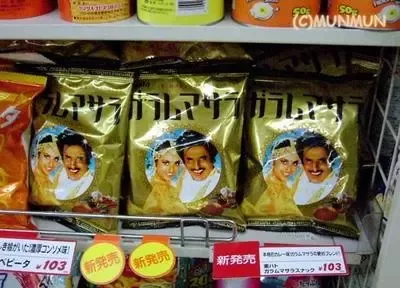
 The Koboi Project
You must be logged in to post a comment.