Dari Pusat Tasek 24

Anwar Saji Lagu Tamil

The 12th series in the Koboi Project, ‘Dari Pusat Tasek”, consists of a pair of photographs titled Naan Anaiyttal and Rockin Cowboy taken in Kampung Indian Settlement, Batu Caves and on West Broadway, Mount Pleasant, Vancouver, respectively. Naan Anaiyttal presents the Koboi standing before a hoarding of 12 meter cutout of formerly jailed Deputy Prime Minister and Parti Keadilan leader, Anwar Ibrahim. The Koboi stands gesturing forwards and upwards with a green skinned mango in his right hand. The cutout was initially erected around the 2008 election but taken down in the context of political controversy and  fears that the structure would be vulnerable to weather conditions. It was put up again for the 14th general election which took place in May 2018. The Koboi photograph was taken in 2018.  Naan Anaiyttal is title of a song from M G Rmachandran’s hit film Enga Veettu Pillai (1965). MGR was of course to become the Chief Minister of Tamil Nadu and the song has populist and egalitarian theme. Anwar Ibrahim, in turn is, however tenuously, in line to be the next Prime Minister of Malaysia.

Naan Anaiyittal
Athu Nadanthuvittal
Ingu Ezhaigal vedanai padamatta
Uyirullavari oru thunbamillai
Avar kanneer kadalile vizhamattar

If I were to rule
and if it comes to pass
The poor will not suffer
As Long as they live they will feel no pain
They will not fall into the sea of tears

or in Anwar Ibrahim’s summation

​Kalau aku diberi kuasa
Tidak ada lagi yang derita
Tidak ada lagi yang miskin mengalir air mata

Dari Pusat Tasek 22

1. Dunia is inhabited by Man, animals, plants, objects, spirits; 2. Pusat Tasik Pauh Janggi is inhabited by Nagas, Jins, Garudas; 3. Padang Jauh dan Puncak Gunung is inhabited by Giants, jins; 4. Pulau Buah is inhabited by Ancestral spirits; 5. Kayangan is inhabited by Dewa, Perman; 6. Dasar Laut is inhabited by Raja Lebis. Modified from a diagram by Md. Salleh Yaspar.

The combined downward spiral of the Pusat Tasek and the upward thrust of the enormous Pokok Pauh Janggi combine to create an axis of Malay Ontology or cosmos. Anker Rentse explains, from ethnographic notes that seem to have been made in Ulu KelantanShurga, Heaven, is on the top of Pauh Janggi, and Nuraka, Hell, is down below its roots. A gigantic hole between the roots causes the ocean water to disappear into hell’s big boiling-pot, kawah nufaka , whence the whirl-pool. Underneath the pot burns everlasting fire. A dragon guards the hole, the gate to hell ( pintu nuraka) with its body in order to prevent the ocean from running dry. In Pusat Tasek an account is kept of the good and the bad deeds of every human being in the world. The accountant in Heaven is Ka’ Tebir, and in Hell, Kiraman. The last one is said to be so busy on occasions, that he gets angry, throws his pen on the floor and declares, Ini sekarang sudah chukup!”

The Dari Pusat Tasek exhibition will run at Percha Artspace, Lumut Waterfront, till 19 JAN 2020  Photographs of the Lumut performance will go towards making the 13th series of the Koboi Project tentatively titled Badan Aku Tubuh Negara. The draft of this work can be viewed at  https://koboibalikkampung.wixsite.com/sialjambalang

https://www-jstor-org.proxy.lib.sfu.ca/stable/41559847

Dari Pusat Tasek 21

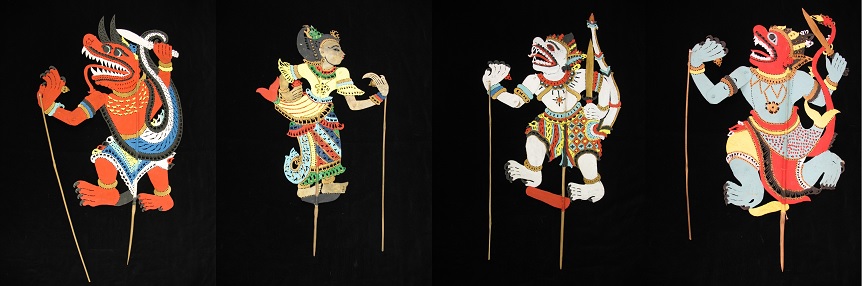
Nenek Sepit Pentala Naga | Tuan Puteri Ikan Selar Banum | Hanuman Kera Putih | Hanuman Ikan

In the Mak Yong Endeng Tajali, when the Great Raja dies, his sons the Elder Raja, the Middle Raja and the Young Raja fight for the throne. The Elder Raja is victorious and Middle Raja flees to the forest to became a Jin Gergasi haunting the land, while the Young Raja goes to the Laut Buih Gelombang Tujuh to become the Nenek Sepit Pentala Naga. At the centre of this lautan is, of course, the Pusat Tasek Pauh Janggi.

In the Kelantan Wayang Kulit at the bottom of, presumably, the same Pusat Tasek, there also lives a Nenek Sepit Pentala Naga. He is the Raja of the Negeri Lautan Buih. He has a beautiful daughter, the Tuan Puteri Ikan Selar Banum who marries the great warrior, Hanuman Kera Putih and has a child named Hanuman Ikan.

https://peabody.yale.edu/

http://rahimidinzahari.blogspot.com/2009/03/kembara-kata-di-balik-warna-rahimidin.html

Dari Pusat Tasek 18

The Dari Pusat Tasek, exhibition at Percha Art Space runs till 19 JAN 2020.

The enormous tree at the centre the ‘Pusat Tasek’. is an known as the Pokok Pauh Janggi. While I have been insisting that this is a mango tree, I have to acknowledge that the more commonly held view is that it is a coco de mer palm. Still, pauh is the Malay word for ‘mango’ and as Paul Kekai Manansala suggests janggi, probably, derives from the Toroja word ‘djjandji’ which, like the Malay ‘buah’, means ‘fruit’.

The Toraja are a people from the Sulawesi island, to the Southeast of Borneo, whose ancestral myths seem to claim origins from an island somewhere to the north where there is a powerful current, which could possibly be the Pusat Tasek. In the Taroja language taripa djandji means ‘mango tree,’ where or taripa  means ‘mango’ and djandji , derived from djampu means ‘fruit’. In suggesting that the Toraja taripa djandji is the more original form of Pauh Janggi , Manansala points out that among the Bare’e people, also from Sulawesi, taripa djandji is the common way of saying ‘mango tree.’

Manasala also notes that Antonio Pigafetta, a mariner on Ferdinand Magellan’s  pioneering voyage of ‘discovery’ (1518-1522), mentions local tales of an island surrounded by whirlpools, somewhere north or south of Java Major (Borneo), called Puzathaer (Pusat air?) on which there was a very large tree in whose branches perch enormous birds called Garuda. The fruit of this tree was said to be ‘larger than a cucumber.’ This size comparison, which must surely be with the in terms of the chayote cucumber from the Americas, suggests that the tree concerned was, indeed, a mango tree. The nut of the coco de mer is very much larger.

In Malay, of course, Pokok Pauh Janggi refers only to the mythical tree. A quotidian Mango tree would be pokok pauh and the coco de mer is referred as kelapa laut. While none of this is conclusive, in my understanding of language and of myth, the fact that, even when the signifier ‘Pauh Janggi‘, is understood as an index for the signified ‘coco de mer‘, the fact that it is indexed via the word ‘pauh‘, confirms that the root of chain of signifieds or similes is, indeed, the ‘mango’.

http://sambali.blogspot.com/2008/04/kuroshio-current-and-navel-of-sea.html

Dari Pusat Tasek 15

The Dari Pusat Tasek exhibition will run at Percha Artspace, Lumut Waterfront till 19 Jan 2020

Dari Pusat Tasek

Di tengah Lautan Melayu kuno,
berpusar pusaran yang menakutkan.
Pusat Tasek Pauh Janggi terkata,
tempat itu dinamakan.

Dari pangkalnya di dasar lautan,
tumbuh sebatang pokok yang menakjubkan.
Tingginya sampai ke langit mentari,
di dahannya Burung Roc gergasi.

Dicelah akarnya mencuram lubuk yang dalam,
di sana menanti mahluk gaib yang seram.
Di manakah pusaran Pauh ini?

Dari Pusat Tasek 14

So where is the mythical Pusat Tasek Pauh Janggi located? I have found two possible locations so far; one from Pigafetta’s notes, is somewhere north or south the island of Borneo and the other, from the Perak establishment (pertabalan) myth of the Perak Sultanate, somewhere off the mouth of the Perak River. Now from that masterful, yet woefully ‘ortentalist’ (in Edward Said’s meaning of ‘Orientalism’ ), storyteller Rudyard Kipling’s, Just So Stories, I have found that there is also a way to conceive of a congruence or conflation of these locations.

In his tale of how the crab came to have pincers and live in holes in the sand titled The Crab That Played With The Sea he tells also of the cause of the tides and the currents and their primordial connection with the Pusat Tasik Pauh Janggi. While this tale is most interesting for its domestication and massification of colonial ethnography in the public discourse of Empire, I find its placement of the Tusat Tasek its greatest draw in the context of my present Dari Pusat Tasek project.

As the Elder Magician, the Son of Adam and his young daughter go in search of Pau Amma, the giant crab –

they pushed out on the Perak river. Then the sea began to run back and back, and the canoe was sucked out of the mouth of the Perak river, past Selangor, past Malacca, past Singapore, out and out to the Island of Bingtang, as though it had been pulled by a string … So he took the paddle; but there was no need to paddle, for the water flowed steadily past all the islands till they came to the place called Pusat Tasek—the Heart of the Sea—where the great hollow is that leads down to the heart of the world, and in that hollow grows the Wonderful Tree, Pauh Janggi ..

So it seems that in the space and time of mythology, and, in fact, of voyages in general, movement on a given course implies no necessary limit on the distance travelled, such that “off the mouth of the Perak River” can mean “North or South of Borneo Island”, of course!

Dari Pusat Tasek 12

In connection with my show at Percha Artspace titled Dari Pusat Tasek, which runs till 5 Jan 2020, I ask the obvious question – where is the Pusat Tasek Pauh Janggi (Navel of the Seas)? The performance carried out on the Lumut Waterfront was based on a Perak Malay cleansing ritual that purports to wash all the sial jambalang (ill luck and malevolent spirits) away to the Navel of the Seas.. Many sources on the location of the Pusat Tasek place it somewhere in the South China Sea or Southwest thereof. According to Antonio Pigafetta, a mariner on Ferdinand Magellan’s pioneering voyage of ‘discovery’ (1518-1522), there were local tales of an island surrounded by whirlpools, somewhere north or south of Java Major (Borneo), called Puzathaer  (Pusat air?) .​ The location of this Pusat Tasek varies, however, with the source of the myth. According to a Perak legend associated with the installation of its first Sultan, Mudzaffar Shah I, the Pusat Tasek is located somewhere off the mouth of the Perak river, beyond the extensive sandbanks there. This area, named Beting Beras Basah or Beras Basah Sandbank, is known as a deeply magical place – one filled with all manner of makhluk ghaib (supernatural beings).

http://sambali.blogspot.com/2008/04/kuroshio-current-and-navel-of-sea.html

http://catatanberkat.blogspot.com/2015/05/rahsia-beting-bersah.html

Dari Pusat Tasek 8

The Dari Pusat Tasek exhibition runs at Percha Artspace, Lumut Waterfront till 5 Jan 2020 (EXTENDED TILL 19 JAN 2020). The gallery presents the Koboi Balik Kampung Series as well as a record or residue of the Dari Pusat Tasek performance that took place on the 25 Dec 2019. This performance stems from the 12th series of the koboi project that carries the same name and which is based on two images. The first of these is a shot of the Koboi standing at the base of a 35 ft elections hoarding of Malaysian prime minister in waiting, Awar Ibrahim at Kampung Indian Settlement, Batu Caves. It is titled Naan Anaiyttal.

Hanging in the Percha gallery is a t-shirt bearing the second image titled Rockin Cowboy. This is the t-shirt worn by Sang Nabil Utama during the performance at the Lumut Waterfront. This is a shot of the koboi outside the Rockin Cowboy Western store on Broadway, Vancouver. This is where I got my hat, boots and shirts  for the first Koboi performance at the National Art Gallery, Kuala Lumpur in 2013. I bought one black and one white version of the Rockmount Classic Sawtooth Western  shirt. The white shirt is now in the collection of the National Art Gallery. Since then, I have acquired much of my gear for the Koboi Project at the Rockin Cowboy. In the photo with me are Dave Lawr and Danny Kresnyak from the store.

Dari Pusat Tasek 7

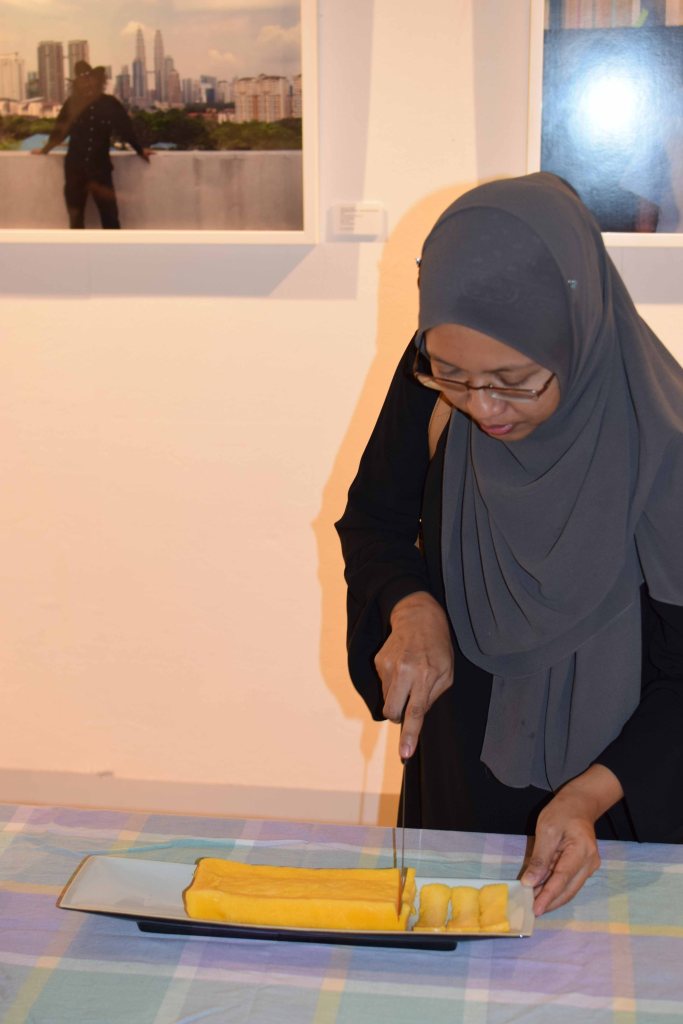
Melayang Kueh Pauh Dilayang!

The Dari Pusat Tasek show runs at the Percha Art Space in Lumut till the 5th Jan 2020 (EXTENDED TILL 19 JAN 2020) .

In the Hikayat Jaya Langkara, a quest for the healing saffron flower leads the Princess Ratna Kasina to a mountain at the pusat tasek where the rising tide brings the miraculous flower up within her reach. While there is no mention of the Pokok Pauh Janggi in this fable, the buah Pauh appears twice in the list of similes used to extoll the beauty of Princess. Princess Ratna Kasina is said to have cheeks like sliced mango (pipi-nya saperti pauh di-layang), and heels like turned (or peeled) mango (tumit-nya saperti pauh di-larek).

For the opening reception of the show at Percha Art Space, Percha Director, Suhaila Hashim, steamed her first Kueh Pauh Dilayang after experimenting with recipes found online. The cake was sliced (dilayang) and served to locate the mango within Malay mythology and aesthetics, and to articulate the core symbolism of the Dari Pusat Tasek happening which includes –

  1. a performance based the mythic realities of the ‘navel of the seas’ or the Pusat Tasik Pauh Janggi.
  2. a gallery installation featuring the Koboi Balik Kampung series of 12 photographic prints and presents an autobiographical take on the complexities of contemporary Malaysian art and society.
  3. and the serving of this rare Kelantan sweet – the Kueh Pauh Dilayang.

Dari Pusat Tasek 3

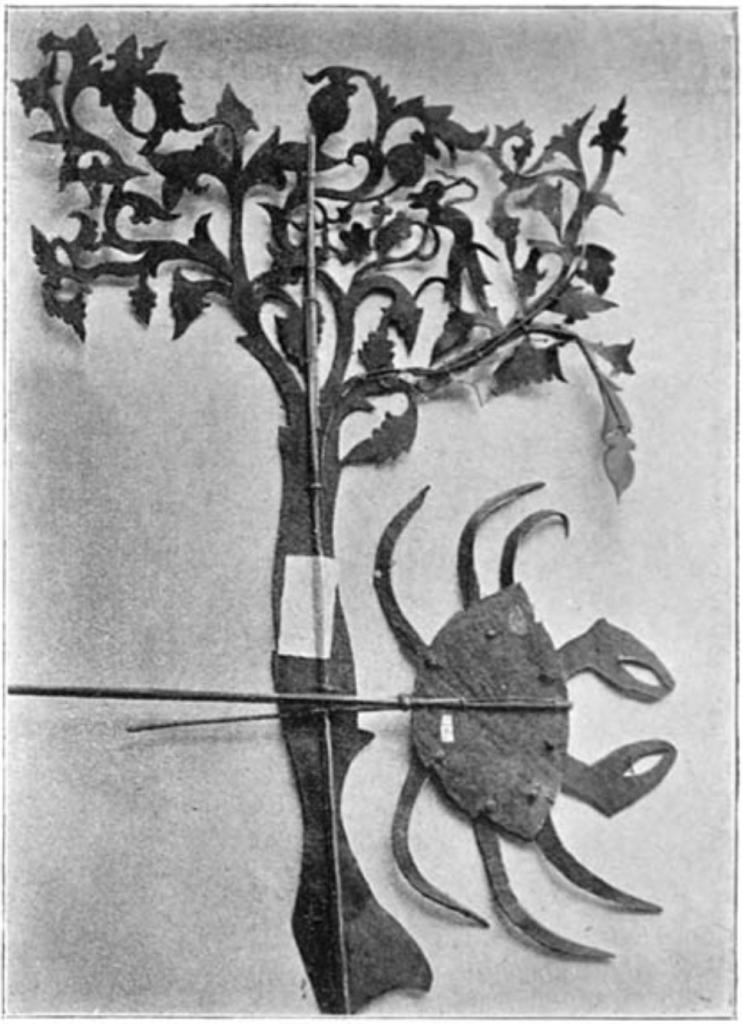
Wayang Kulit puppets – Pokok Pauh Janggi and Ketam Gergasi

The Dari Pusat Tasek exhibition and performance will open at the Percha Art Space in Lumut on 25th Dec 2019. This performance for this event arises from the mythic realities of the ‘navel of the seas’ or the Pusat Tasik Pauh Janggi. Far out in in the deep ocean somewhere in the proximity of the island of Borneo, or even in the mouth of the Perak river, depending on which account one follows, there is said to be a momentus whirlpool that swirls down to the depths, draining the waters into the earth. Also at this nexus, rooted on the ocean floor, is the fabulous Pokok Pauh Janggi that reaches up to the heavens. At the base of this tree, at the bottom of the ‘pusat tasek’, there is said to sit a giant crab, blocking the opening of the drain of the waters. It is the daily movements of this crab, that cause the oceans to rise and fall cyclically, giving us both the currents and the tides.  The oceanic currents are sometimes personified as a regular visitor, the Mambang Tali Harus, a type of spirit who is said to go back and forth from the navel of the seas (bĕrulang ka pusat tasek). Rooted at this centre of tidal activity, this Pusat Tasik, is the fabulous Pokok Pauh Janggi that reaches up to the heavens.

In the Selangor Malay tale of Haji Batu, a man, journeying to perform the Haj, had to cross the fearsome Navel of the Seas, known to be a dangerous and fiendish place (Siapa terjatuh atau tergelincir, tersuruplah ia ke dalam pusar. Tempat menanti segala mara bahaya. Tempat duduk menantinya Nenek Sepit Pentala Naga di Laut Buih Gelombang Tujuh. Kalau si lemah yang sampai, maka hilang ghaiblah ia di mulut Raja Naga yang maha bisa). As Haji Batu’s ship went down, he clung to the Pokok Pauh Janggi, and following instructions he had received in a dream, drew himself up on 7 nails that he drove into the tree. When he reached the top, he found the nest of the mythical Burong Roc (Garuda) that lived there.  He waited therein and when the Roc returned, he attached himself to the bird and flew Westward on his Journey to Mecca. 

http://www.gutenberg.org/files/47873/47873-h/47873-h.htm