Deja Vu: Planet of the Apes 2

In my pervious post titled Deja Vu: Planet of the Apes I discussed the imprint made on my mind by the violent chase scenes in the said film. This impression was revived by the recent border patrol images coming out of Del Rio, Texas. I noted in that post how this is one of two images brought forth in me, the other being that of the “historical injustices suffered by black people in the US..” Upon further reflection, however, I have come to realize that these two images are infact one and the same. Urko and his fellow gorillas are literally black, while the regressed, abject, Yahooesque humans are Caucasian. This seems to be an artistic inversion of the historical image of the American slave patrol and I suggest that it is in this very reversal that the power of these chase scenes lies.
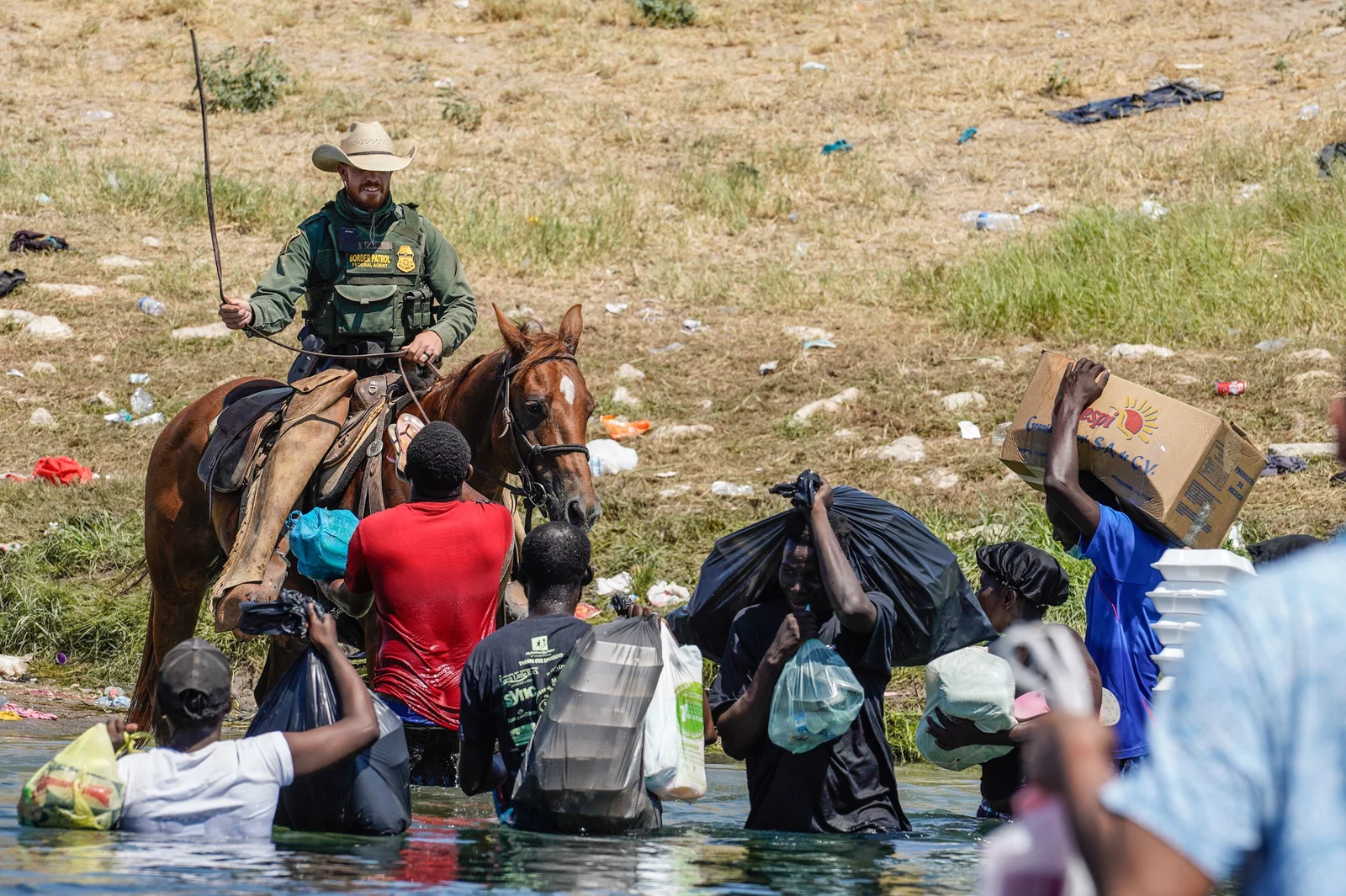
I wonder if the authors of this filmic scenario were conscious (I would like to think they were) of the Slave Patrol predecessor of their image, and further, if they intended a progressive parody or if it was merely a reactionary pastiche. However, regardless of this authorial intent, I am convinced that this recurring image is etched into the American psyche and is sublimated in all that is now referred to as ‘structural’ in that nations institutions.

Writing on Juneteenth 2020, Phillis Coley cites historian Gary Potter’s three functions of the Southern slave patrol –
(1) to chase down, apprehend, and return to their owners, runaway slaves;
(2) to provide a form of organized terror to deter slave revolts; and,
(3) to maintain a form of discipline for slave-workers who were subject to summary justice, outside the law.

She goes on to note that the use of these patrols to capture runaway slaves was a precursor to the formal police force in America and its ethos has persisted as an element of policing role even after the passage of the Civil Rights Act of 1964.

Image: https://www.arise.tv/white-house-condemns-border-guard-use-of-whip-like-cord-against-haitian-migrants/z

mage: https://www.tnp.sg/news/world/white-house-slams-use-horse-reins-threaten-haitian-migrants

image: https://www.npr.org/2021/09/23/1040214077/the-biden-administration-will-no-longer-use-horses-at-a-texas-border-crossing

https://spectacularmag.com/2020/06/15/police-in-the-u-s/

Malaysian Indian Artists

“WHY ARE THERE so few artists of Indian … descent in Malaysia?” Veteran Malaysian art Journalist Ooi Kok Chuen presents an overview of Malaysian Indian artists in the Penang Monthly which opens by questioning the dearth of Indians in the national canon. He goes on to offer some possible answers that he notes have been ‘bandied about,’ “Economic status, parental / social disapprobation, opportunity, (lack of) role models, patronage, minority syndrome (proportionately smaller population, of only 6.2%), “estranged” Indian-ish themes, and discrimination,” Ooi rightly states no preference amongst these reasons. Nevertheless, while it is difficult to go beyond speculation in this matter, I am glad he has asked the question publically. It is an important one as it points to the undeniable fact that, while a few Malaysian Indians have made significant contributions to the practice and theorization of the visual arts, overall, our numbers are low.

This is something that gave me pause during my years of intense involvement in the Malaysian scene from 1996 to 2002. I gave my support and encouragement to individual artists with a sense of communal allegiance whenever the opportunity came my way, but my own concerns during that period were national and international, and while intra-national questions of race and communalism formed the framework of my practice, I was not community oriented. I often wonder if I could have engaged more actively with my community in those years in terms of promoting and developing the arts.

This personal reflection and recollection, triggered by Ooi’s question, leads to a more fundamental question that lies at the heart of my Malaysian identity. Am I an Indian first or a Malaysian first? An Indian Malaysian or a Malaysian Indian! Of course, an analogous question arises for the other races of our multiethnic nation. Such pondering has even been turned into political capital. Malaysia’s present Prime Minister is reported to have said, back in 2010, “I am a Malay first, I want to say that … But being Malay does not mean that you are not Malaysian.” While the country struggles with the horrors of the recent covid-19 crisis atop an ongoing and now long running political one, the foundations of the nation are being shaken. Will the old Malaysia, whose founding social contract is premised on communalism, survive this crisis in its present form? Will we regress to a more ethnocentric paradigm, or will we emerge from this national trauma with a reformed and refined national agreement? These questions might seem far from the world of Malaysian art but this is where the stream of thoughts that flowed that follows from Ooi’s innocent, perhaps not so innocent question, has brought me – WHY ARE THERE so few artists of Indian … descent in Malaysia?”

https://penangmonthly.com/article/20432/spotlight-on-indian-malaysian-artists?fbclid=IwAR3CB_s6jMPFH2A8P-4UcFwKXz6oUzjwBn7aRXijHkPNp35Aob8d9iE5Gto

https://www.japantimes.co.jp/news/2020/03/01/asia-pacific/politics-diplomacy-asia-pacific/muhyiddin-yassin-malaysia/

Keling Pariah 2

Indians should be proud to be called Pariah! The fact that the term is offensive to Indians, both in India and in the diaspora, is really a symptom of our own horrendous internal racism or catseism. Pariah is the name of one of the oppressed Dalit communities in Tamil Nadu and, according to devendrakulam.org, the English language the use of the word ‘pariah’, meaning ‘social outcast’ was first recorded in 1613. Devendrakulam.org also notes that Paraiyan is mentioned in the Classical Tamil Sangam literature in the Puram text – “Without the following four – Thudian, Panan, Parayan, Kadamban the citizens’ Categorization is not complete” . These are all categories of music workers – Thudian is a player of the Thudi drum, Panan is a singer Singer, Parayan is a player of the Parai drum, and Kadamban is a player of the instrument named Kadambu which I think might be a katam (கடம்), the clay water pot vessel that is used as a drum (I stand to be corrected).

Devendrakulam.org offers a speculative narrative of the descent of the community as Bhramanism rose in South India through the centuries. Among the intriguing possibilities offered here are the idea that the Paraiyar were Buddhists who held out against the ascendant Bhramanism and that some of the Shudra casts of the contemporary South like my own Jaffna Vellala caste emerged from the Paraiyar in a process of assimilation. The Paraiyar community has, despite millennia of oppression within the entrenched Brahmanical order, produced significant figures in Indian social, political and cultural life including, M. C. Rajah, R. Srinivasan, Thol. Thirumavalavan, Illayaraja and Pa. Ranjith. I repeat, Indians (I include Jaffna Tamils) should be proud to be called Pariah!

Image: https://en.wikisource.org/wiki/Castes_and_Tribes_of_Southern_India/Paraiyan

http://devendrakulam.org/uploads/Who%20are%20the%20Paraiyars.htm

https://en.wikipedia.org/wiki/Paraiyar

Keling Pariah

This is a super exposition on the Keling word on A Daview Originals. Although there are errors, for example, according to the Malay Concordance Project, in the 1963 edition of Cherita Jenaka, orang Keling  was changed to orang India and not, as the presenter claims, the other way around. Sorry lah it is in Tamil!

https://www.youtube.com/c/DaViewProduction/videos

http://mcp.anu.edu.au/N/CJen_bib.html

Satu Kesinambungan

CM Kerela/ PM Malaysia

KELING dan MELAYU tak dapat dipisahkan,
Sejarah dan keturunannya satu kesinambungan..
Persuratan Melayu Makkal tak perasan,
Kerana memaki namanya sudahpun berleluasan.

A Keling Lexicon Q – Z

Telinga Keling, Silver Halide Print, Niranjan Rajah, 1999. Permanent Collection of the National Visual Art Gallery, Kuala Lumpur

A Keling Lexicon A – J
A Keling Lexicon K – P

Q
R
Raja Keling
Rakyat Keling
Rama Keling
Rojak Keling
Roti Keling
Rendang Keling
S
Sembah Keling
Sembang Keling
Sireh Keling
(Kayu) Sono Keling
Subang Keling
Sungai Keling
T
Tanah Keling
Tanjung Keling
Taubat Keling
Telinga Keling
Temberang Keling
Terup Keling
U
Ubi Keling
Ugut Keling
Usada (Pengubatan) Keling
V
W

Wayang Keling
X
Y
Z

Addendum: Keling words with no Indian reference (happy to be corrected)
Keling Gawai
Paku Keling
Pasang Keling


A Keling Lexicon K – P

Telinga Keling, Silver Halide Print, Niranjan Rajah, 1999. Permanent Collection of the National Visual Art Gallery, Kuala Lumpur

A Keling Lexicon A – J
A Keling Lexicon Q – Z

K
Kacang Keling
Kain Keling
Kampung Keling
Kapal Keling
Kapitan Keling
Keling Karam
Kecamatan Keling
Keling Kelate
Kemudi Keling
(Jika Perak) Kerani Keling
(Ikan) Kerapu Keling
Keris (Sempana) Keling
Kesumba Keling
Ketuk Keling (Dulu)
(Darah) Keturunan Keling
Koboi Keling
Kote Keling
Kuli Keling
L
Lidah Keling
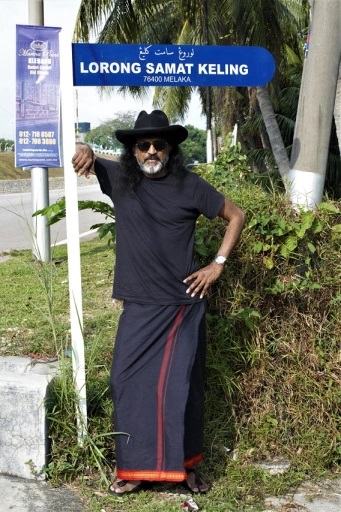
Lorong (Samat) Keling
M
Keling Mabuk (Todi)
Mamu Keling
Keling Maya
Keling Mabuk (Todi)
Melayu Keling
Mengkuang Keling
N
Negeri Keling
O

P
Pacar Keling (Surabaya)
Pahlawan Keling
Pandai Keling
(Corak) Parang Keling
Peguam Keling
Pendekar Keling
Penulis Keling
Keling Pariah
Keling Pelikat
Penulis Keling
Pisang (Abu) Keling
Pisang (Kelat) Keling
Pukul Keling (Dulu)
Pusing Keling
Putar Keling

A Keling Lexicon A – J

Telinga Keling, Silver Halide Print, Niranjan Rajah, 1999. Permanent Collection of the National Visual Art Gallery, Kuala Lumpur

A Keling Lexicon K – P
A Keling Lexicon Q – Z

A
Akal Keling
Anak Keling (Bermain Api)
Auta Keling
Ayam Keling
B
Babi Keling
Keling Balik (India)
Keling Bang (Azan)
Bawang (Merah) Keling
Belanga Keling
Benua Keling
Beras Keling
(Sang) Bhramana Keling
Keling Bodoh
(Anak-putu) Bono Keling
Keling Botol
Bukit Keling (Johor)
Bunuh Keling
Butuh Keling
C
Cempaka Keling
Cakap (Macam) Keling
Cucak Keling
D
Doktor Keling
E
F
G
(Ikan) Gelama Keling
Gelung Keling
Gempar Keling
Gendang Keling
Gertak Keling
Gerantang Keling
(Kerja) Golok Keling
Gulai Keling
(Tari) Keling Gunojoyo
Gunting (Rambut) Keling
H
Hulubalang Keling
Keling Hindu
I
Keling Islam
J
Jambu Keling
Janji Keling
Keling (Teater) Jikey

Towards A Keling Lexicon

Telinga Keling, Silver Halide Print, Niranjan Rajah, 1999. Permanent Collection of the National Visual Art Gallery, Kuala Lumpur

KELING dan MELAYU tak dapat dipisahkan,
Sejarah dan keturunanpun ada kesinambungan.
Persuratan mulia Makkal tak rasa,
Kerana memaki namanya sudahpun berleluasa.